روضة RawdahLibrary of How to Muslim
  1. Rawdah
  2. Seerah & History
  3. Lost Islamic History
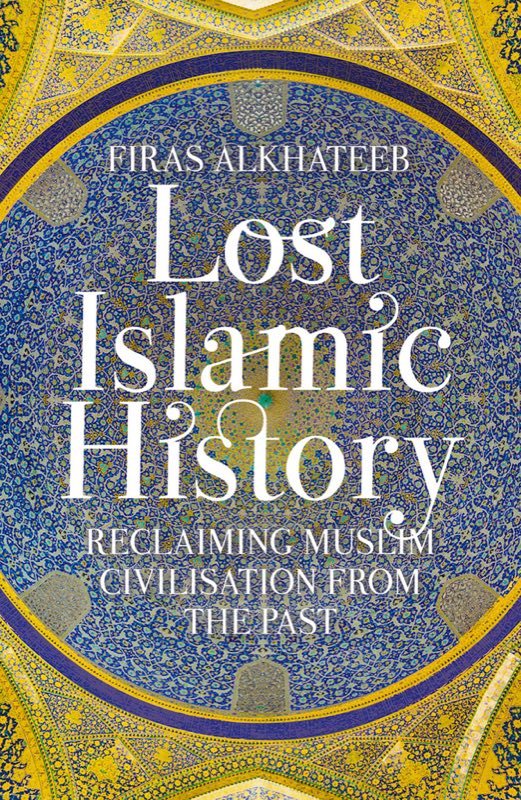
Cover of Lost Islamic History by Firas Alkhateeb

Our reading notes · Garden of Seerah & History

Lost Islamic History

Reclaiming Muslim Civilisation from the Past · by Firas Alkhateeb

A one-volume history of Muslim civilisation, from pre-Islamic Arabia to the Muslim world today. The author wrote it from his notes for teaching Islamic history at high school, for readers meeting the subject for the first time. Below are our notes on each chapter, a timeline, a map, and links to the pages on our own sites that go deeper.

Publisher
Hurst, 2017 edition
Chapters
12
Covers
About 1,400 years
Good for
Teens and beginners

These notes are written in our own words. The book’s text isn’t reproduced here, so read it in full in your own copy. Where a detail in the book needs correcting, we say so under “Read with care”.

الفصول

Chapter notes

Twelve chapters, in brief

For each chapter: what it covers, the points worth remembering, any details to read with care, and where to go deeper on Prophetic Footsteps, Athar and Ummah Atlas.

  1. 1Pre-Islamic Arabia
  2. 2The Life of the Prophet ﷺ
  3. 3The Rightly Guided Caliphs
  4. 4The Establishment of the Muslim State
  5. 5Intellectual Golden Ages
  6. 6The Islamic Sciences
  7. 7Upheaval
  8. 8Al-Andalus
  9. 9The Edge
  10. 10Rebirth
  11. 11Decline
  12. 12Old and New Ideas

Chapter 1

Pre-Islamic Arabia

Before 610

Sets the scene: a dry, tribal Arabia sitting between the Roman and Persian empires, where poetry was the great art and memory mattered more than writing.

Key points

  • Tribe and clan were the basis of survival and protection, and hosting a guest was a point of honour.
  • Poetry was the height of Arab culture. The famous long odes were memorised and recited for generations.
  • The Ka‘bah, built by Ibrahim and Isma‘il for the worship of one God, had become crowded with idols.
  • The Ghassanids served Rome and the Lakhmids served Persia as client kingdoms, while Aksum in Abyssinia traded across the Red Sea.

Think aboutA people who could memorise thousands of lines of poetry received the Qur’an. How did that habit help preserve it?

Write a fa’idah from this chapter

Chapter 2

The Life of the Prophet ﷺ

c. 570 – 632

A compact walk through the Seerah, from his ﷺ early life in Makkah to the Hijrah, the years in Madinah and his passing.

Key points

  • Known as al-Amin before prophethood, he received the first revelation in the cave of Hira in 610.
  • Persecution, the boycott of Banu Hashim and the Year of Sorrow led to the Hijrah in 622, the start of the Islamic calendar.
  • The Charter of Madinah set out one community, with rights and duties for the city’s Jewish tribes.
  • Badr, Uhud, the Trench and the Treaty of Hudaybiyyah led to the opening of Makkah in 630 with a general pardon.

Read with care

  • Who led at Badr. The book says the Muslim army at Badr was commanded by Hamzah. The Seerah sources describe the Prophet ﷺ leading the army himself, with Hamzah among its foremost fighters.

Think aboutMany Companions saw Hudaybiyyah as a setback. What did the truce make possible in the two years that followed?

Write a fa’idah from this chapter

Chapter 3

The Rightly Guided Caliphs

632 – 661

How the community held together after the Prophet ﷺ, and how four caliphs led a state that grew from Arabia to Egypt, Syria and Persia.

Key points

  • Abu Bakr ended the Ridda wars and had the written Qur’an gathered into one compilation.
  • Under ‘Umar, Syria, Iraq and Egypt joined the state. He received Jerusalem’s surrender in person and guaranteed its people’s safety.
  • ‘Uthman built the first Muslim navy, and the last of the Sassanid lands came under Muslim rule by 651.
  • ‘Uthman’s killing in 656 opened years of trial for ‘Ali: the Battle of the Camel, the arbitration with Mu‘awiya, and the Kharijites who finally killed him.

Think aboutAbu Bakr chose ‘Umar for his ability rather than kinship. Why did that matter for the caliphs who came after?

Write a fa’idah from this chapter

Chapter 4

The Establishment of the Muslim State

661 – c. 800

The Umayyads turn the caliphate into a dynasty and push its borders to Spain and Sindh, until the Abbasids overthrow them in 750 and build Baghdad.

Key points

  • Mu‘awiya reunited the state from Damascus, but by naming his son Yazid he made the caliphate hereditary.
  • Karbala in 680 and the revolt of ‘Abdullah ibn al-Zubayr shook the dynasty before ‘Abd al-Malik restored it.
  • In 711 Tariq ibn Ziyad crossed into Iberia and Muhammad ibn al-Qasim reached Sindh.
  • Taxing non-Arab converts as if they were not Muslim fed resentment. ‘Umar ibn ‘Abd al-‘Aziz tried to undo it, and the Abbasids rode it to power.

Read with care

  • When Baghdad was founded. The book gives 765. Al-Mansur’s Round City is usually dated to 762 (145 AH), with building finished around 766.
  • The death of ‘Umar ibn ‘Abd al-‘Aziz. The book states that his own family poisoned him. Some early reports say he was poisoned, but who was behind it is not established.

Think aboutLater Muslims called ‘Umar ibn ‘Abd al-‘Aziz the fifth rightly guided caliph. What earned him that name in just over two years?

Write a fa’idah from this chapter

Chapter 5

Intellectual Golden Ages

800s – 1200s

The House of Wisdom and the scholars it drew to Baghdad, and what they achieved in mathematics, astronomy, geography, medicine and physics.

Key points

  • Al-Ma’mun’s House of Wisdom brought translators and scholars together in one place, with Arabic as their shared language.
  • Al-Khwarizmi spread the Indian numerals with zero and gave algebra its name.
  • Al-Razi and Ibn Sina moved medicine towards observation and testing, and hospitals treated the poor for free.
  • Ibn al-Haytham’s experiments on light helped shape what we now call the scientific method.

Read with care

  • The Atlantic voyage from Mali. The account of Mansa Abu Bakr sailing west was recorded by al-‘Umari, who heard it from Mansa Musa in Cairo, not by Ibn Battuta. The book itself treats the story as unproven.

Think aboutThese scholars often opened their books with verses about reflecting on creation. How would seeing study as worship change the way you learn?

Write a fa’idah from this chapter

Chapter 6

The Islamic Sciences

700s – 1100s

How fiqh, ‘aqidah and the science of the heart grew, using the hadith of Jibril (Islam, Iman and Ihsan) as the framework.

Key points

  • The four schools of Abu Hanifa, Malik, al-Shafi‘i and Ahmad ibn Hanbal differ in how much room they give to reasoning, and each spread to different regions.
  • Mainstream scholars answered the Kharijites and the Mu‘tazila, and Ahmad ibn Hanbal stood firm through al-Ma’mun’s inquisition.
  • The Ash‘ari and Maturidi schools, with the Athari approach, became the three Sunni schools of creed.
  • Early figures such as al-Hasan al-Basri and al-Junayd shaped the path of purifying the heart.

Think aboutThe hadith of Jibril is the backbone of this chapter. Can you name the six pillars of iman it lists?

Write a fa’idah from this chapter

Chapter 7

Upheaval

900 – 1300

Three centuries of threats from the Qarmatians and Fatimids, the Crusaders and the Mongols, and the leaders who answered them.

Key points

  • The Qarmatians raided Makkah and carried off the Black Stone, while the Fatimids ruled Egypt from their new city of Cairo.
  • The First Crusade took Jerusalem in 1099. Zengi, Nur al-Din and then Salahuddin united Syria and Egypt against it.
  • Salahuddin won at Hattin and entered Jerusalem in 1187 without a massacre.
  • The Mongols destroyed Baghdad in 1258, and the Mamluks stopped them at Ain Jalut in 1260.

Read with care

  • The Qarmatians and the Black Stone. The book dates the raid on Makkah to 928. It took place in 930 (317 AH), and the Stone was returned about twenty years later.
  • Zengi and Edessa. The book prints 1044 for Zengi’s capture of Edessa. The year was 1144.
  • Who led at Ain Jalut. The book calls Baibars the sultan at Ain Jalut. The sultan was Qutuz. Baibars led the vanguard and became sultan shortly after.
  • The toll in Jerusalem, 1099. The figure of 70,000 dead comes from later Muslim chroniclers. Modern historians think the true number was lower, though the massacre itself is not in doubt.

Think aboutDivision let the Crusaders in, and unity under Salahuddin turned them back. Where else in the book does that pattern repeat?

Write a fa’idah from this chapter

Chapter 8

Al-Andalus

711 – 1614

The whole story of Muslim Iberia, from Tariq’s landing to Córdoba at its height, the taifa kingdoms, Granada and the Moriscos.

Key points

  • ‘Abd al-Rahman I, the Umayyad who escaped the Abbasids, founded the emirate of Córdoba. ‘Abd al-Rahman III declared a caliphate in 929.
  • Córdoba’s libraries and its Great Mosque made the city a gateway for learning into Europe.
  • Rivalry between the taifa kings let the Christian kingdoms advance, until the Murabitun and then the Muwahhidun held them back for a time.
  • Granada fell in 1492. The Moriscos kept Islam alive in secret until they were expelled between 1609 and 1614.

Think aboutThe Alhambra’s walls repeat “There is no victor except Allah”. What does that mean coming from a state that was slowly losing its land?

Write a fa’idah from this chapter

Chapter 9

The Edge

700s – 1800s

How Islam reached West and East Africa, the Americas, China, India and Southeast Asia, mostly through trade, scholars and Sufis rather than armies.

Key points

  • Mali grew rich on gold. Mansa Musa’s hajj in 1324 showed its wealth, and Timbuktu became a centre of scholarship.
  • On the Swahili coast and in Southeast Asia, merchants and intermarriage brought Islam into local cultures, with Pasai and then Melaka leading the way.
  • Millions of the Africans enslaved in the Americas were Muslims, and some, like the leaders of the 1835 revolt in Bahia, Brazil, were scholars.
  • In China the Hui became fully Chinese and fully Muslim, and Admiral Zheng He led the Ming treasure fleets.

Read with care

  • The Atlantic voyage from Mali. The account of Mansa Abu Bakr sailing west was recorded by al-‘Umari, who heard it from Mansa Musa in Cairo, not by Ibn Battuta. The book itself treats the story as unproven.

Think aboutTrade carried Islam to places no army reached. What made merchants such good ambassadors for the faith?

Write a fa’idah from this chapter

Chapter 10

Rebirth

1299 – 1700s

The rise of the three gunpowder empires: the Ottomans, the Safavids and the Mughals.

Key points

  • From a small frontier state, the Ottomans grew until Mehmed II took Constantinople in 1453.
  • Selim I brought Egypt, Syria and the holy cities under Ottoman rule in 1516–17, and Suleiman the Lawgiver reorganised the empire’s laws.
  • Shah Isma‘il I founded the Safavid state in 1501 and imposed Twelver Shi‘ism on Iran.
  • Babur founded the Mughal empire at Panipat in 1526, and Aurangzeb had the Fatawa-e Alamgiri compiled.

Read with care

  • The first siege of Vienna. Chapter 10 dates it to 1526. It was 1529, the year chapter 11 gives.
  • The Shahnama. The book places it in the ninth century. Firdawsi completed it around 1010.

Think aboutThe three empires were rivals, yet a traveller could cross all of them and feel at home. What did they share?

Write a fa’idah from this chapter

Chapter 11

Decline

1600s – 1914

How the Ottoman and Mughal empires weakened while Europe colonised most of the Muslim world.

Key points

  • Stalled wars, sultans raised in seclusion and inflation from American silver weakened the Ottomans. The Treaty of Karlowitz in 1699 was their first big loss of land by treaty.
  • The Tanzimat rebuilt Ottoman law and schools on European lines, and Abdulhamid II answered with pan-Islamism and the Hejaz Railway.
  • The East India Company took control of India, and after the revolt of 1857 Britain ruled directly and ended the Mughal line.
  • France took Algeria in 1830, Britain occupied Egypt in 1882, Russia took Central Asia, and the Dutch the Malay Archipelago.

Read with care

  • Smallpox. What the Ottomans practised was inoculation, which Lady Mary Wortley Montagu brought to England in the 1720s. Vaccination came later, with Edward Jenner in 1796.
  • The Ottomans and Aceh. The Ottoman help sent to Aceh in the 1560s was against the Portuguese. The Dutch had not yet arrived in the region.

Think aboutSome reformers copied Europe and others looked back to the early Muslims. Which approach does the book seem to favour, and do you agree?

Write a fa’idah from this chapter

Chapter 12

Old and New Ideas

1700s – today

The two answers Muslims gave to decline, renewing tradition or copying the West, and the nation-states drawn up after the First World War.

Key points

  • Reformers such as Muhammad ibn ‘Abd al-Wahhab, Shah Waliullah and Hassan al-Banna each called for renewal in a different way.
  • During the First World War, Britain made promises that could not all be kept: to Sharif Husayn, to France in the Sykes–Picot Agreement, and to the Zionist movement in the Balfour Declaration.
  • The caliphate was abolished in 1924, Pakistan was founded in 1947, and the Nakba followed in 1948.
  • Most new Muslim states took secular, national forms, and the debate about Islam’s place in public life continues.

Think aboutThe book ends with an open question about Islam’s role in public life. How would you answer it?

Write a fa’idah from this chapter

الزمن

Timeline

43 moments, from Makkah to the modern world

Each moment shows the chapter that covers it and our page that goes further. Choose “Show on the map” to see where it happened.

  • The Prophet ﷺ
  • The caliphates
  • Empires and the wider world
  • Colonialism and the modern age
  1. c. 570

    The Prophet ﷺ is born in Makkah

    Born in the Year of the Elephant into Banu Hashim, a clan of Quraysh.

  2. 610

    The first revelation

    Jibril comes to him in the cave of Hira with the opening verses of Surah al-‘Alaq.

  3. 622

    The Hijrah

    The Muslims move to Yathrib, soon called Madinah. The Islamic calendar counts from this year.

  4. 624

    The Battle of Badr

    A small Muslim force defeats a larger army of Quraysh south-west of Madinah.

  5. 628

    The Treaty of Hudaybiyyah

    A ten-year truce with Quraysh lets Islam spread across Arabia.

  6. 630

    Makkah is opened

    The Prophet ﷺ enters Makkah with almost no fighting and pardons its people.

  7. 632

    The Farewell Hajj and his passing ﷺ

    He performs his only hajj, then passes away in Madinah.

  8. 632

    Abu Bakr becomes caliph

    Chosen at the Saqifah. He ends the Ridda wars and has the Qur’an gathered.

  9. 636

    Yarmuk and al-Qadisiyyah

    Victories over the Byzantines and Persians open Syria and Iraq.

  10. 637

    Jerusalem receives ‘Umar

    The city surrenders to the caliph in person, who guarantees its people’s safety.

  11. 656–661

    The years of trial

    ‘Uthman is killed. ‘Ali governs from Kufa through the Camel, the arbitration and the Kharijites.

  12. 661

    The Umayyad caliphate

    Mu‘awiya rules from Damascus and later makes the caliphate hereditary.

  13. 680

    Karbala

    Al-Husayn, the Prophet’s ﷺ grandson, is killed at Karbala in Iraq.

  14. 711

    Tariq crosses into Iberia

    He lands below the rock that still carries his name, Jabal Tariq, or Gibraltar.

  15. 711

    Muhammad ibn al-Qasim reaches Sindh

    The first lasting Muslim rule in the Indian subcontinent.

  16. 747–762

    The Abbasid revolution

    Black banners rise in Merv, the Umayyads fall in 750, and al-Mansur founds Baghdad.

  17. 756

    ‘Abd al-Rahman I in Córdoba

    The Umayyad survivor founds an emirate far from Abbasid reach.

  18. 813–833

    The House of Wisdom

    Al-Ma’mun gathers scholars and translators in Baghdad.

  19. 929

    The Caliphate of Córdoba

    ‘Abd al-Rahman III declares himself caliph.

  20. 969

    The Fatimids take Egypt

    They found the city of Cairo as their capital.

  21. 1099

    Crusaders take Jerusalem

    The First Crusade storms the city after a short siege.

  22. 1187

    Hattin and Jerusalem

    Salahuddin defeats the Crusaders and enters Jerusalem without a massacre.

  23. 1258

    The Mongols sack Baghdad

    The Abbasid capital falls and its libraries are destroyed.

  24. 1260

    Ain Jalut

    The Mamluks halt the Mongols in Palestine.

  25. 1290s

    Pasai, a Muslim port in Sumatra

    Marco Polo finds it Muslim when he passes through.

  26. 1324

    Mansa Musa’s hajj

    Mali’s king crosses the Sahara with a vast caravan and brings scholars home.

  27. 1330s

    Ibn Battuta on the Swahili coast

    He describes Kilwa’s mosques and a sultan who ate with the poor.

  28. c. 1400

    Melaka

    A sultanate on the strait carries Islam and Malay culture across the region.

  29. 1405–1433

    Zheng He’s voyages

    The Muslim admiral leads Ming China’s treasure fleets across the Indian Ocean.

  30. 1453

    Constantinople

    Mehmed II takes the city and makes it his capital.

  31. 1492

    Granada falls

    The last Muslim state in Iberia surrenders on 2 January.

  32. 1501

    The Safavid state

    Shah Isma‘il I takes Tabriz and makes Twelver Shi‘ism the state religion.

  33. 1517

    Selim I takes Egypt

    The holy cities pass under Ottoman protection, and the caliphate with them.

  34. 1526

    Panipat

    Babur defeats the Delhi Sultanate and founds the Mughal empire.

  35. 1609–1614

    The Moriscos are expelled

    Spain drives out the last descendants of al-Andalus.

  36. 1699

    The Treaty of Karlowitz

    The Ottomans give up Hungary, their first big loss of land by treaty.

  37. 1798

    Napoleon in Egypt

    The French invasion fails, and Muhammad Ali takes power after it.

  38. 1830

    France takes Algiers

    Algeria is made part of France itself.

  39. 1857

    The Indian revolt

    Britain crushes it, rules India directly and ends the Mughal line.

  40. 1900–1908

    The Hejaz Railway

    Abdulhamid II links Damascus to Madinah for pilgrims.

  41. 1924

    The caliphate is abolished

    The last caliph, Abdulmejid II, is sent into exile.

  42. 1947

    Pakistan is founded

    The Muslim-majority regions are partitioned from India.

  43. 1948

    The Nakba

    More than 700,000 Palestinians are driven from their homes.

الخريطة

Map

Where it happened

18 places from the book, from al-Andalus to China. Select a place to see what happened there.

MakkahMadinahJerusalemDamascusBaghdadCairoal-AndalusAlgiersTimbuktuIstanbulTabrizMervSindhDelhiPasaiMelakaChinaKilwa

تنبيه

Read with care

Details we read differently

The book is a good introduction, but a few dates and details don’t match the sources. Here is what we found, chapter by chapter.

  • Chapter 2

    Who led at Badr

    The book says the Muslim army at Badr was commanded by Hamzah. The Seerah sources describe the Prophet ﷺ leading the army himself, with Hamzah among its foremost fighters.

    See our page
  • Chapter 4

    When Baghdad was founded

    The book gives 765. Al-Mansur’s Round City is usually dated to 762 (145 AH), with building finished around 766.

  • Chapter 4

    The death of ‘Umar ibn ‘Abd al-‘Aziz

    The book states that his own family poisoned him. Some early reports say he was poisoned, but who was behind it is not established.

    See our page
  • Chapter 7

    The Qarmatians and the Black Stone

    The book dates the raid on Makkah to 928. It took place in 930 (317 AH), and the Stone was returned about twenty years later.

  • Chapter 7

    Zengi and Edessa

    The book prints 1044 for Zengi’s capture of Edessa. The year was 1144.

    See our page
  • Chapter 7

    Who led at Ain Jalut

    The book calls Baibars the sultan at Ain Jalut. The sultan was Qutuz. Baibars led the vanguard and became sultan shortly after.

    See our page
  • Chapter 7

    The toll in Jerusalem, 1099

    The figure of 70,000 dead comes from later Muslim chroniclers. Modern historians think the true number was lower, though the massacre itself is not in doubt.

  • Chapters 5 and 9

    The Atlantic voyage from Mali

    The account of Mansa Abu Bakr sailing west was recorded by al-‘Umari, who heard it from Mansa Musa in Cairo, not by Ibn Battuta. The book itself treats the story as unproven.

  • Chapter 10

    The first siege of Vienna

    Chapter 10 dates it to 1526. It was 1529, the year chapter 11 gives.

  • Chapter 10

    The Shahnama

    The book places it in the ninth century. Firdawsi completed it around 1010.

  • Chapter 11

    Smallpox

    What the Ottomans practised was inoculation, which Lady Mary Wortley Montagu brought to England in the 1720s. Vaccination came later, with Edward Jenner in 1796.

  • Chapter 11

    The Ottomans and Aceh

    The Ottoman help sent to Aceh in the 1560s was against the Portuguese. The Dutch had not yet arrived in the region.

فوائد

Your fawa’id

Write down what this book taught you

Each fa’idah is saved in your Rawdah notebook under Lost Islamic History, with the chapter it came from. Your notebook page keeps them all, book by book.

Notes are kept in this browser only. Download a copy from your notebook page to keep them safe.

From this book0 notes

    Nothing yet. Your first fa’idah from this book will appear here.

    Open your whole notebook