روضة RawdahLibrary of How to Muslim
  1. Rawdah
  2. Du’a & Dhikr
  3. Prayers of the Pious
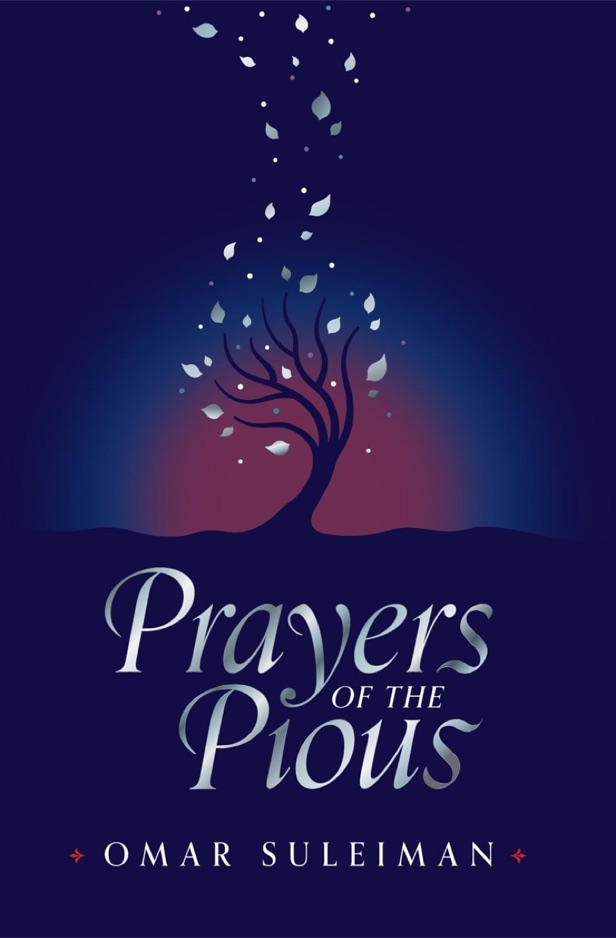
Cover of Prayers of the Pious by Omar Suleiman: a bare tree on a hill at night, its silver leaves rising into a dark blue sky

Our reading notes · Gardens of Du’a and the Heart

Prayers of the Pious

by Omar Suleiman · Kube Publishing, 2019

Thirty short chapters, each built around one du‘a: from Abu Bakr asking for a good ending and a woman on her rooftop at midnight, to ‘Umar weeping in tawaf, a Bedouin whose praise amazed the Prophet ﷺ and a scholar stuck in his books. Each chapter tells who made the du‘a and what it teaches about speaking to Allah. It began as a Ramadan series for Yaqeen Institute. Below are our notes on each chapter, the thirty du‘as in our own words, a prompt a day for writing your own, and links to the guide, Prophetic Footsteps, Athar and our other sites.

Publisher
Kube, 2019
Chapters
30, one du‘a each
Began as
A Yaqeen Ramadan series
Good for
A du‘a a day

Buy it from the publisher, Kube; Yaqeen Institute lists it among its books. These notes are written in our own words; the book’s text isn’t reproduced here, and the du‘as are our own renderings of the meaning. We checked the narrations it uses: where a report is weak, disputed or credited to the wrong person, we say so under “Read with care”.

الدعاء

The shape of the book

Thirty du‘as, in five groups

The book is not arranged by theme: each chapter is one day. We have grouped its thirty du‘as into five to make them easier to find: endings, forgiveness, talking to Him at night, trial, and knowledge and character.

الفصول

Chapter notes

Thirty du‘as, in brief

Pick a chapter for who made the du‘a, what it asks, the points worth remembering, anything to read with care, and pages to go deeper with on the guide, Prophetic Footsteps, Athar and our other sites.

  1. 1The Best of My Days
  2. 2His Door Is Always Open
  3. 3A Covenant with Allah
  4. 4The Enormity of My Sins vs. His Mercy
  5. 5The Hand That Kills Me
  6. 6The Highest Companionship
  7. 7O Allah, You Know That I Love You
  8. 8The Precious Prayer of a Mother
  9. 9The Greed of the Soul
  10. 10A Prayer More Powerful than the Wind
  11. 11Don’t Punish a Tongue of Praise
  12. 12Don’t Make an Example Out of Me
  13. 13A Station of Patience Without Trial
  14. 14My Evil vs. His Good
  15. 15The Prayer of a Tree
  16. 16A House on Fire
  17. 17His Prayer Amazed the Prophet
  18. 18A Reminder of My Illness
  19. 19Make Me Better
  20. 20Don’t Ask Allah for Patience
  21. 21Death After Fajr
  22. 22Your Perfect Light
  23. 23My Sincerity to Your Creation
  24. 24Your Beautiful Veil
  25. 25O Teacher of Abraham
  26. 26Your Greatness vs. My Insignificance
  27. 27My Love for You
  28. 28Record Me Among the Blessed
  29. 29Beautify My Character
  30. 30Show Us Guidance and Error

Chapter 1

The Best of My Days

Asking for a good ending

Abu Bakr as-Siddiq asks that the end of his life be its best part, his last deed his best deed, and his best day the day he meets Allah.

Key points

  • The early Muslims kept their finest du‘as for the end of their lives: the closer the meeting with Allah, the more they cared how they would arrive.
  • Abu Bakr died at sixty-three, the age at which the Prophet ﷺ died, and is buried beside him.
  • The du‘a covers three endings at once: the last stretch of life, the very last deed, and the Day of meeting Allah.
  • As he died he recited Yusuf’s prayer to die in submission and be joined with the righteous (12:101).

Think aboutIf today were the last stretch, which deed would you most want to be your last?

Write a fa’idah from this chapter

Chapter 2

His Door Is Always Open

Talking to Him at night

Habibah al-‘Adawiyyah, a devout woman of the early generations after the Companions, climbed to her roof at midnight to speak to Allah while the world slept.

Key points

  • Her words: the stars have set, eyes have closed, kings have shut their doors, and His door is still open; every lover is alone with the one they love, and she is alone with Him.
  • At dawn she would ask whether her night had been accepted, so she could rejoice, or rejected, so she could console herself, and promise never to leave His door either way.
  • Ibn Rajab pointed out how we wait at the doors of kings by day, yet sleep when the King of kings invites us by night.
  • We never know for sure if a du‘a was accepted. Her answer was neither to relax nor to give up, but to keep knocking, as Ibrahim and Isma‘il asked for acceptance after building the Ka‘bah (2:127).

Think aboutWhen did you last speak to Allah when no one else was awake?

Write a fa’idah from this chapter

Chapter 3

A Covenant with Allah

Talking to Him at night

‘Abdullah ibn Mas‘ud taught his students a du‘a that is a promise lodged with Allah, to be returned on the Day of Judgement.

Key points

  • It grew out of the verse that only those who have taken a covenant with the Most Merciful will be able to intercede (Maryam 19:87).
  • In it the servant admits that if Allah left him to himself he would drift towards harm and away from good, so he trusts nothing but His mercy.
  • The Prophet ﷺ said that whoever wants to hear the Qur’an as fresh as when it came down should listen to Ibn Mas‘ud’s recitation: this du‘a shows how he lived with a verse.
  • Allah is too generous to send back empty the hands raised to Him (at-Tirmidhi, Abu Dawud), so holding Him to His promise of mercy is good manners with Him, not presumption.

Read with care

  • Ibn Mas‘ud’s covenant. The book gives the covenant du‘a as Ibn Mas‘ud’s teaching, which is how al-Aswad reports it: al-Haythami found its narrators reliable except that one, al-Mas‘udi, became confused late in life. A version told as the Prophet’s ﷺ own words (Ahmad) has a weak chain (Ahmad Shakir).

Think aboutWhat has Allah promised that you could ask Him for, by His own promise, tonight?

Write a fa’idah from this chapter

Chapter 4

The Enormity of My Sins vs. His Mercy

Sins, cover and His mercy

At the end of his life the Umayyad caliph ‘Abd al-Malik ibn Marwan admitted that his sins were huge, and that a little of Allah’s pardon was bigger.

Key points

  • He is a mixed figure: real achievements alongside real wrongs. The book does not hide either, and the du‘a shows him facing his own record.
  • Al-Asma‘i is reported to have envied him for being able to say these words at the end.
  • The Prophet’s ﷺ du‘as for forgiveness admit our faults plainly; sayyid al-istighfar admits both His blessings and our sins (al-Bukhari).
  • Allah has a hundred parts of mercy and sent one into the world, keeping ninety-nine for the Hereafter (Muslim). No one enters Paradise by the size of their deeds, only by His mercy.
  • Hope at the end of life is good, but it does not excuse us from our duties while we still have time.

Read with care

  • ‘Abd al-Malik ibn Marwan. The book marks him “(ra)”, as it does nearly everyone it quotes, which can suggest a Companion. He was not one: he ruled as the fifth Umayyad caliph from 65 to 86 AH, and it was his governor al-Hajjaj who besieged Makkah and killed ‘Abdullah ibn az-Zubayr, the son in chapter 8.

Think aboutWhich sin have you been treating as too big for Allah’s pardon?

Write a fa’idah from this chapter

Chapter 5

The Hand That Kills Me

Asking for a good ending

‘Umar ibn al-Khattab asked to die as a martyr in the Prophet’s ﷺ city, and not at the hand of anyone who had ever prostrated to Allah.

Key points

  • When Uhud trembled beneath them, the Prophet ﷺ told it to be still, for on it were a prophet, a siddiq and two martyrs (al-Bukhari): ‘Umar knew how he would die.
  • Martyrdom in Madinah seemed unlikely while the Muslims ruled it; his daughter asked how it could happen, and he said Allah would bring it about if He willed.
  • He was stabbed while leading Fajr, and his first question was whether his killer was a Muslim. Told he was not, he praised Allah.
  • Whoever sincerely asks Allah for martyrdom reaches the rank of the martyrs even if he dies in his bed (Muslim), and the Prophet ﷺ promised to intercede for those who die in Madinah (at-Tirmidhi).
  • Every unlikely part of his du‘a was answered, and he is buried beside the Prophet ﷺ and Abu Bakr.

Think aboutWhat do you want the last scene of your life to look like? Have you asked for it?

Write a fa’idah from this chapter

Chapter 6

The Highest Companionship

Asking for a good ending

The Prophet ﷺ, walking with Abu Bakr and ‘Umar at night, stopped to listen to Ibn Mas‘ud’s du‘a and told him to ask, for he would be given.

Key points

  • Ibn Mas‘ud asked for faith that never turns back, delight that never runs out, and the company of the Prophet ﷺ in the highest garden of eternity.
  • The report is graded hasan or sahih by several scholars, among them al-Hakim and Shu‘ayb al-Arna’ut, and Ibn Mas‘ud said he never left it out of his prayers.
  • The Prophet ﷺ taught us to ask for al-Firdaws, the highest level of Paradise (al-Bukhari).
  • Offered anything he wished, Rabi‘ah ibn Ka‘b asked for the Prophet’s ﷺ company in Paradise (Muslim).

Think aboutIs your du‘a for Paradise as specific as Ibn Mas‘ud’s?

Write a fa’idah from this chapter

Chapter 7

O Allah, You Know That I Love You

Asking for a good ending

Hudhayfah ibn al-Yaman, who kept the Prophet’s ﷺ secret list of hypocrites, met death telling Allah that He knew how much he loved Him.

Key points

  • People asked the Prophet ﷺ about the good; Hudhayfah asked about the evil so he could avoid it (al-Bukhari).
  • He used to seek refuge from any morning or evening that would lead to the Fire, and at the end he asked Allah to bless their meeting (al-Haythami found the narrators reliable).
  • To say “You know I love You” at death takes a whole life of that love.
  • The Prophet ﷺ taught us to ask for Allah’s love, the love of those who love Him and the deeds that bring us to it (at-Tirmidhi, from Mu‘adh, hasan sahih).
  • Hope and fear are the two wings; love is the body that carries them.

Read with care

  • “To know your standing with Allah”. The book gives the saying “if you want to know your standing with Allah, look at His standing with you” as Imam Ahmad’s. It is reported as a hadith from Jabir through a single route (at-Tabarani, al-Mu‘jam al-Awsat). Al-Albani graded it weak, Ibn al-Jawzi listed one version among fabricated reports, and as-Sakhawi called it hasan. We did not find it credited to Imam Ahmad.

Think aboutWhat evidence of your love for Allah would you point to?

Write a fa’idah from this chapter

Chapter 8

The Precious Prayer of a Mother

Trial, ease and loss

Asma’ bint Abi Bakr, nearly a hundred years old, prayed over her son ‘Abdullah ibn az-Zubayr as he went out to face death in the siege of Makkah.

Key points

  • She asked Allah to have mercy on his long nights of prayer, his thirst in the midday heat of Makkah and Madinah, and his goodness to his father and to her.
  • Then she handed him over to Allah’s decree, accepted it, and asked to be rewarded as those who endure and give thanks are rewarded.
  • She had carried food to the Prophet ﷺ and her father during the hijrah; her son was the first child born to the emigrants after it, greeted with cries of Allahu akbar.
  • Ibn ‘Umar is reported to have noted that the men who killed him also shouted Allahu akbar. The same words can be carried by very different hearts.
  • There are few du‘as stronger than a mother’s, and the du‘a of the wronged is not turned back. She died soon after his body was brought down.

Read with care

  • How Ibn az-Zubayr died. The book calls it an assassination and him the first child born in Madinah. He was the first child born to the emigrants after the hijrah, at Quba’, and he was killed fighting in 73 AH when al-Hajjaj’s army besieged Makkah; his body was then hung up, where ‘Abdullah ibn ‘Umar stopped to greet him (Muslim 2545).

Think aboutWho prays for you like this, and when did you last thank them?

Write a fa’idah from this chapter

Chapter 9

The Greed of the Soul

Knowledge and character

‘Abd ar-Rahman ibn ‘Awf, among the richest and most generous Companions, spent whole circuits of the Ka‘bah asking for one thing: protection from the greed of his own soul.

Key points

  • The righteous feared the very faults they were furthest from, which shows how high they set their own standards.
  • He explained that if he were saved from his soul’s greed he would not steal, commit zina or do any evil: greed is the root of many sins.
  • Whoever is saved from the greed of his soul is among the successful (59:9 and 64:16), and the son of Adam would want a third valley of gold if he had two (al-Bukhari).
  • Greed is not only about money. A soul that always feels empty reaches for more of anything, and sin often fills a hole that should have been filled by Allah.

Think aboutWhere in your life do you feel “not enough” even when you have plenty?

Write a fa’idah from this chapter

Chapter 10

A Prayer More Powerful than the Wind

Trial, ease and loss

Caught in a storm at sea, the ascetic Ibrahim ibn Adham called on the Ever-Living, the Sustainer: having seen His might, he asked to see His pardon.

Key points

  • Adh-Dhahabi tells the story: the passengers were sure they would drown and begged him to pray; the sea calmed, and he went back to sleep.
  • He did not say “You have shown us Your punishment”. Hardship is a display of His power, and he asked to see the other side of Him.
  • Pardon (‘afw) is more than mercy: it is being left in safety, as if the danger had never come.
  • The scene recalls Yunus in the belly of the whale, where only Allah could reach him.

Think aboutRecall a time you saw Allah’s power up close. What would it mean to ask for His pardon in the same breath?

Write a fa’idah from this chapter

Chapter 11

Don’t Punish a Tongue of Praise

Knowledge and character

Ibn al-Jawzi, the great preacher of Baghdad, asked Allah not to punish a tongue that told people about Him, eyes that read the sciences pointing to Him, or a hand that wrote out His Messenger’s hadith.

Key points

  • He would tell his students to look for him in Paradise and, if he was missing, to ask Allah for him.
  • Behind the du‘a is fear of hypocrisy: a teacher who guides others to Paradise and is lost himself.
  • Asking Allah by your good deeds is taught in the Sunnah, as in the three men trapped in the cave (al-Bukhari), as long as it comes from humility and not from pride.

Think aboutWhich good deed of yours would you dare to mention to Allah, and which would you rather He forgot?

Write a fa’idah from this chapter

Chapter 12

Don’t Make an Example Out of Me

Knowledge and character

Mutarrif ibn ‘Abdillah asked not to become a warning to others, and to profit from his own knowledge more than anyone he taught.

Key points

  • It is the same fear as Ibn al-Jawzi’s from another side: being remembered as the scholar who did not live what he taught.
  • The Prophet ﷺ compared revelation to rain: some land soaks it up and grows things, some holds water for others, and some lets it run off (al-Bukhari).
  • The goal is to be the fertile land, not only a container that others drink from.
  • Allah hates that we say what we do not do (as-Saff 61:2-3).

Think aboutWhat do you tell others to do that you have not yet done yourself?

Write a fa’idah from this chapter

Chapter 13

A Station of Patience Without Trial

Trial, ease and loss

Sallam ibn Abi Muti‘ asked that if Allah had raised any righteous person to a rank through a trial, He raise him to it with ease instead.

Key points

  • When Allah loves a people He tests them (at-Tirmidhi; al-Albani graded it sahih), and on the Day of Judgement those spared will wish their skins had been cut with scissors when they see the reward of the afflicted (at-Tirmidhi 2402, which he called gharib; al-Munawi and al-Albani graded it hasan).
  • So is trial the only road to Allah’s love? The du‘a answers that He can give the rank without the hardship.
  • It matches the Qur’anic prayer for good in this world and good in the Hereafter (2:201).
  • Do not ask for trials. Ask for the reward with ease, and if a trial comes anyway, meet it gracefully.

Think aboutWhat reward are you hoping for that you could ask Allah for with ease?

Write a fa’idah from this chapter

Chapter 14

My Evil vs. His Good

Sins, cover and His mercy

An unnamed man in the masjid asked Allah not to keep from him the good that is with Allah because of the evil that is with him. Sufyan ath-Thawri overheard it and never forgot it.

Key points

  • Some of the most beautiful du‘as come from people no one remembers; even the great scholars learned from them.
  • His good comes down to us while our ingratitude and sins go up to Him, and the du‘a asks Him not to let the second cut off the first.
  • Sayyid al-istighfar says the same: I admit Your blessing upon me and I admit my sin (al-Bukhari).

Think aboutWhich blessing are you afraid a sin of yours might cost you?

Write a fa’idah from this chapter

Chapter 15

The Prayer of a Tree

Talking to Him at night

A man told the Prophet ﷺ he had dreamt of praying behind a tree that prostrated and asked Allah to write a reward for it, remove a sin by it, store it up and accept it as He accepted Dawud’s prostration.

Key points

  • Ibn ‘Abbas then heard the Prophet ﷺ say the same words in a prostration of recitation (at-Tirmidhi).
  • The prostration of Dawud is in Surah Sad (38:24).
  • A servant is closest to his Lord while prostrating, so make plenty of du‘a there (Muslim).
  • Sufyan ibn ‘Uyaynah said only people can make a complete sujud: forehead, hands, knees and toes on the ground in humility.

Read with care

  • The tree’s prostration. The book calls this report authentic. At-Tirmidhi (579, 3424) called it gharib; al-‘Uqayli said all its routes have some weakness, and al-Mundhiri and Shu‘ayb al-Arna’ut pointed to a narrator, al-Hasan ibn Muhammad, whom few vouched for; al-Albani graded it hasan. Its meaning, du‘a in sujud, is sound (Muslim 482).

Think aboutIn your next sujud, what will you ask for?

Write a fa’idah from this chapter

Chapter 16

A House on Fire

Trial, ease and loss

Two stories of houses that did not burn, about believing in the du‘a you make.

Key points

  • The book tells, crediting Abu Musa al-Ash‘ari, of a fire in a Basra neighbourhood: a man refused to rush home because he had sworn by his Lord his house would not burn, and it was the one left standing (see Read with care).
  • Some people are dishevelled and turned away from doors, yet if they swore by Allah He would fulfil it (Muslim). Status in this world is not status with Him.
  • The dhikr “In the name of Allah, with whose name nothing on earth or in heaven can harm” is said three times morning and evening (Abu Dawud 5088, at-Tirmidhi 3388, from ‘Uthman; Shu‘ayb al-Arna’ut graded it hasan).
  • Many recite beautiful du‘as without believing them. Trust (tawakkul) is what gives a du‘a its weight.

Read with care

  • Abu ad-Darda’ and the fire. The book ties Abu ad-Darda’s house to the “In the name of Allah” dhikr. In the report itself, the words he said were a different du‘a (“O Allah, You are my Lord, there is no god but You…”), and the report is weak: al-‘Iraqi graded it weak, Ibn al-Jawzi said it is not established, and Shu‘ayb al-Arna’ut and al-Albani found its chain weak. The “In the name of Allah” dhikr is sound in its own right (Abu Dawud 5088). We could not find a source for the story of the man in Basra; the hadith of the dishevelled man whose oath Allah fulfils is in Muslim (2622) from Abu Hurayrah.

Think aboutIs there a du‘a you say every day without expecting anything from it?

Write a fa’idah from this chapter

Chapter 17

His Prayer Amazed the Prophet

Talking to Him at night

A Bedouin praised Allah as the One no eye sees and nothing that happens can change, who knows how heavy the mountains are, what the seas hold, and every drop of rain and every leaf, and then asked for a good ending.

Key points

  • The Prophet ﷺ had someone wait with him until he finished, then asked who he was, and gave him a gift because of how beautifully he had praised Allah.
  • His request at the end is almost the same as Abu Bakr’s in chapter 1: the best of life at its end and the best day the day of meeting Him.
  • Praise before you ask. Allah cannot be over-praised, and you do not need to be a poet: sincerity makes the words.

Read with care

  • The Bedouin’s praise. Only at-Tabarani narrates this (al-Mu‘jam al-Awsat), by one route. Al-Haythami said its narrators are those of the Sahih apart from one, who is reliable; Ibn ‘Uthaymin rejected it as munkar and untrue. Scholars differ over it.

Think aboutBefore your next request, spend a minute describing to Allah what you know of Him.

Write a fa’idah from this chapter

Chapter 18

A Reminder of My Illness

Trial, ease and loss

Uways al-Qarani, a man of Yemen the Prophet ﷺ described but never met, was cured of a skin disease except for a coin-sized patch.

Key points

  • The Prophet ﷺ told the Companions that if they met Uways they should ask him to seek forgiveness for them; he was known for his devotion to his mother (Muslim 2542).
  • ‘Umar asked the caravans from Yemen about him every year until he found him.
  • Ibn ‘Abbas said he knew no deed that brings a person closer to Allah than kindness to their mother (al-Adab al-Mufrad 4, graded sahih by al-Albani).
  • The book reads the remaining patch as a reminder of the hardship and the closeness it brought: ask Allah to lift the trial, but not to take away its lesson.
  • The du‘a at the head of the chapter is the Prophet’s ﷺ own ruqyah for the sick: remove the harm, Lord of mankind, and heal, for You are the Healer (al-Bukhari, Muslim).

Read with care

  • Uways and the coin-sized patch. In Sahih Muslim (2542), Uways prayed and was cured except for a patch the size of a dinar or dirham. It does not say he asked for the patch to stay, or why: read the reminder as the book’s reflection. The du‘a at the head of the chapter is the Prophet’s ﷺ ruqyah for the sick (al-Bukhari 5743, Muslim 2191), not words recorded from Uways.

Think aboutWhich past hardship brought you closest to Allah, and how do you keep its lesson?

Write a fa’idah from this chapter

Chapter 19

Make Me Better

Sins, cover and His mercy

When people praised Abu Bakr, he asked Allah to make him better than they thought, forgive what they did not know, and not hold him to what they said.

Key points

  • Praise can harm as much as slander: it can make us content with an image instead of the truth.
  • Abu Bakr hid his good deeds so well that Companions kept discovering them by accident.
  • Ibn al-Jawzi said that when people admire you, they are admiring the cover Allah has put over your faults.
  • We hope people will speak well of us on the Day of Judgement; we just want what they say to be true.

Read with care

  • The angels and praise of the dead. The book says that when people speak well of someone at his burial, angels prod him and ask if he was really like that. The hadith (at-Tirmidhi 1003, which he called hasan; graded sahih by Darussalam and hasan by al-Albani) is about mourners wailing with exaggerated cries like “O my mountain! O my master!”, not ordinary good words about someone who has died.

Think aboutWhat do people praise you for that you know is not the whole story?

Write a fa’idah from this chapter

Chapter 20

Don’t Ask Allah for Patience

Trial, ease and loss

Mu‘adh ibn Jabal reports the Prophet ﷺ correcting three men’s du‘as; the book pictures him as a teacher walking between students.

Key points

  • One asked for the completion of blessing, and was told that part of it is entering Paradise and being saved from the Fire.
  • One called on Allah as Possessor of Majesty and Honour, and was told he had been answered, so he should ask.
  • One asked for patience, and was told he had asked for trial and should ask for ‘afiyah, wellbeing, instead.
  • Patience is a great gift (al-Bukhari), but in hardship the Sunnah is to ask Allah to lift it and to meet what comes with patience.

Read with care

  • The three du‘as in the masjid. Scholars differ over Mu‘adh’s report. At-Tirmidhi (3527) called it hasan, and al-‘Iraqi and Shu‘ayb al-Arna’ut found its chain hasan; al-Albani graded it weak, and Abu Nu‘aym noted that one narrator carries it alone.

Think aboutWhich hard thing have you been asking to endure that you could ask Allah to remove?

Write a fa’idah from this chapter

Chapter 21

Death After Fajr

Asking for a good ending

‘Abdullah ibn Sa‘d ibn Abi Sarh asked that his last deed be the Fajr prayer, and died as he finished it.

Key points

  • Life rises and dips, and no one knows whether death will come on a good day or a bad one; that is why the Prophet ﷺ taught us to ask Allah for a good ending.
  • For those who pray at night, Fajr is less the start of the day than the close of the night.
  • Those who have sat with the righteous at the end often notice that they seemed to know their time had come.
  • Asking to die in prayer, in sujud or after it, is asking to be taken in the state Allah loves most.

Think aboutWhich act of worship would you most like to be doing when your time comes?

Write a fa’idah from this chapter

Chapter 22

Your Perfect Light

Talking to Him at night

A long night-prayer du‘a of praise credited to ‘Ali ibn Abi Talib: Allah perfected His light and guided, was patient and pardoned, opened His hand and gave.

Key points

  • Each line ends in praise (laka al-hamd): every one of His gifts is met with thanks.
  • It moves from His qualities to His acts: He answers the desperate, lifts harm, heals the sick, accepts repentance and forgives.
  • It ends by admitting that no one’s words can repay His favours or count them.

Read with care

  • ‘Ali’s night du‘a. The chain crediting this du‘a to ‘Ali is broken: ash-Shawkani called it munqati‘, and al-Haythami noted a narrator who never met ‘Ali and another whom most scholars weakened. Read it as a beautiful du‘a attributed to him, not a firm report.

Think aboutWrite five lines of praise in the same pattern: what Allah did, and your thanks.

Write a fa’idah from this chapter

Chapter 23

My Sincerity to Your Creation

Sins, cover and His mercy

Asked by his students for a du‘a, the elderly Yusuf ibn al-Husayn ar-Razi said he had been sincere to people in public and false to himself in private, and asked to be forgiven the second for the sake of the first. He wept, and died.

Key points

  • Serving people can become an excuse to drop private devotion: “I do so much for others, a little slack in private is fine.”
  • That is why some of the greatest public figures had the greatest private flaws.
  • Only Allah knows whether his private failings were real or just the high standard he held himself to.

Think aboutWhat do you let slide in private because of the good you do in public?

Write a fa’idah from this chapter

Chapter 24

Your Beautiful Veil

Sins, cover and His mercy

Sufyan ibn ‘Uyaynah asked Allah to keep us under His gracious covering, and to make what it hides something He is pleased with.

Key points

  • It goes further than asking to have our sins hidden: it asks that what lies under the cover be worth hiding.
  • Al-Fudayl ibn ‘Iyad said the early Muslims hid their good deeds as carefully as their sins.
  • Excellence (ihsan) is when a hidden deed becomes a private matter between you and Allah, and you would rather no one else ever saw it.

Think aboutWhat good deed could you do this week that no one will ever know about?

Write a fa’idah from this chapter

Chapter 25

O Teacher of Abraham

Knowledge and character

Ibn al-Qayyim reports that his teacher Ibn Taymiyyah often said, when stuck on a question: O Teacher of Ibrahim, teach me.

Key points

  • Another version calls on the One who gave Sulayman understanding.
  • Understanding is a gift from Allah, not only a reward for effort, so ask for it when you are stuck.
  • Calling on Him as the Lord of a prophet reminds you that the Lord of Ibrahim, Zakariyya, Maryam, ‘Isa and Muhammad ﷺ is your Lord too.

Think aboutWhat are you stuck on right now? Ask the Teacher of Ibrahim before you open the next book.

Write a fa’idah from this chapter

Chapter 26

Your Greatness vs. My Insignificance

Sins, cover and His mercy

A man from a nation before ours said: You are You and I am me; You keep returning with forgiveness and I keep returning to sin, so forgive me. He fell into prostration and was forgiven.

Key points

  • Jabir reports it, and a voice answered him: you keep sinning and I keep forgiving, so I have forgiven you.
  • Du‘a does not need poetry. The simplest honest words can carry the greatest request.
  • Allah already knows what you will ask. The du‘a is for you: the connection, and the realisation that comes while asking.

Read with care

  • “You are You, and I am me”. The book calls this report authentic and has the man speaking as he walks; in the report he speaks as he looks at a skull. Scholars differ over whether it is the Prophet’s ﷺ words or Jabir’s own: Abu Nu‘aym and an-Nakhshabi judged the version stopping at Jabir the more correct, while al-Albani called the chain of the Prophet’s version good (as-Silsilah as-Sahihah 3231).

Think aboutSay your own version: who He is, who you are, and what you need.

Write a fa’idah from this chapter

Chapter 27

My Love for You

Trial, ease and loss

‘Umar ibn ‘Abd al-‘Aziz lost his son ‘Abd al-Malik, his brother Sahl and his trusted servant Muzahim, one after another, and told Allah it had only made him love Him more.

Key points

  • The Prophet ﷺ buried six of his seven children and his wife Khadijah, and still had so much to give.
  • ‘Umar did not pretend the loss did not hurt; the Prophet ﷺ wept for his children too.
  • He asked Allah to take him as well, without his having been negligent or careless. He died soon after, at about forty.
  • Turn pain into a request for the Hereafter rather than resentment of Allah.

Read with care

  • Sahl and Muzahim. The book calls all three of ‘Umar ibn ‘Abd al-‘Aziz’s dead his children. ‘Abd al-Malik was his son; Sahl was his brother, and Muzahim his freed servant and trusted aide. They died within a short time of one another.

Think aboutHas a loss pushed you away from Allah or towards Him? What would it take to turn it towards Him?

Write a fa’idah from this chapter

Chapter 28

Record Me Among the Blessed

Asking for a good ending

Abu ‘Uthman an-Nahdi saw ‘Umar ibn al-Khattab weeping in tawaf, asking that if he had been written among the wretched, Allah erase it and write him among the blessed.

Key points

  • It rests on the verse that Allah erases and confirms what He wills, and with Him is the Mother of the Book (ar-Ra‘d 13:39).
  • Each person’s provision, lifespan, deeds and whether they will be wretched or blessed are written while they are in the womb (al-Bukhari).
  • Despite being promised Paradise, ‘Umar never took it for granted.
  • The practical question: if your book of deeds were handed to you today, would it come in your right hand?

Read with care

  • Abu ‘Uthman an-Nahdi. The book names the narrator Abu ‘Uthman al-Hindi; he is Abu ‘Uthman an-Nahdi. The du‘a is reported from ‘Umar and also from Ibn Mas‘ud: al-Haythami noted that the chain to Ibn Mas‘ud is broken, and Siddiq Hasan Khan called it established from a group of Companions.

Think aboutWhat would you need to wipe from your record before you would be glad to show it?

Write a fa’idah from this chapter

Chapter 29

Beautify My Character

Knowledge and character

Umm ad-Darda’ watched her husband Abu ad-Darda’ spend a whole night asking for one thing: as You made my form beautiful, make my character beautiful.

Key points

  • It is the Prophet’s ﷺ own du‘a (Ibn Hibban, graded sahih by al-Albani).
  • Asked why, he said good character makes people pray for you until those prayers carry you into Paradise, and bad character makes them pray against you.
  • Your outer form (khalq) and inner character (khuluq) share a root: imagine holding your character up to a mirror.
  • Abu Dujanah, dying, is said to have placed his hope in guarding his tongue from hurting anyone (see Read with care).

Read with care

  • Abu Dujanah’s last words. The report usually cited for his last words (Ibn Sa‘d; adh-Dhahabi, Siyar) names two deeds he trusted most: not speaking about what did not concern him, and keeping his heart free of ill will towards Muslims. The book’s version, that he never used his tongue to hurt anyone, is close in meaning but not the same words.

Think aboutWho might be praying against you because of something you said? What could you do to put it right?

Write a fa’idah from this chapter

Chapter 30

Show Us Guidance and Error

Knowledge and character

The book ends with a du‘a for guidance: to see truth and falsehood for what they are, and to be helped to follow the one and avoid the other.

Key points

  • We ask Allah for guidance at least seventeen times a day in al-Fatihah; whoever asks sincerely will not be led astray.
  • Something can feel right without being guidance, and people offer conflicting advice on how to get close to Allah: hence this du‘a.
  • Ask to understand His message properly, follow the Sunnah properly, and see your own faults.
  • The book closes with a prayer journal: write your own du‘as in the pattern of the ones you have read.

Read with care

  • “Show me the truth as truth”. This du‘a is widely quoted, but Taj ad-Din as-Subki said he found no chain for it as a hadith, and we did not find it reported from ‘Umar as the book says. Its meaning is sound, and the prayer for guidance in al-Fatihah is part of every rak‘ah.

Think aboutWhere do you most need to see the truth clearly right now?

Write a fa’idah from this chapter

العمل

Put it into practice

The thirty du‘as, and your own

Every du‘a from the book in our own words, and a prompt a day for writing your own in the same spirit, as the book’s closing prayer journal invites.

The thirty du‘as

The meaning of each in our own words, with who made it or where it is narrated. Learn the Arabic from a teacher or a trusted collection, and see “Read with care” for the ones whose reports are weak or disputed.

  • Abu Bakr as-Siddiq

    O Allah, make the end of my life its best part, my final deed my best deed, and the day I meet You my best day.

    Abu Bakr; as-Sakhawi notes several routesCh. 1

  • Habibah al-‘Adawiyyah, at midnight

    My God, the stars have gone down and the eyes have closed in sleep; kings have shut their gates, but Your door is open. Every lover has slipped away with the one they love, and this is my place, before You.

    Habibah al-‘AdawiyyahCh. 2

  • ‘Abdullah ibn Mas‘ud

    O Allah, Maker of the heavens and the earth, who knows what is hidden and what is witnessed: I give You my word in this life that if You leave me to myself I will drift towards harm and away from good, and I trust only in Your mercy. Keep it for me as a promise You will honour on the Day of Resurrection; You never break Your promise.

    Ibn Mas‘ud (see Read with care)Ch. 3

  • ‘Abd al-Malik ibn Marwan

    My Lord, my sins are great, and a little of Your pardon is greater. O Allah, wipe out my great sins with a little of Your pardon.

    ‘Abd al-Malik ibn MarwanCh. 4

  • ‘Umar ibn al-Khattab

    O Allah, grant me martyrdom in Your path and let me die in the city of Your Messenger ﷺ; and do not let me be killed by anyone who has ever bowed down to You, who could argue it against me on the Day of Resurrection.

    al-Bukhari 1890; al-Busiri graded the second part sahihCh. 5

  • ‘Abdullah ibn Mas‘ud

    O Allah, I ask You for faith that never turns back, delight that never runs out, and the company of Your Prophet Muhammad ﷺ in the highest garden of eternity.

    Ahmad, Ibn Hibban, al-HakimCh. 6

  • Hudhayfah ibn al-Yaman, at death

    I seek refuge in You from a morning and an evening that end in the Fire. This is the last hour I have in the world: O Allah, You know the love I hold for You, so put blessing in my meeting with You.

    Hudhayfah; al-Haythami found the narrators reliableCh. 7

  • Asma’ bint Abi Bakr, for her son

    O Allah, have mercy on his long standing through the long nights, his weeping, his thirst in the midday heat of Madinah and Makkah, and how he honoured his father and me. I have handed him over to Your decree and accepted what You decided, so reward me as You reward those who endure and give thanks.

    Asma’ bint Abi BakrCh. 8

  • ‘Abd ar-Rahman ibn ‘Awf, in tawaf

    O Allah, shield me from the stinginess of my own self.

    ‘Abd ar-Rahman ibn ‘AwfCh. 9

  • Ibrahim ibn Adham, in a storm

    O Ever-Living, O Sustainer of all: You have let us witness Your might; let us now witness Your pardon.

    Ibrahim ibn Adham, in adh-DhahabiCh. 10

  • Ibn al-Jawzi

    My God, spare from Your punishment a tongue that spoke of You, eyes that read the sciences that lead to You, and a hand that copied out Your Messenger’s hadith. By Your might, keep me out of the Fire.

    Ibn al-JawziCh. 11

  • Mutarrif ibn ‘Abdillah

    O Allah, do not turn me into a warning for other people, and let no one gain more than I do from the knowledge You gave me.

    Mutarrif ibn ‘AbdillahCh. 12

  • Sallam ibn Abi Muti‘

    O Allah, if You have raised any of the righteous to a rank through a trial, raise me to it in wellbeing.

    Sallam ibn Abi Muti‘Ch. 13

  • A stranger, overheard by Sufyan ath-Thawri

    O Allah, do not keep the good that is with You from me because of the evil that is with me.

    reported by Sufyan ath-ThawriCh. 14

  • In a prostration of recitation

    O Allah, record a reward for me with You because of it, lift a sin from me through it, keep it with You as savings for me, and receive it from me as You received it from Your servant Dawud.

    at-Tirmidhi 579 (see Read with care)Ch. 15

  • Morning and evening, three times

    In the name of Allah, with whose name nothing on earth or in the heavens can cause harm; He is the All-Hearing, the All-Knowing.

    Abu Dawud 5088, at-Tirmidhi 3388Ch. 16

  • A Bedouin, overheard by the Prophet ﷺ

    O You whom no eye can see and no guess can reach, whom no one can fully describe and nothing that happens can alter; You know how heavy the mountains are, how much water the seas hold, and how many drops of rain and leaves there are: let my life be best at its close, my deeds best at their seal, and my best day the day I stand before You.

    at-Tabarani (see Read with care)Ch. 17

  • For the sick

    Take away the harm, Lord of mankind, and heal, for You are the Healer; there is no healing but Yours, a healing that leaves no illness behind.

    al-Bukhari 5743, Muslim 2191Ch. 18

  • Abu Bakr, when praised

    O Allah, make me better than people’s opinion of me, pardon the faults they cannot see, and do not take me to task for their words.

    Abu BakrCh. 19

  • From the Prophet’s ﷺ correction

    O Possessor of Majesty and Honour. (Then ask: he said whoever calls Him this has been answered.)

    at-Tirmidhi 3527 (see Read with care)Ch. 20

  • ‘Abdullah ibn Sa‘d ibn Abi Sarh

    O Allah, make the Fajr prayer my last deed.

    Ibn Abi SarhCh. 21

  • Credited to ‘Ali, at night

    You perfected Your light and gave guidance; praise belongs to You. You were vast in patience and pardoned; praise belongs to You. You opened Your hand and gave; praise belongs to You.

    attributed to ‘Ali (see Read with care)Ch. 22

  • Yusuf ibn al-Husayn ar-Razi

    O Allah, I was true to Your creation in public and false to myself in private; forgive me the falseness for the sake of the truthfulness.

    Yusuf ibn al-HusaynCh. 23

  • Sufyan ibn ‘Uyaynah

    O Allah, shelter us under Your gracious covering, and let whatever lies hidden beneath it be something You are pleased with.

    Sufyan ibn ‘UyaynahCh. 24

  • Ibn Taymiyyah, when stuck

    O Teacher of Ibrahim, teach me.

    Ibn al-Qayyim, from his teacherCh. 25

  • A man of an earlier nation

    O Allah, You are You and I am me: You keep returning with forgiveness and I keep returning to sin, so forgive me.

    Jabir (see Read with care)Ch. 26

  • ‘Umar ibn ‘Abd al-‘Aziz, after his losses

    O Allah, You have taken Sahl, ‘Abd al-Malik and Muzahim from me, and losing them has only deepened my love for You and my longing for what You hold. So take me to You before I squander anything or fall short.

    ‘Umar ibn ‘Abd al-‘AzizCh. 27

  • ‘Umar ibn al-Khattab, in tawaf

    O Allah, if You have written me among the blessed, keep me there; and if You have written me among the sinful and wretched, erase it and write me among the blessed, for You erase and confirm what You will, and with You is the Mother of the Book.

    Abu ‘Uthman an-Nahdi, from ‘UmarCh. 28

  • Abu ad-Darda’, all night

    O Allah, as You have made my form beautiful, make my character beautiful.

    the Prophet’s ﷺ du‘a: Ibn Hibban, AhmadCh. 29

  • For guidance

    O Allah, let me see what is true for what it is and give me the means to follow it, and let me see what is false for what it is and give me the means to keep away from it.
    widely quoted (see Read with care)Ch. 30

More du‘as for every moment of the day are in the How to Muslim guide.

A prompt a day for your own du‘a

One from each chapter. Take one a day for a month, in Ramadan or any other, and tick it off once you have made that du‘a in your own words. You can keep what you write in your fawa’id notebook at the bottom of the page.

0 of 30 done

Your ticks are kept in this browser only.

  1. Your last deed, your last day, your meeting with Him.

    Ch. 1: The Best of My Days

  2. Even two rak‘ahs and a few honest words.

    Ch. 2: His Door Is Always Open

  3. Name the promise, then ask.

    Ch. 3: A Covenant with Allah

  4. Admit it plainly; do not despair.

    Ch. 4: The Enormity of My Sins vs. His Mercy

  5. Sincerity can reach it even in your bed.

    Ch. 5: The Hand That Kills Me

  6. Be as specific as Ibn Mas‘ud.

    Ch. 6: The Highest Companionship

  7. And ask for His love and the deeds that bring it.

    Ch. 7: O Allah, You Know That I Love You

  8. And thank whoever prays for you.

    Ch. 8: The Precious Prayer of a Mother

  9. Name the “more” you keep reaching for.

    Ch. 9: The Greed of the Soul

  10. You have seen His power; ask for His safety.

    Ch. 10: A Prayer More Powerful than the Wind

  11. And not to let you be lost while guiding others.

    Ch. 11: Don’t Punish a Tongue of Praise

  12. So that you benefit from it first.

    Ch. 12: Don’t Make an Example Out of Me

  13. Ask for good in this world and the next.

    Ch. 13: A Station of Patience Without Trial

  14. And admit both His blessing and your sin.

    Ch. 14: My Evil vs. His Good

  15. You are closest to Him there.

    Ch. 15: The Prayer of a Tree

  16. Bismillah, three times, with trust.

    Ch. 16: A House on Fire

  17. Mountains, seas, raindrops, leaves.

    Ch. 17: His Prayer Amazed the Prophet

  18. From a hardship you are in, or one that passed.

    Ch. 18: A Reminder of My Illness

  19. And pardoned for the faults they cannot see.

    Ch. 19: Make Me Better

  20. And for patience with whatever comes.

    Ch. 20: Don’t Ask Allah for Patience

  21. And ask for a good ending in it.

    Ch. 21: Death After Fajr

  22. What He did, and your thanks.

    Ch. 22: Your Perfect Light

  23. That your public good has crowded out.

    Ch. 23: My Sincerity to Your Creation

  24. Under His beautiful veil.

    Ch. 24: Your Beautiful Veil

  25. Before you open the next book.

    Ch. 25: O Teacher of Abraham

  26. And what you need.

    Ch. 26: Your Greatness vs. My Insignificance

  27. Ask that it increase your love for Him.

    Ch. 27: My Love for You

  28. And wipe one thing from your record today.

    Ch. 28: Record Me Among the Blessed

  29. And mend one word that hurt someone.

    Ch. 29: Beautify My Character

  30. On the question you are most unsure of.

    Ch. 30: Show Us Guidance and Error

المزيد

Keep going

Read with care, then read on

A few narrations and details in the book that need care, and our sites that go deeper.

Details to read with care

The book is gentle and moving, but it calls a few disputed reports authentic, ties one story to the wrong du‘a, and gets a few names and relationships wrong. Here they are, chapter by chapter, with the gradings of the scholars who checked them.

  • Chapter 3

    Ibn Mas‘ud’s covenant

    The book gives the covenant du‘a as Ibn Mas‘ud’s teaching, which is how al-Aswad reports it: al-Haythami found its narrators reliable except that one, al-Mas‘udi, became confused late in life. A version told as the Prophet’s ﷺ own words (Ahmad) has a weak chain (Ahmad Shakir).

    See our page
  • Chapter 4

    ‘Abd al-Malik ibn Marwan

    The book marks him “(ra)”, as it does nearly everyone it quotes, which can suggest a Companion. He was not one: he ruled as the fifth Umayyad caliph from 65 to 86 AH, and it was his governor al-Hajjaj who besieged Makkah and killed ‘Abdullah ibn az-Zubayr, the son in chapter 8.

    See our page
  • Chapter 7

    “To know your standing with Allah”

    The book gives the saying “if you want to know your standing with Allah, look at His standing with you” as Imam Ahmad’s. It is reported as a hadith from Jabir through a single route (at-Tabarani, al-Mu‘jam al-Awsat). Al-Albani graded it weak, Ibn al-Jawzi listed one version among fabricated reports, and as-Sakhawi called it hasan. We did not find it credited to Imam Ahmad.

    See our page
  • Chapter 8

    How Ibn az-Zubayr died

    The book calls it an assassination and him the first child born in Madinah. He was the first child born to the emigrants after the hijrah, at Quba’, and he was killed fighting in 73 AH when al-Hajjaj’s army besieged Makkah; his body was then hung up, where ‘Abdullah ibn ‘Umar stopped to greet him (Muslim 2545).

    See our page
  • Chapter 15

    The tree’s prostration

    The book calls this report authentic. At-Tirmidhi (579, 3424) called it gharib; al-‘Uqayli said all its routes have some weakness, and al-Mundhiri and Shu‘ayb al-Arna’ut pointed to a narrator, al-Hasan ibn Muhammad, whom few vouched for; al-Albani graded it hasan. Its meaning, du‘a in sujud, is sound (Muslim 482).

  • Chapter 16

    Abu ad-Darda’ and the fire

    The book ties Abu ad-Darda’s house to the “In the name of Allah” dhikr. In the report itself, the words he said were a different du‘a (“O Allah, You are my Lord, there is no god but You…”), and the report is weak: al-‘Iraqi graded it weak, Ibn al-Jawzi said it is not established, and Shu‘ayb al-Arna’ut and al-Albani found its chain weak. The “In the name of Allah” dhikr is sound in its own right (Abu Dawud 5088). We could not find a source for the story of the man in Basra; the hadith of the dishevelled man whose oath Allah fulfils is in Muslim (2622) from Abu Hurayrah.

    See our page
  • Chapter 17

    The Bedouin’s praise

    Only at-Tabarani narrates this (al-Mu‘jam al-Awsat), by one route. Al-Haythami said its narrators are those of the Sahih apart from one, who is reliable; Ibn ‘Uthaymin rejected it as munkar and untrue. Scholars differ over it.

  • Chapter 18

    Uways and the coin-sized patch

    In Sahih Muslim (2542), Uways prayed and was cured except for a patch the size of a dinar or dirham. It does not say he asked for the patch to stay, or why: read the reminder as the book’s reflection. The du‘a at the head of the chapter is the Prophet’s ﷺ ruqyah for the sick (al-Bukhari 5743, Muslim 2191), not words recorded from Uways.

    See our page
  • Chapter 19

    The angels and praise of the dead

    The book says that when people speak well of someone at his burial, angels prod him and ask if he was really like that. The hadith (at-Tirmidhi 1003, which he called hasan; graded sahih by Darussalam and hasan by al-Albani) is about mourners wailing with exaggerated cries like “O my mountain! O my master!”, not ordinary good words about someone who has died.

  • Chapter 20

    The three du‘as in the masjid

    Scholars differ over Mu‘adh’s report. At-Tirmidhi (3527) called it hasan, and al-‘Iraqi and Shu‘ayb al-Arna’ut found its chain hasan; al-Albani graded it weak, and Abu Nu‘aym noted that one narrator carries it alone.

    See our page
  • Chapter 22

    ‘Ali’s night du‘a

    The chain crediting this du‘a to ‘Ali is broken: ash-Shawkani called it munqati‘, and al-Haythami noted a narrator who never met ‘Ali and another whom most scholars weakened. Read it as a beautiful du‘a attributed to him, not a firm report.

  • Chapter 26

    “You are You, and I am me”

    The book calls this report authentic and has the man speaking as he walks; in the report he speaks as he looks at a skull. Scholars differ over whether it is the Prophet’s ﷺ words or Jabir’s own: Abu Nu‘aym and an-Nakhshabi judged the version stopping at Jabir the more correct, while al-Albani called the chain of the Prophet’s version good (as-Silsilah as-Sahihah 3231).

    See our page
  • Chapter 27

    Sahl and Muzahim

    The book calls all three of ‘Umar ibn ‘Abd al-‘Aziz’s dead his children. ‘Abd al-Malik was his son; Sahl was his brother, and Muzahim his freed servant and trusted aide. They died within a short time of one another.

    See our page
  • Chapter 28

    Abu ‘Uthman an-Nahdi

    The book names the narrator Abu ‘Uthman al-Hindi; he is Abu ‘Uthman an-Nahdi. The du‘a is reported from ‘Umar and also from Ibn Mas‘ud: al-Haythami noted that the chain to Ibn Mas‘ud is broken, and Siddiq Hasan Khan called it established from a group of Companions.

    See our page
  • Chapter 29

    Abu Dujanah’s last words

    The report usually cited for his last words (Ibn Sa‘d; adh-Dhahabi, Siyar) names two deeds he trusted most: not speaking about what did not concern him, and keeping his heart free of ill will towards Muslims. The book’s version, that he never used his tongue to hurt anyone, is close in meaning but not the same words.

    See our page
  • Chapter 30

    “Show me the truth as truth”

    This du‘a is widely quoted, but Taj ad-Din as-Subki said he found no chain for it as a hadith, and we did not find it reported from ‘Umar as the book says. Its meaning is sound, and the prayer for guidance in al-Fatihah is part of every rak‘ah.

    See our page

فوائد

Your fawa’id

Write down what this book taught you

Each fa’idah is saved in your Rawdah notebook under Prayers of the Pious, with the chapter it came from. Your notebook page keeps them all, book by book.

Notes are kept in this browser only. Download a copy from your notebook page to keep them safe.

From this book0 notes

    Nothing yet. Your first fa’idah from this book will appear here.

    Open your whole notebook