روضة RawdahLibrary of How to Muslim
  1. Rawdah
  2. Seerah & History
  3. Meeting Muhammad
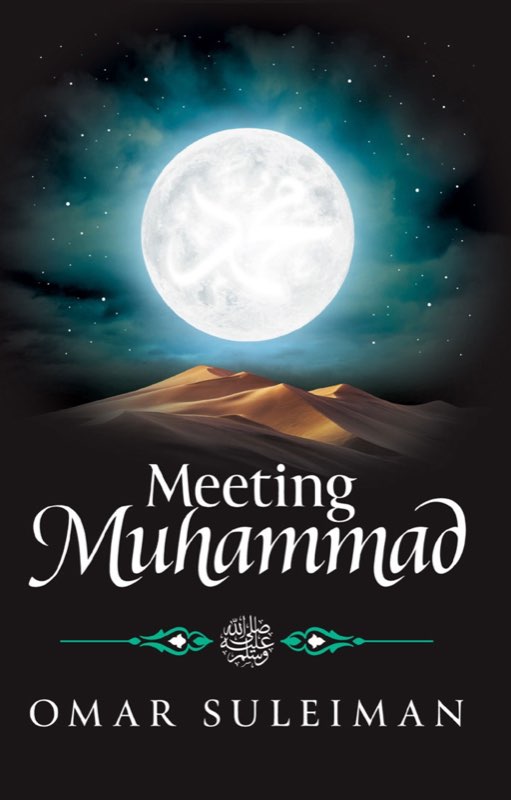
Cover of Meeting Muhammad by Omar Suleiman: a full moon over desert dunes

Our reading notes · Gardens of Seerah and the Heart

Meeting Muhammad ﷺ

by Omar Suleiman · Kube Publishing, 2022

Thirty short chapters that place you beside the Prophet ﷺ: at his Friday sermon, behind him in prayer, at your own table, in his hardest days and at his death. Each gathers the narrations about one setting, so you come away knowing how he would have treated you. The chapters began as talks given in Ramadan during the pandemic, which is why a few mention Ramadan and closed masjids. Below are our notes on each chapter, his habits as a checklist, the du‘as from the book, and links to Prophetic Footsteps and our other sites for the Companions and events it mentions.

Publisher
Kube, 2022
Chapters
30, short
Royalties
To Yaqeen Institute
Good for
Anyone, any age

The author gives all the book’s royalties to Yaqeen Institute, which lists it among its books, so buying it from the publisher or on Amazon supports their work. These notes are written in our own words; the book’s text isn’t reproduced here. Where a report needs care, we say so under “Read with care”.

لقاؤه

The shape of the book

Thirty scenes, in six groups

The book runs from seeing him for the first time to longing for him today. We have grouped its thirty chapters into six to make them easier to find.

الفصول

Chapter notes

Thirty chapters, in brief

Pick a chapter for the scene it describes, the points worth remembering, anything to read with care, and the Companions, events and pages to go deeper with on Prophetic Footsteps, the guide and our other sites.

  1. 1His Appearance
  2. 2His Blessed Demeanour
  3. 3Attending His Khutbah
  4. 4Praying Behind Him
  5. 5Sitting in His Circle
  6. 6With Him in the Trenches
  7. 7Celebrating With Him
  8. 8When He Played With Your Kids
  9. 9Inviting Him to Your Home
  10. 10When He Joked With You
  11. 11When You Thought You Were His Best Friend
  12. 12When You Needed His Help
  13. 13When No One Else Noticed
  14. 14When He Was Angry
  15. 15When He Saw Oppression
  16. 16When You Thought He Cursed You
  17. 17If You Claimed He Hurt You
  18. 18When You Sought His Forgiveness
  19. 19When You Became Embarrassed
  20. 20When You Noticed His Poverty
  21. 21When He Lost His Child
  22. 22When He Received Revelation
  23. 23When He Performed Miracles
  24. 24When Jibril Met Him
  25. 25Late Night Incidents With Him
  26. 26When He Listened to Your Night Prayers
  27. 27The Most Amazing Thing About Him
  28. 28When He Prayed for Us
  29. 29The Pain of His Death
  30. 30Longing for His Presence

Chapter 1

His Appearance

Seeing him

What it was like simply to look at him: the descriptions the Companions left of his face, his build and his smile.

Key points

  • Every prophet was given a beautiful face and voice, and his character was more beautiful still. ‘Abdullah ibn Salam, a rabbi of Madinah, knew from his face alone that he was no liar.
  • Companions compared his face with the full moon and found it brighter. He was of middle height, with a bright complexion, wavy hair to his ears or shoulders, and a thick beard with fewer than twenty white hairs at his death.
  • The descriptions go into detail: dark eyes with long lashes, evenly spaced teeth kept clean with the siwak, a clear voice, broad shoulders, soft hands and a pleasant scent.
  • He was always smiling, though he carried constant concern for his ummah: he smiled at people as a charity and wept for them before his Lord.

Read with care

  • The finer details of his description. The main features (middle height, a bright complexion, wavy hair, a thick beard, fewer than twenty white hairs) are in al-Bukhari and Muslim. Some finer details come from longer descriptions, such as Umm Ma‘bad’s and Hind ibn Abi Halah’s in at-Tirmidhi’s Shama’il, whose chains hadith scholars debate.

Think aboutHe smiled for people and wept for them in private. Which of the two do you find harder?

Write a fa’idah from this chapter

Chapter 2

His Blessed Demeanour

Seeing him

How he carried himself: his modesty, smile and laughter, silence, gaze, attention to whoever spoke to him, his walk and the way he sat.

Key points

  • He was the shyest of people, and called modesty the distinctive trait of Islam.
  • He smiled constantly, and his laugh was a wide smile that showed his back teeth, often at news of Allah’s mercy.
  • He was often silent, spoke slowly and clearly, repeated himself so people understood, and lowered his gaze out of humility.
  • He turned his whole body toward whoever spoke to him and never let go of a handshake first. He once took off a ring because glancing at it distracted him from his Companions, a lesson for our phones.
  • He pointed with his whole hand rather than a finger, walked briskly with purpose, and sat up to eat as a servant rather than reclining like a king.

Think aboutIn your next conversation, what would it take to give someone your whole attention, phone and all?

Write a fa’idah from this chapter

Chapter 3

Attending His Khutbah

In his masjid

Friday in his masjid: how he prepared, where the Companions sat, and how he preached.

Key points

  • He treated Friday as a weekly Eid: ghusl, his best perfume, the siwak, and the best clothes he kept for Jumu‘ah and for receiving delegations.
  • Sit close to the imam, but don’t step over people: he told one latecomer who did to sit down.
  • He noticed everything from the pulpit: a man standing in the sun, a poor man who sat without praying, and his grandsons tripping over their red shirts, whom he came down to carry.
  • He recited Surah Qaf so often that a woman learnt it from his sermons. He spoke from the heart, with gestures and repetition, about death and the grave, and the Companions sat as still as if birds were on their heads.

Think aboutWhat would change in how you prepare for Jumu‘ah if you were going to hear him?

Write a fa’idah from this chapter

Chapter 4

Praying Behind Him

In his masjid

His recitation and his prayer: short and gentle when he led others, long and tearful when he prayed alone at night.

Key points

  • He recited slowly, verse by verse, and wept quietly with a sound in his chest like a pot coming to the boil. When Ibn Mas‘ud recited an-Nisa’ to him, he stopped him at verse 41 with tears running.
  • Leading the obligatory prayers, he kept them short for the old, the sick and parents, and shorter still when he heard a baby cry.
  • He stayed in prostration while al-Hasan rode on his back, and carried his granddaughter Umamah while he prayed.
  • At night it was another prayer: Hudhayfah saw him recite al-Baqarah, an-Nisa’ and Al ‘Imran in one rak‘ah, with bowing and prostration nearly as long.
  • He stopped leading the Ramadan night prayer in congregation so that it wouldn’t become obligatory, and taught that voluntary prayer is best at home.

Think aboutWhen did a prayer of yours last feel like an ascent rather than a task?

Write a fa’idah from this chapter

Chapter 5

Sitting in His Circle

In his masjid

The morning gatherings after Fajr: who sat with him, what they talked about, and how he made each person feel.

Key points

  • After Fajr he stayed in dhikr until after sunrise, prayed Duha, then joined the circles in the masjid, taking whatever seat was free.
  • He gave everyone in a gathering an equal share of his attention, disliked people standing for him, and sought forgiveness at least seventy times in a sitting.
  • The talk wasn’t only of the Hereafter: they recited poetry, remembered the old days and laughed, and he smiled with them. He spoke with the young men about marriage and asked who had seen a good dream.
  • When the women asked for time of their own, he gave them a day. The first thing he taught them was that parents who lose children will find them a shield on the Day of Judgement.

Think aboutIn the gatherings you lead or join, who usually gets the least attention?

Write a fa’idah from this chapter

Chapter 6

With Him in the Trenches

Life alongside him

Leadership as service in hard times: building the masjids, digging the trench, and his courage and ethics in battle.

Key points

  • He arrived in Quba so plainly that people couldn’t tell him from Abu Bakr, then carried bricks for the masjids of Quba and Madinah like everyone else.
  • At the Trench he dug the share of ten men, covered in dust, with two stones tied to his stomach against hunger, praying for the Ansar and the Muhajirun.
  • Before a battle he prayed through the night, then gave the rules first: no killing women, children, the old or the sick, no mutilation, and no harm to monks, trees or crops.
  • He was always nearest the enemy and held firm at Uhud and Hunayn, yet killed only one man in all his battles. When a noise in the night alarmed Madinah, he had already ridden out alone to check it.

Read with care

  • Who said he never struck anyone. The book gives this to ‘Ali. The report that he never struck anyone with his hand, neither a woman nor a servant, except in battle for Allah’s sake, is ‘A’ishah’s, in Sahih Muslim.

Think aboutWhere could you work alongside people this week rather than direct them?

Write a fa’idah from this chapter

Chapter 7

Celebrating With Him

Life alongside him

Eid and weddings in his time: simple, generous and open to everyone.

Key points

  • On Eid he wore a striped Yemeni cloak, called everyone out to the prayer, greeted people, and ended his sermon urging charity. Zakat al-Fitr and the sacrifice let the poor celebrate too.
  • He let two girls sing on Eid, and stood with ‘A’ishah, her cheek against his shoulder, watching the Abyssinians’ display with spears for as long as she liked.
  • He took one road to the prayer and another home, to greet more people and meet those in need.
  • Wedding feasts were simple, sometimes only bread or dates, sometimes a meal everyone brought a dish to. The worst feast, he said, is the one that invites the rich and leaves out the poor.

Think aboutWho is missing from your celebrations, and how could you invite them?

Write a fa’idah from this chapter

Chapter 8

When He Played With Your Kids

Life alongside him

His mercy and play with children, other people’s children and orphans included.

Key points

  • He said that whoever shows no mercy to the young isn’t one of us. Anas never saw anyone more merciful to children.
  • He asked little Abu ‘Umayr after his pet bird, did tahnik for the Companions’ newborns and often named them, and gave the first fruit of each harvest to a child.
  • He kissed and carried al-Hasan and al-Husayn, asked Allah to love whoever loves them, and gathered his grandchildren under his cloak to pray for them.
  • He gave orphans special care, having grown up as one himself: keeping them close, defending them and bringing them home.

Read with care

  • “The best house”. The hadith that the best house is one where an orphan is treated well (Ibn Majah) has a weak chain. Care for orphans rests on sound hadith all the same: “I and the one who looks after an orphan will be like this in Paradise” (al-Bukhari).

Think aboutWhich child in your life would light up if you asked about their own “little bird”?

Write a fa’idah from this chapter

Chapter 9

Inviting Him to Your Home

Life alongside him

What it would be like to host him: what he ate, how he treated food and his hosts, and the blessing he left behind.

Key points

  • He accepted any invitation, even to a sheep’s foot and even from slaves, and he visited the sick and rode a donkey.
  • He liked simple food: bread with oil, vinegar or honey, sweet cold drinks, a shoulder of lamb. He never criticised food and thanked whoever served it.
  • When his Persian neighbour invited him, he asked three times whether ‘A’ishah could come too, and went only when she could.
  • He brought the poor of the Suffah or orphans along, and prayed in his hosts’ homes so the spot became their place of prayer, as he did with Anas, Umm Sulaym and an orphan on a worn mat.

Think aboutWhom have you not invited because you thought your table wasn’t good enough?

Write a fa’idah from this chapter

Chapter 10

When He Joked With You

Life alongside him

His humour, always truthful, and the good it was used for.

Key points

  • Surprised Companions asked whether he joked. He said he did, but only ever spoke the truth, and promised a house in Paradise to whoever gives up lying even in jest.
  • Much of his humour was at home: ‘A’ishah described him as a great joker with his family.
  • He used jokes to make peace, calling ‘Ali, asleep in the dust after a quarrel with Fatimah, “Abu Turab”, and to teach gently, telling an old woman that no one old enters Paradise, since all enter young.
  • He used them to lift the overlooked: he caught Zahir from behind in the market calling “who will buy this slave?”, then told him he was priceless to Allah. Jokes that mock or frighten people he forbade.

Think aboutDoes your humour raise people up or put them down?

Write a fa’idah from this chapter

Chapter 11

When You Thought You Were His Best Friend

His heart for people

How he made each person feel like the one he loved most, while staying wise about people.

Key points

  • People were drawn to him like a magnet. He honoured people’s standing and lifted the overlooked for their piety, while staying watchful as a leader must.
  • He gave countless people personal advice; many Companions are known to us only through the advice he gave them.
  • He returned every gift with a gift: al-Rubayyi‘ brought dates and cucumbers and went home with jewellery. Jarir never saw him without a smile for him.
  • ‘Amr ibn al-‘As, a former enemy, felt so favoured that he asked whom he loved most. The answer was ‘A’ishah, then her father, then ‘Umar, then ‘Uthman, and ‘Amr stopped asking.

Think aboutWho in your life would say you make them feel like your favourite?

Write a fa’idah from this chapter

Chapter 12

When You Needed His Help

His heart for people

He never turned away anyone in need, whatever their rank.

Key points

  • Even while persecuted in Makkah, he went to Abu Jahl’s door to recover a stranger’s debt.
  • He never said no to a request. When a Bedouin dragged his cloak hard enough to mark his neck, he smiled and ordered him a gift.
  • His help went beyond money: speaking up for orphans, settling disputes between neighbours and spouses, asking lenders for leniency, finding people spouses.
  • He walked with widows and orphans until their needs were met, and told a woman with a mental illness to choose any street and he would go with her.

Think aboutWhose need have you been putting off because it seemed small?

Write a fa’idah from this chapter

Chapter 13

When No One Else Noticed

His heart for people

His eye for hidden pain: the hungry who wouldn’t ask, and the grieving who stopped coming.

Key points

  • Those who pray at night give a share to the one who asks and the one who can’t (51:19); he had an eye for both.
  • He never belittled anyone, never pried into people’s faults, and never spoke without hope of reward. He asked after absent people kindly.
  • Abu Hurayrah, faint with hunger, asked Abu Bakr and ‘Umar about verses, hoping they would notice. They didn’t; the Prophet ﷺ did, called him “Abu Hirr”, and had him drink milk until he was full.
  • When a father stopped coming after his little son died, he went to visit him and told him his son would be waiting for him at every gate of Paradise.

Think aboutWho around you has gone quiet lately?

Write a fa’idah from this chapter

Chapter 14

When He Was Angry

His heart for people

The rare times he was angry, and how that anger served the truth rather than himself.

Key points

  • Anger in a usually cheerful person means a line has been crossed. He was never foul and never angry on his own account.
  • He was angry when Allah’s limits were crossed: with Usamah for killing a man who had said the Shahadah, and with three men who vowed to outdo his worship by never sleeping, eating or marrying.
  • He was angry when people were belittled: at Companions who laughed at Ibn Mas‘ud’s thin legs, which he said would outweigh Uhud, and at Abu Dharr for insulting Bilal through his mother.
  • When ‘A’ishah spoke slightingly of Khadijah, his face reddened, but he answered by listing Khadijah’s virtues rather than attacking ‘A’ishah.

Think aboutWhat made you angry last, and was it for Allah or for yourself?

Write a fa’idah from this chapter

Chapter 15

When He Saw Oppression

His heart for people

How he stood with the wronged, people and animals alike.

Key points

  • Khadijah described him, before prophethood, as someone who supports every just cause.
  • He called out to Abu Mas‘ud, who was whipping his servant, that Allah had more power over him than he had over the boy, and Abu Mas‘ud dropped the whip.
  • A woman beaten by her husband was given his protection, then a piece of his own shirt as proof, and when the beating went on, he prayed against the man.
  • He had Companions return a bird’s chicks to their distressed mother, and told the owner of a starving camel to fear Allah over the animals that cannot speak.

Think aboutWhose complaint are you treating as too small to hear?

Write a fa’idah from this chapter

Chapter 16

When You Thought He Cursed You

His heart for people

What happened when believers feared he had prayed against them.

Key points

  • He was sent as a mercy, not to curse, and usually prayed for tribes to be guided rather than punished.
  • Amazed at how much Umm Sulaym’s orphan girl had grown, he said “may you not grow older”, and she ran home in tears, thinking he had cursed her.
  • He laughed and explained that he had asked his Lord to turn any word he said against a believer who didn’t deserve it into purification and nearness to Him.
  • After a prisoner escaped while ‘A’ishah chatted with friends, he said “may Allah cut your hand”; she sat staring at her hands until he reassured her the same way.

Think aboutWhich harsh word of yours needs turning into a prayer?

Write a fa’idah from this chapter

Chapter 17

If You Claimed He Hurt You

His heart for people

How he answered anyone who felt wronged by him, even when he was in the right.

Key points

  • He could tell when ‘A’ishah was upset: she swore “by the Lord of Ibrahim” instead of “by the Lord of Muhammad”.
  • Allah gently corrected him in Surah ‘Abasa for frowning at the blind ‘Abdullah ibn Umm Maktum. Afterwards he welcomed him warmly and gave him roles of honour.
  • When he prodded a man with a stick and the man asked to retaliate, he bared his own side; the man kissed it, saying that was all he had wanted.
  • The more remedies like these he gave, the more people loved him.

Read with care

  • Ibn Umm Maktum’s roles. The book says the Prophet ﷺ made him a flag-bearer. The reports describe him being left in charge of Madinah many times while the Prophet ﷺ was away on expeditions, and giving the adhan. He carried a banner at al-Qadisiyyah, years after the Prophet’s ﷺ death.
  • Two reports in one. The story of the man who asked to retaliate seems to join two reports: Sawad ibn Ghaziyyah, prodded while the ranks were straightened at Badr (Ibn Ishaq), and Usayd ibn Hudayr, prodded while joking with people, who asked for the shirt to be raised (Abu Dawud).

Think aboutWhen someone says you hurt them, is your first reply an explanation or an ear?

Write a fa’idah from this chapter

Chapter 18

When You Sought His Forgiveness

His heart for people

He held no grudges, even against those who had tried to kill him or had killed his family.

Key points

  • A heart busy with Allah at night has no room for grudges. He forgave anyone who apologised, however serious the wrong.
  • When some greeted him with “death be upon you” instead of salam, he answered only “and upon you”, and told ‘A’ishah that Allah loves gentleness in everything.
  • He didn’t want to hear complaints about his Companions, so that he could meet them with a clean heart. Anas served him for years and was never once asked “why did you do that?”
  • He released eighty armed men who came to kill him, forgave Abu Sufyan with Yusuf’s words “no blame on you today”, forgave Hind and Wahshi, and asked people not to speak of Abu Jahl in front of his son ‘Ikrimah.

Think aboutWhom do you need to forgive before you sleep tonight?

Write a fa’idah from this chapter

Chapter 19

When You Became Embarrassed

His heart for people

His patience with awkward questions and embarrassing mistakes, and the way forward he always found.

Key points

  • Every prophet was a shepherd. He let Bedouins interrupt him, finished his point, then asked for the person with the question.
  • He cleaned dried mucus off his own pulpit, and gently explained to a man who greeted people in the middle of the prayer that speaking in prayer was no longer allowed.
  • When a Bedouin urinated in the masjid, he stopped the Companions from rushing at him, had water poured over the spot, and reminded them they were sent to make things easy.
  • Salamah ibn Sakhr broke a vow of zihar with his wife and could neither free a slave, fast two months nor feed sixty. He left with a basket of dates for his family, saying he had found only gloom with his people and generosity with the Prophet ﷺ.

Think aboutWhen someone confesses a mistake to you, do they leave with a way forward?

Write a fa’idah from this chapter

Chapter 20

When You Noticed His Poverty

Trials and revelation

The hunger and simplicity he chose, though he could have been rich.

Key points

  • Quraysh offered him wealth and power to compromise (68:9); he refused. In Madinah his wealthy Companions would gladly have built him palaces.
  • He never kept food for the next day. He and Abu Bakr once met at night, both out looking for food, and at the Trench his hunger could be heard in his voice.
  • ‘Umar wept at the marks of the palm mat on his side and his almost empty room, while Caesar and Khosrow lived among gardens. He asked ‘Umar whether it wasn’t enough that the Hereafter is ours and this world theirs.
  • ‘A’ishah couldn’t eat her fill without weeping at how he had lived.

Think aboutWhat would you give up if you remembered how he lived?

Write a fa’idah from this chapter

Chapter 21

When He Lost His Child

Trials and revelation

The birth and death of his son Ibrahim, and how he grieved.

Key points

  • He buried six of his seven children; only Fatimah outlived him.
  • Ibrahim, his son by Mariyah, was the only child born to him after prophethood. He gave him the adhan, tahnik and ‘aqiqah, named him after his father Ibrahim and announced him in the masjid.
  • At about sixteen months Ibrahim died in his arms. He wept, and told ‘Abd ar-Rahman ibn ‘Awf this was mercy: the eyes weep and the heart grieves, but we say only what pleases our Lord.
  • The sun was eclipsed that day and people linked the two. He corrected them after a long eclipse prayer: the sun and moon are signs of Allah and are not eclipsed for anyone’s death.

Think aboutHow does his grief change the way you think about your own?

Write a fa’idah from this chapter

Chapter 22

When He Received Revelation

Trials and revelation

What it looked like when the Qur’an came down to him.

Key points

  • Revelation is “a weighty word” (73:5). When Allah speaks, the angels are struck by the sound until Jibril tells them that He has spoken the truth.
  • It was hardest when it came like the ringing of a bell. His brow ran with sweat even on cold days, his camel’s knees buckled, and Zayd ibn Thabit felt his leg would break beneath the Prophet’s ﷺ.
  • Those near him heard something like the humming of bees. Then he recited it perfectly, and his scribes wrote it down (75:16–17).
  • After one revelation he told the Companions that ten verses had come which bring whoever lives by them to Paradise: the opening of Surah al-Mu’minun.

Read with care

  • Two weak reports. The report that seventy thousand angels escorted Surah al-An‘am, and the du‘a “give us more and not less” after a revelation (at-Tirmidhi), both come through chains that many scholars grade weak.

Think aboutWhich verse would you like to read as if it had just come down?

Write a fa’idah from this chapter

Chapter 23

When He Performed Miracles

Trials and revelation

Two kinds of miracle the Companions saw again and again: creation greeting him, and blessing multiplying in his hands.

Key points

  • The Qur’an is the lasting miracle, but there were others. Stones and trees greeted him in Makkah, even before prophethood, and pebbles glorified Allah in his palm.
  • When he moved from the palm trunk he used to lean on to a new pulpit, the trunk cried like a child until he came down and comforted it.
  • Blessing in his hands: Umm Ma‘bad’s dry goat gave milk, one sheep fed 130 people with some left over, one pot fed the diggers at the Trench, and water flowed from between his fingers for wudu.
  • Through these miracles, the author notes, he gave his ummah more than they expected, as he will in the Hereafter.

Think aboutWhere have you seen barakah make a little go a long way?

Write a fa’idah from this chapter

Chapter 24

When Jibril Met Him

Trials and revelation

How Jibril’s visits, above all in Ramadan, made him more generous still.

Key points

  • He came to long for Jibril’s visits and asked why they weren’t more frequent; the answer was that angels descend only by Allah’s command (19:64).
  • In Ramadan Jibril met him every night to review the Qur’an, and he became more generous than a free-blowing wind.
  • He gave without fear of poverty: one man went home telling his people to accept Islam for that reason, Safwan ibn Umayyah received three hundred camels, and he wouldn’t keep a mountain of gold for three days.
  • With nothing to give, he told a man to buy on his account. ‘Umar objected; an Ansari told him to give and fear no poverty from the Lord of the Throne, and he smiled.
  • The scholars’ lesson: righteous company makes you better.

Think aboutWhose company makes you more generous?

Write a fa’idah from this chapter

Chapter 25

Late Night Incidents With Him

His nights, and his love for us

The nights of his worship, and the conversations and wonders they held.

Key points

  • In the last ten nights of Ramadan he gave life to the night, woke his family and tightened his belt, staying in a tent in the masjid. Ibn ‘Umar later showed Nafi‘ the spot.
  • Under a full moon he told the Companions they would see their Lord as plainly as they saw it.
  • Some nights, after a third had passed, he called people to remember Allah, for death was coming.
  • Usayd ibn Hudayr and ‘Abbad ibn Bishr left him on a dark night and a light went before each of them to his door.
  • On one Laylat al-Qadr, in the rain, he prostrated in mud and water and rose with mud on his forehead and tears on his face.

Read with care

  • Mud on his forehead. The book gives this report to Ibn ‘Abbas. It is narrated by Abu Sa‘id al-Khudri, for the twenty-first night (al-Bukhari), and by ‘Abdullah ibn Unays, for the twenty-third (Muslim).

Think aboutWhich of the last ten nights will you plan for now?

Write a fa’idah from this chapter

Chapter 26

When He Listened to Your Night Prayers

His nights, and his love for us

The nights he walked the streets listening to his Companions recite.

Key points

  • Night prayer and recitation were the strength of the ummah’s heroes. Umm Hani’ used to listen to his recitation from her roof.
  • He heard Abu Bakr reciting softly and ‘Umar loudly, and told the first to raise his voice a little and the second to lower his.
  • He went with ‘A’ishah to listen to Salim, the freed slave of Abu Hudhayfah, and praised Allah for such a reciter in his ummah. He told Abu Musa his voice was like Dawud’s.
  • Outside Ibn Mas‘ud’s door he said, ask and you will be given. Ibn Mas‘ud asked for unwavering faith, unending blessing and his company in the highest Garden, and Abu Bakr beat ‘Umar to telling him the news.

Think aboutIf he passed your house tonight, what would he hear?

Write a fa’idah from this chapter

Chapter 27

The Most Amazing Thing About Him

His nights, and his love for us

What ‘A’ishah told those who asked about him at home, and the night she called the most amazing.

Key points

  • At home he was in his family’s service: mending clothes, milking the goat, kneading dough with the servants, carrying his own shopping and joking.
  • She remembered small tendernesses, such as drinking from the place where she had drunk. Asked about his character, she said it was the Qur’an.
  • His night prayer was eleven rak‘ahs, of a beauty and length she said not to ask about; his eyes slept but his heart did not.
  • Asked for the most amazing thing she saw, she wept, then told of a night he asked her permission to worship his Lord and cried until the floor was wet over the verse on the signs in creation (2:164), asking: should I not be a grateful servant?

Think aboutRead 2:164 slowly tonight. What do you notice?

Write a fa’idah from this chapter

Chapter 28

When He Prayed for Us

His nights, and his love for us

The du‘as he made for his ummah, including those of us who came long after.

Key points

  • In prostration at night, ‘A’ishah heard him seek refuge in Allah’s pleasure from His anger and in His forgiveness from His punishment.
  • He wept “my ummah, my ummah”, and Jibril brought the promise that Allah would please him concerning his ummah and not grieve him.
  • He spent a whole night repeating one verse: if You punish them, they are Your servants, and if You forgive them, You are the Mighty, the Wise (5:118).
  • When ‘A’ishah asked for a du‘a, he asked forgiveness for all her sins, past and future. Seeing her delight, he said he made that du‘a for his whole ummah in every prayer.

Read with care

  • Two reports in one. The long prostration that made the Companions fear he had died, and his weeping “my ummah, my ummah” answered by Jibril’s promise, are separate reports. The promise came after he recited the prayers of Ibrahim and ‘Isa for their people (14:36, 5:118) and raised his hands weeping (Muslim).

Think aboutWho are you praying for who doesn’t know it?

Write a fa’idah from this chapter

Chapter 29

The Pain of His Death

His nights, and his love for us

His last days, his last smile and his passing, and what it meant to the Companions.

Key points

  • The heavens and a believer’s place of prostration weep when a righteous person dies, and all of Madinah had revolved around him.
  • At Uhud a false report of his death made Companions lay down their weapons. Years later they waited in the masjid, sure he would recover.
  • The last time they saw him, he drew back his curtain during the prayer and smiled, his face like a page of the mushaf, and told them to carry on.
  • With his head on ‘A’ishah’s lap he used a siwak she had softened, then chose the Highest Companion. Abu Bakr steadied the stunned community: whoever worshipped Muhammad, he has died, and whoever worships Allah, He is alive and never dies.
  • He told those who never lose a child that his loss would be theirs.

Think aboutHow would tomorrow change if you took in that he has gone and left the work to us?

Write a fa’idah from this chapter

Chapter 30

Longing for His Presence

His nights, and his love for us

How those who never saw him can still be close to him.

Key points

  • He spoke of people after him who would give their families and wealth to see him, and at al-Baqi‘ he wished he could meet his brothers: those who would believe in him without seeing him.
  • A young man wept that even in Paradise he might be far from him, and was told that a person is with those they love.
  • He will wait at the Pool to give his ummah drink, and in Paradise every moment we missed with him becomes possible.
  • The way there: sound belief, then good character, which brings you nearest to him, and salawat, which he answers.

Think aboutWhich one trait from this book will you take on this month, out of love for him?

Write a fa’idah from this chapter

سنته

Put it into practice

His Sunnah at home, and his du‘as

The book ends by saying that good character brings you closest to him. Here are his habits from its chapters as a checklist, and the du‘as it records.

14 habits to bring home

One from each of the chapters where it appears. Tick them off as they become yours.

0 of 14 done

Your ticks are kept in this browser only.

  1. He smiled so much that it was counted as a charity.

    Ch. 1His daily Sunnah: 89 habits Prophetic Footsteps

  2. Turn towards them, and put the phone away as he put away his ring.

    Ch. 2The character of the Prophet ﷺ How to Muslim guide

  3. Ghusl, perfume, siwak and your best clothes, then sit near the front without stepping over anyone.

    Ch. 3How to perform ghusl How to Muslim guide

  4. Think of the old, the sick and parents with children behind you.

    Ch. 4How to pray How to Muslim guide

  5. Look at each person and let no one feel less important.

    Ch. 5Good character and manners in Islam How to Muslim articles

  6. He carried bricks and dug the trench with everyone else.

    Ch. 6What we owe each other Ummah Atlas

  7. The worst feast is the one that leaves them out.

    Ch. 7How to give sadaqah How to Muslim guide

  8. As he asked Abu ‘Umayr about his little bird.

    Ch. 8The Prophet ﷺ and children little Amanah

  9. Eat what you like, leave what you don’t, and thank whoever served it.

    Ch. 9Sunnah foods Prophetic Footsteps

  10. He never received a present without giving one back.

    Ch. 11

  11. He went looking for the father who had stopped coming.

    Ch. 13Mental health in Islam How to Muslim guide

  12. He held no grudge, even against those who had hurt him most.

    Ch. 18Istighfar: du‘as for forgiveness How to Muslim guide

  13. He walked the streets to hear his Companions recite.

    Ch. 26How to pray tahajjud How to Muslim guide

  14. It keeps you connected with him, and he answers it.

    Ch. 30What to say after salah How to Muslim guide

Du‘as from the book

The meaning of each in our own words, with where it is narrated. Learn the Arabic from a teacher or a trusted collection.

  • In prostration at night

    O Allah, I seek refuge in Your pleasure from Your anger, in Your forgiveness from Your punishment, and in You from You. I cannot praise You as You have praised Yourself.

    MuslimCh. 28

  • For truthfulness

    O Allah, I ask You for a word of truth, whether I am content or angry.

    an-Nasa’iCh. 14

  • While digging the trench

    O Allah, there is no life but the life of the Hereafter, so have mercy on the Ansar and the Muhajirun.

    al-BukhariCh. 6

  • For al-Hasan

    O Allah, I love him, so love him, and love whoever loves him.

    al-Bukhari and MuslimCh. 8

  • For anyone he spoke against

    O Allah, whichever believer I have spoken harshly to, make it a means of nearness to You on the Day of Judgement.

    al-Bukhari and MuslimCh. 16

  • Ibn Mas‘ud’s du‘a, which he said would be answered

    O Allah, I ask You for faith that does not waver, blessing that does not run out, and the company of Your Prophet in the highest Garden.

    AhmadCh. 26

  • Salawat

    O Allah, send blessings on Muhammad and on the family of Muhammad, as You sent blessings on Ibrahim and the family of Ibrahim.

    al-BukhariCh. 30

More du‘as for every moment of the day are in the How to Muslim guide.

المزيد

Keep going

Read with care, then read on

A few reports the book gives that need care, and our sites that go deeper.

Details to read with care

The book is warm and well sourced, but a few reports have weak chains, a few are joined together, and a few are credited to the wrong narrator. Here they are, chapter by chapter.

  • Chapter 1

    The finer details of his description

    The main features (middle height, a bright complexion, wavy hair, a thick beard, fewer than twenty white hairs) are in al-Bukhari and Muslim. Some finer details come from longer descriptions, such as Umm Ma‘bad’s and Hind ibn Abi Halah’s in at-Tirmidhi’s Shama’il, whose chains hadith scholars debate.

    See our page
  • Chapter 6

    Who said he never struck anyone

    The book gives this to ‘Ali. The report that he never struck anyone with his hand, neither a woman nor a servant, except in battle for Allah’s sake, is ‘A’ishah’s, in Sahih Muslim.

    See our page
  • Chapter 8

    “The best house”

    The hadith that the best house is one where an orphan is treated well (Ibn Majah) has a weak chain. Care for orphans rests on sound hadith all the same: “I and the one who looks after an orphan will be like this in Paradise” (al-Bukhari).

    See our page
  • Chapter 17

    Ibn Umm Maktum’s roles

    The book says the Prophet ﷺ made him a flag-bearer. The reports describe him being left in charge of Madinah many times while the Prophet ﷺ was away on expeditions, and giving the adhan. He carried a banner at al-Qadisiyyah, years after the Prophet’s ﷺ death.

    See our page
  • Chapter 17

    Two reports in one

    The story of the man who asked to retaliate seems to join two reports: Sawad ibn Ghaziyyah, prodded while the ranks were straightened at Badr (Ibn Ishaq), and Usayd ibn Hudayr, prodded while joking with people, who asked for the shirt to be raised (Abu Dawud).

    See our page
  • Chapter 22

    Two weak reports

    The report that seventy thousand angels escorted Surah al-An‘am, and the du‘a “give us more and not less” after a revelation (at-Tirmidhi), both come through chains that many scholars grade weak.

  • Chapter 25

    Mud on his forehead

    The book gives this report to Ibn ‘Abbas. It is narrated by Abu Sa‘id al-Khudri, for the twenty-first night (al-Bukhari), and by ‘Abdullah ibn Unays, for the twenty-third (Muslim).

    See our page
  • Chapter 28

    Two reports in one

    The long prostration that made the Companions fear he had died, and his weeping “my ummah, my ummah” answered by Jibril’s promise, are separate reports. The promise came after he recited the prayers of Ibrahim and ‘Isa for their people (14:36, 5:118) and raised his hands weeping (Muslim).

فوائد

Your fawa’id

Write down what this book taught you

Each fa’idah is saved in your Rawdah notebook under Meeting Muhammad, with the chapter it came from. Your notebook page keeps them all, book by book.

Notes are kept in this browser only. Download a copy from your notebook page to keep them safe.

From this book0 notes

    Nothing yet. Your first fa’idah from this book will appear here.

    Open your whole notebook