روضة RawdahLibrary of How to Muslim
  1. Rawdah
  2. The Heart
  3. Daily Adhkar
Cover of Daily Adhkar by Life With Allah: white Arabic and English title on dark teal with a fine geometric pattern

Our reading notes · Gardens of the Heart and Du‘a

Daily Adhkar

by Life With Allah · Ummah Welfare Trust · fifth edition

A pocket book of the remembrances and supplications the Prophet ﷺ taught for every day, from Life With Allah, the da‘wah initiative of Ummah Welfare Trust. It explains what dhikr and du‘a are and why they matter, then gives the adhkar of the morning and evening, of sleep and waking, after each prayer, and for dozens of everyday moments, with the virtue the Prophet ﷺ named for each. Below are our notes on its 31 sections, a step from each to make part of your day, the adhkar in our own words, and links to the guide, Ayah Unpacked and our other sites.

Publisher
Life With Allah (UWT)
Chapters
5, in 31 sections
Length
About 126 pages
To read it
Free PDF

Life With Allah gives its books away free: the button above opens the fifth edition, which our notes follow, and their page for the book offers printed copies. These notes are written in our own words; the book’s text isn’t reproduced here. Where a report needs care, or the book states one view on a question scholars differ over, we say so under “Read with care”.

الأذكار

The shape of the book

Five chapters, Thirty-one sections

The book opens with why remembering Allah matters and the general adhkar, then follows the day: morning and evening, sleep, the prayers, and the many small moments in between. We have kept its order and numbered its sections 1 to 31.

الفصول

Section notes

Thirty-one sections, in brief

Pick a section for its main idea, the points worth remembering, anything to read with care, and pages to go deeper with on the guide, Ayah Unpacked and our other sites.

  1. 1Why the daily adhkar matter
  2. 2What dhikr does for the believer
  3. 3Doing dhikr with presence of heart
  4. 4The Qur’an as the best remembrance
  5. 5La ilaha illa Allah and its weight
  6. 6Tasbih, tahmid, takbir and hawqalah
  7. 7How to ask: the manners of du‘a
  8. 8Calling on Allah by His Names
  9. 9Sending blessings on the Prophet ﷺ
  10. 10Seeking forgiveness and the secrets of deeds
  11. 11What the adhkar are and when to say them
  12. 12Why these adhkar are worth keeping
  13. 13Ayat al-Kursi and the three Quls
  14. 14Forgiveness, worry and well-being
  15. 15Thanks, pledges and shields for the day
  16. 16Counted phrases, salawat and istighfar
  17. 17Habits that prepare you for sleep
  18. 18Surahs and verses to recite before bed
  19. 19Tasbih and du‘as as you lie down
  20. 20Nightmares, night waking and the morning
  21. 21Dhikr after every obligatory prayer
  22. 22Special dhikr after Fajr, Maghrib and Witr
  23. 23Clothes, the lavatory and wudu
  24. 24Leaving, entering and going to the masjid
  25. 25The adhan, istikharah, gatherings and finishing the Qur’an
  26. 26Food, hosts, fasting and travel
  27. 27Markets, graveyards and new towns
  28. 28Rain, wind, thanks and greetings
  29. 29Anger, intimacy and sneezing
  30. 30Steady faith: doubt, shirk and Dajjal
  31. 31Hardship, grief, fear, illness and difficult times

Chapter 1

Why the daily adhkar matter

Why remember Allah · pages 1 to 3

The introduction presents adhkar as the remembrances and supplications the Prophet ﷺ taught, gathered as daily essentials. It explains how the book is organised and why a short, steady routine is worth building.

Key points

  • Ibn ‘Abbas read the Qur’anic praise of those who remember Allah often (Al-Ahzab 33:35Read it word by word, and listenSee it on the Ayah Unpacked mapRead it on Quran.comAlso in the libraryNo other book here cites it yet.Every verse in our notes) as covering the times after prayer, morning and evening, lying down and waking, and leaving or entering the home.
  • The book runs in five parts: general adhkar for any moment, then morning and evening, bedtime, after prayer, and finally supplications for everyday actions.
  • The first reason it gives is nearness to Allah: a few words each day renew tawhid and remind you of your weakness and of Allah as the One you turn to for every need.
  • The second reason is reward: the words are quick to say at the set times, yet the Prophet ﷺ linked them to generous rewards, so a small amount of time can bring a great deal of good.
  • The third reason is protection and calm. The authors say the morning and evening words guard against harm and worry. Take this as spiritual support only, never as a substitute for proper medical care.

Think aboutWhich part of my day is currently empty of any remembrance of Allah, and what would a realistic two minute habit there look like?

Write a fa’idah from this chapter

Chapter 2

What dhikr does for the believer

Why remember Allah · pages 4 to 6

This section gathers ten virtues of dhikr from the Qur’an and Sunnah, from peace of heart to being among the best of deeds. It argues that remembering Allah is the most beneficial habit a servant can keep.

Key points

Read with care

  • Dhikr as the best of deeds, and the polish of hearts. The book quotes the report that dhikr is the best of deeds, better than spending gold and silver (Tirmidhi 3377, also Ibn Majah 3790 and Ahmad 27525). Al-Albani graded it sahih, al-Baghawi hasan and Shu‘ayb al-Arna’ut isnad sahih, but Ibn Rajab preferred that it is a saying of Abu al-Darda rather than of the Prophet ﷺ, and the Ahmad 27525 chain is called weak and interrupted in one edition’s notes. The book also cites a saying that every thing has a polish and the polish of hearts is dhikr (al-Bayhaqi, Shu‘ab al-Iman 522); al-Albani called that one fabricated, and al-Mundhiri and al-Damyati criticised a narrator in its chain. It is safest to rely on the Qur’anic verses and the sound reports about dhikr, and to leave the polish saying out.

Think aboutWhen I feel spiritually flat, do I reach for remembrance first, or only after I have tried everything else?

Write a fa’idah from this chapter

Chapter 3

Doing dhikr with presence of heart

Why remember Allah · pages 7 to 11

Here the book says dhikr is meant to be done with understanding, and separates general dhikr for any time from specific dhikr tied to set times and wordings. It also eases the worry about saying words without full focus.

Key points

  • Al-Nawawi stressed that the aim is a present heart, which is why one reflects on the meaning, just as when reciting Qur’an.
  • Ibn al-Jawzi contrasted habit with awareness: the heedless person repeats words out of routine, while the aware person is moved to say them by reflecting on creation and on his own sins.
  • Ibn Hajar described five levels, from the tongue alone (still rewarded), to adding the heart, to grasping the meaning, to doing it within a good deed, to complete sincerity.
  • General dhikr has no fixed time or count. Specific dhikr belongs to certain places, times, numbers and wordings, and is best said as reported, as with the four phrases the Prophet ﷺ told Juwayriyah about (Muslim 2726).
  • Scholars rank the Qur’an above dhikr and dhikr above du‘a in general, though the prescribed adhkar of a given time come first at that time. This is a scholarly ranking, not a hadith, and a missed regular wird is usually made up when you can.

Think aboutIs my dhikr mostly habit right now? What one small change would help my heart arrive before my tongue finishes?

Write a fa’idah from this chapter

Chapter 4

The Qur’an as the best remembrance

General adhkar · pages 13 to 15

The book places Qur’an recitation at the top of all dhikr and encourages reflection over speed. It closes with how much to read and the call to keep a daily connection.

Key points

  • The Prophet ﷺ called the people of the Qur’an the people of Allah and those He has chosen (Ibn Majah 215, graded sahih by al-Albani, al-Mundhiri and al-Wadi‘i, isnad hasan by Shu‘ayb al-Arna’ut).
  • On the Day of Judgement the Qur’an will plead for its reciter to be crowned, then robed in honour, then granted Allah’s pleasure, and the reciter keeps rising with each verse (Tirmidhi 2915, hasan sahih per al-Tirmidhi, sahih isnad per al-Hakim, hasan per al-Albani).
  • The verse about a blessed Book sent down so that people will reflect (Sad 38:29Read it word by word, and listenSee it on the Ayah Unpacked mapRead it on Quran.comAlso in the libraryTaste the Sweetness of Salah Ch. 16: Reflect on the Qur’anEvery verse in our notes) is the book’s basis for slow, thoughtful reading. Ibn al-Qayyim said one verse pondered is better than the whole Qur’an skimmed.
  • Al-Nawawi advised sincerity, and reciting as though you see Allah, since He sees you.
  • Do not let a day pass without some recitation. The book mentions that the Companions finished in seven days, and that for those who cannot manage that, finishing at least once a month is a good aim.

Think aboutIf I read just one page tomorrow and stayed with a single verse that spoke to me, what might change?

Write a fa’idah from this chapter

Chapter 5

La ilaha illa Allah and its weight

General adhkar · pages 16 to 18

This section treats tahlil as the greatest of all statements, explains its meaning and lists the virtues given to it. It stresses sincerity, since the words carry their weight only when meant.

Key points

  • The words mean that nothing deserves worship except Allah, which includes obeying, fearing, loving and relying on Him alone.
  • The book also cites a report telling believers to renew their faith by saying it often (Ahmad, from Abu Hurayrah). Its chain is weak according to several graders, so hold it lightly: see Read with care.
  • Allah has forbidden the Fire to the one who says it seeking His Face (al-Bukhari 425 and Muslim 33), and whoever’s last words are these will enter Paradise (Abu Dawud 3116, called thabit by Ibn Taymiyyah, sahih by al-Hakim and Ibn ‘Uthaymin, hasan by al-Nawawi and Shu‘ayb al-Arna’ut, and sahih by al-Albani).
  • The Prophet ﷺ said the people most fortunate in his intercession are those who say it sincerely from the heart (al-Bukhari 99).
  • The story of the man with ninety nine scrolls of sins and one small card shows the card outweighing them all (Tirmidhi 2639, hasan gharib per al-Tirmidhi, hasan per al-Shawkani, sahih per Ibn al-Mulaqqin, al-Wadi‘i and al-Albani), a picture of the Name of Allah being heavy on the scale.

Read with care

  • Renew your faith by saying La ilaha illa Allah often. The book gives this as a saying of the Prophet ﷺ, citing Ahmad (from Abu Hurayrah; also al-Bazzar 9569). Ahmad’s numbering differs between editions, so the exact number should be checked in the edition used. Al-Albani, Shu‘ayb al-Arna’ut and al-‘Ajluni called the chain weak, and al-Dhahabi pointed to a weak narrator, Sadaqa ibn Musa. Other scholars, among them al-Mundhiri and Ahmad Shakir, were kinder and called it hasan. The meaning is sound and well supported elsewhere, so you can keep up the habit, but avoid presenting these exact words as a firmly authentic hadith.

Think aboutIf I lived out only this one sentence fully, whom or what would I stop obeying, fearing or relying on?

Write a fa’idah from this chapter

Chapter 6

Tasbih, tahmid, takbir and hawqalah

General adhkar · pages 19 to 24

Four short phrases are explained: glorifying, praising, magnifying and the statement of having no power except through Allah. The section gives their meanings, their rewards and how to count them.

Key points

  • The four words most loved by Allah are SubhanAllah, al-hamdu lillah, La ilaha illa Allah and Allahu akbar (Muslim 2137).
  • Two light words weigh heavily on the scale and are loved by the Most Merciful: Subhan Allahi wa bihamdihi, Subhan Allahil ‘Azim (al-Bukhari 6406 and Muslim 2694).
  • Tasbih means declaring Allah free of any fault, tahmid is praise joined with gratitude, and takbir is acknowledging that He is greater than anything we imagine.
  • The Prophet ﷺ was seen counting tasbih on his fingers, with his right hand in one wording (Abu Dawud 1502 and Tirmidhi 3411, graded sahih by al-Albani, isnad sahih by al-Arna’ut; the right-hand wording of the Abu Dawud chain has been questioned). The book also encourages counting on the fingers and allows beads or a counter, a point where scholars differ: see Read with care.
  • La hawla wa la quwwata illa billah is a treasure of Paradise (al-Bukhari 4205 and Muslim 2704) and is also called a gate of Paradise (Tirmidhi 3581, sahih gharib per al-Tirmidhi, sahih per al-Hakim, al-Mundhiri and al-Suyuti, hasan per Shu‘ayb al-Arna’ut).

Read with care

  • Paradise’s plants, and the hundred tasbih reports. The book uses a report in which Ibrahim tells the Prophet ﷺ on the Night Journey that Paradise has plants of the four phrases (Tirmidhi 3462). Graders differ: al-Tirmidhi called it hasan gharib, al-Albani and Ibn Hajar hasan, while Shu‘ayb al-Arna’ut called the chain weak because of ‘Abd al-Rahman ibn Ishaq. A report urging shelter in the four phrases plus hawqalah (Nasa’i Kubra 10684, with al-Hakim) ranges from sahih (al-Hakim, al-Albani) to hasan (Ibn Hajar), with criticism of narrators by al-Bukhari and al-‘Uqayli. The report on a hundred tasbih, tahmid and takbir that looks closest to the book’s wording is Ahmad 26911 (Umm Hani), whose chain the Dar al-Salam edition calls weak because of Abu Salih; al-Albani first weakened it and later called it hasan. Treat these as encouragement backed by disputed chains, and rely on the Sahih reports for the main rewards.
  • Counting on the fingers or with beads. The book encourages counting tasbih on the fingers and allows beads or a counter. The report that the Prophet ﷺ counted on his fingers is in Abu Dawud 1502 and Tirmidhi 3411; al-Albani graded the Abu Dawud report sahih and al-Arna’ut called its isnad sahih, though the right-hand wording of the Abu Dawud chain has been questioned by one later grader, and al-Nawawi mentioned a concern about the narrator ‘Ata ibn al-Sa’ib in another chain. A separate report tells the women to count on their fingers because the fingers will be questioned (Abu Dawud 1501, hasan per al-Albani; also Tirmidhi 3583). Scholars differ on beads: some allow them, others prefer the fingers as the reported practice.

Think aboutWhich of these four phrases do I rush through most, and what blessing from Allah could I recall while saying it?

Write a fa’idah from this chapter

Chapter 7

How to ask: the manners of du‘a

General adhkar · pages 25 to 28

Du‘a is presented as worship and as an expression of our need. The section gives ten manners for asking, a list of times when du‘a is hoped to be answered, and the three ways Allah may respond.

Key points

  • The Prophet ﷺ said du‘a is worship (Tirmidhi 2969, hasan sahih per al-Tirmidhi, sahih per al-Hakim, al-Albani and Ibn Baz).
  • Begin by praising Allah and sending blessings on the Prophet ﷺ, then ask (Abu Dawud 1481, hasan sahih per al-Tirmidhi, sahih per Ibn Hibban and al-Hakim). Using Qur’anic and prophetic words is best, though other words are allowed.
  • Ask with certainty and a present heart, do not hurry by saying you asked and nothing came (al-Bukhari 6340 and Muslim 2735), and keep food and drink lawful (Muslim 1015). The report about asking with certainty has a weak link in its chain: see Read with care.
  • Your Lord is Generous and Shy, and is reluctant to send back empty the hands raised to Him (Abu Dawud 1488, graded sahih by Ibn Hibban, Ibn Baz and al-Albani, hasan by Ibn Hajar). Scholars differ on details of raising the hands: see Read with care.
  • Allah may grant the request now, store its reward for the hereafter, or turn away an equal harm (Ahmad 11133, graded sahih by al-Albani and Shu‘ayb al-Arna’ut). The book lists hopeful times, such as the last third of the night, sujud, between adhan and iqamah, and Arafah.

Read with care

  • Ask with certainty that Allah will answer. The book says to ask Allah while certain of a reply, because He does not accept du‘a from a heedless heart (Tirmidhi 3479). Al-Tirmidhi called the report gharib, al-Nawawi called the chain weak, and al-Dhahabi, al-Mundhiri and al-‘Iraqi pointed to a weak narrator, Salih al-Murri. Al-Albani graded it hasan through support. The advice to ask with presence of heart is supported by the Qur’an and wider teaching, so you can hold it as good practice without leaning on this wording as a sure hadith.
  • Raising the hands and wiping the face. The book relies on the report that Allah is shy to return empty the hands of a servant who raises them (Abu Dawud 1488, also Tirmidhi 3556 and Ibn Majah 3865). Most graders accept it (Ibn Hibban, al-Albani, Ibn Baz and Shu‘ayb al-Arna’ut sahih, Ibn Hajar hasan), though Sadr al-Din al-Munawi criticised the narrator Ja‘far ibn Maymun. Scholars differ on whether the hands are raised in every du‘a, and on wiping the face afterwards, so neither is presented here as required.

Think aboutWhat is one need I have never actually asked Allah for directly, perhaps because it felt too big or too small?

Write a fa’idah from this chapter

Chapter 8

Calling on Allah by His Names

General adhkar · pages 29 to 34

The book explains that knowing Allah and calling on Him by His Names is at the heart of the Messengers’ message. It gives examples of du‘as linked to the Greatest Name and groups the Beautiful Names by the feelings they build.

Key points

  • Allah tells us to call on Him by His Beautiful Names (Al-A’raf 7:180Read it word by word, and listenSee it on the Ayah Unpacked mapRead it on Quran.comAlso in the libraryTaste the Sweetness of Salah Ch. 4: Know AllahThe Answered Supplication 15 manners of du‘aEvery verse in our notes), which includes praising, worshipping and asking through them.
  • The Prophet ﷺ said a man had asked by the Greatest Name when he prayed with words of praise, “Dhul-Jalali wal-Ikram” and “Ya Hayyu Ya Qayyum” (Abu Dawud 1495, graded sahih by Ibn al-Qayyim, Ibn ‘Uthaymin and al-Albani; one route is weak).
  • He ﷺ said the same of a man who asked by Allah’s oneness and self-sufficiency, in words close to Surat al-Ikhlas (Abu Dawud 1493, sahih per Ibn Hibban, Ibn Baz and al-Albani), and urged frequent use of “Ya Dhal-Jalali wal-Ikram” (Ahmad 17596, sahih isnad per al-Hakim, sahih per al-Albani).
  • Allah has ninety nine Names and whoever preserves them enters Paradise (al-Bukhari 2736 and Muslim 2677). Al-Nawawi notes that scholars agree this does not limit His Names to ninety nine, and the printed list of names in some collections is not part of the sound report.
  • Preserving the Names means learning them, understanding them, calling on Allah through them and acting on what they imply. Match your request to the Name, for example “Ya Tawwab, accept my repentance”. The book suggests dropping “al” when addressing Him, a small point on which to follow your teacher.

Read with care

  • The Greatest Name and the list of ninety nine. The book treats the du‘as in Abu Dawud 1495 and 1493 as ones made by the Greatest Name. Both reports are widely graded sahih (al-Albani, Ibn Hibban, Ibn Baz and others), though al-Haythami weakened one route of the first because of Aban ibn ‘Ayyash. Scholars hold many different opinions on which Name is the Greatest, so it is not settled. The report on the ninety nine Names is in the Sahihayn, but the numbered list in some collections is not part of that sound text, as al-Albani and others point out, so use the lists as teaching aids and not as hadith.

Think aboutWhich Name of Allah matches what I am going through right now, and how would my du‘a change if I used it?

Write a fa’idah from this chapter

Chapter 9

Sending blessings on the Prophet ﷺ

General adhkar · pages 35 to 39

The section gives the Qur’anic command to send blessings on the Prophet ﷺ, what salawat means, and his love for his ummah. It lists forty benefits and ends with the best form taught to the Companions.

Key points

  • Allah and His angels send blessings on the Prophet, and believers are told to do so too (Al-Ahzab 33:56Read it word by word, and listenSee it on the Ayah Unpacked mapRead it on Quran.comAlso in the libraryNo other book here cites it yet.Every verse in our notes).
  • Whoever sends one salah on him receives ten from Allah, has ten sins erased and is raised ten ranks (Nasa’i 1297, graded sahih by al-Albani, al-San‘ani and Ibn Hibban, isnad sahih by Shu‘ayb al-Arna’ut). A report that those who send most will be nearest him on the Day of Judgement (Tirmidhi 484) is graded differently: see Read with care.
  • Salah on him means mercy and praise from Allah, and for us it includes honouring him by upholding his teachings, as Ibn Hajar quotes from al-Halimi.
  • The book recalls his tears for his ummah, his words “my ummah, my ummah” and his wish to meet those who came after him, as reasons for love.
  • The best wording is the Ibrahimic salawat taught to the Companions (al-Bukhari 6357 and Muslim 406). The Prophet ﷺ called stingy the one who hears his name and does not send salah (Tirmidhi 3546, hasan sahih gharib per al-Tirmidhi, sahih per Ibn Hibban and al-Albani).

Read with care

  • Those nearest him on the Day of Judgement. The book cites that the people closest to the Prophet ﷺ are those who sent most salah (Tirmidhi 484). Al-Tirmidhi and al-Baghawi called it hasan gharib, and Ibn Hibban graded it sahih, but Shu‘ayb al-Arna’ut called the chain weak because of ‘Abdullah ibn Kaysan, al-Dhahabi noted criticism of Khalid ibn Makhlad, and al-Albani moved from weak to hasan li-ghayrihi. The forty benefits listed are Ibn al-Qayyim’s own reflections and not all hadith promises. Hold the nearness as a hope, not a guaranteed ranking.

Think aboutDo I send blessings on the Prophet ﷺ only when I hear his name, or have I made it a habit of love?

Write a fa’idah from this chapter

Chapter 10

Seeking forgiveness and the secrets of deeds

General adhkar · pages 40 to 45

The section holds out hope for every sin, gives ten steps to repentance, and ends with the inner secret of each act of worship. It shows that outward words need a living heart.

Key points

  • Allah invites those who have wronged themselves not to despair, since He forgives all sins (Az-Zumar 39:53Read it word by word, and listenSee it on the Ayah Unpacked mapRead it on Quran.comAlso in the libraryLove of Allah Ch. 20: In SummaryEvery verse in our notes). A hadith qudsi says that even sins as large as the earth are met with comparable forgiveness for one who meets Him without shirk (Tirmidhi 3540, hasan gharib per al-Tirmidhi, sahih per Ibn al-Qayyim, al-Suyuti and al-Albani, hasan per Shu‘ayb al-Arna’ut).
  • Repentance begins with seeing sin’s harm: a sin leaves a dark mark on the heart that can grow into rust (Tirmidhi 3334, hasan sahih per al-Tirmidhi, hasan per al-Albani, sahih per al-Suyuti).
  • It needs stopping, resolving not to return and feeling regret. Wudu and two rak‘ahs followed by asking forgiveness is encouraged (Abu Dawud 1521, sahih per al-Albani, hasan per Ibn Muflih and al-Arna’ut), though a narrator in its chain is criticised: see Read with care.
  • Follow a bad deed with a good one (Hud 11:114Read it word by word, and listenSee it on the Ayah Unpacked mapRead it on Quran.comAlso in the libraryNo other book here cites it yet.Every verse in our notes), put right any wrong done to others, and ask in the last third of the night, when Allah invites people to call and seek forgiveness (al-Bukhari 1145 and Muslim 758, affirmed as sound by Ibn Taymiyyah).
  • Make istighfar a habit and ask for the believers too, though the report promising a good deed for each believer is graded with some doubt: see Read with care. The book adds that each act has an inner secret: salah is a heart in Allah’s presence, Qur’an is pondering, dhikr is remembering His Names, and du‘a is neediness.

Read with care

  • Two rak‘ahs of repentance and forgiving all believers. The report on wudu, two rak‘ahs and asking forgiveness (Abu Dawud 1521, also Tirmidhi 406 and Ibn Majah 1395) is graded sahih by al-Albani and hasan by Ibn Muflih and al-Arna’ut, though al-Zayla‘i criticised the narrator Asma ibn al-Hakam. The practice itself is widely taught. The book also cites a report that whoever asks forgiveness for all believers earns a good deed for each (al-Tabarani). Its grading is uncertain: al-Haythami and al-Mundhiri called a Tabarani chain jayyid, but a similarly worded report elsewhere is called fabricated by al-Albani, so hold it as unconfirmed and lean on the Qur’an’s own command to ask forgiveness for the believing men and women (Muhammad 47:19Read it word by word, and listenSee it on the Ayah Unpacked mapRead it on Quran.comAlso in the libraryDaily Adhkar Details to read with careEvery verse in our notes).

Think aboutWhich sin have I treated as small, and what honest first step toward repentance could I take before tonight?

Write a fa’idah from this chapter

Chapter 11

What the adhkar are and when to say them

Morning and evening · pages 48 to 50

The morning and evening adhkar are a daily set of remembrances taught by the Prophet ﷺ, rooted in a Qur’anic call to glorify Allah at both ends of the day. The book places them after Fajr and ‘Asr, gives their best windows, and speaks of the reward of staying in remembrance after Fajr until the duha prayer.

Key points

  • The Qur’an tells believers to remember Allah often and to declare His glory at the start and the close of the day (Al-Ahzab 33:41-42Read it word by word, and listenSee it on the Ayah Unpacked mapRead it on Quran.comAlso in the libraryNo other book here cites it yet.Every verse in our notes). The book treats this as the root of the daily adhkar.
  • Fajr and ‘Asr are the two obligatory prayers that frame the day, and whoever guards them is promised Paradise (Bukhari 574, Muslim 635). The adhkar are the highly recommended, optional extra that follows each, alongside a little Qur’an and du‘a.
  • The book names the stretch between Fajr and sunrise as the best window for the morning set, and ‘Asr to sunset for the evening set, and attributes this to al-Nawawi, Ibn al-Qayyim and Ibn Hajar. If you miss the window, say them when you can rather than skip them.
  • Sitting with people in remembrance of Allah from Fajr to sunrise, or ‘Asr to sunset, was said by the Prophet ﷺ to be dearer to him than freeing four slaves (Abu Dawud 3667, graded hasan by al-Albani, Ibn Hajar and Shu‘ayb al-Arna’ut, though al-Daraqutni noted that one narrator is alone in it). The report that staying after Fajr prayer in congregation until sunrise, then praying two rak‘ahs, earns the reward of a Hajj and ‘Umrah (at-Tirmidhi 586) was called hasan gharib by at-Tirmidhi and hasan by al-Albani, while al-Mubarakfuri criticised a narrator, so hold it with care.
  • The duha prayer follows. A hadith qudsi says four rak‘ahs at the start of the day will see you through its end (at-Tirmidhi 475, called hasan gharib by at-Tirmidhi, hasan by Ibn Hajar and sahih by al-Albani, though al-Haythami criticised a narrator), and two rak‘ahs stand in for the charity owed each morning by every joint of the body (Muslim 720). The book gives duha as running from a short while after sunrise until shortly before Dhuhr, and the exact margins vary between calendars and schools.

Read with care

  • The Hajj and ‘Umrah reward after Fajr. The book says that praying Fajr in congregation, staying in remembrance until sunrise and praying two rak‘ahs earns the reward of a complete Hajj and ‘Umrah. It is in at-Tirmidhi 586, who called it hasan gharib; Ibn Baz said there is no harm in it and al-Albani graded it hasan, while Ibn Hajar called it gharib and al-Mubarakfuri criticised a narrator, Abu Zilal. Scholars therefore differ a little on its strength. Treat it as a hoped-for reward, not a replacement for the obligatory Hajj or ‘Umrah. The extra claims that it applies equally to a woman at home or to someone who moves within the masjid are scholarly extensions, not the wording of the hadith.
  • Who keeps the duha prayer. The book cites a report that only the awwab, those who turn to Allah often, keep the duha prayer. It appears in Ibn Khuzaymah 1224 and al-Hakim 1182, and al-Tabarani, with grades from hasan (al-Albani, Shu‘ayb al-Arna’ut) to sahih on Muslim’s condition (al-Hakim), though Ibn al-Qaysarani criticised one narrator. Most graders accept it. The stronger and clearer proofs for duha are the sahih reports, such as the charity owed by each joint (Muslim 720), so lean on those.

Think aboutWhat does the first half hour after Fajr usually look like for me, and what small change would turn it into protected time with Allah?

Write a fa’idah from this chapter

Chapter 12

Why these adhkar are worth keeping

Morning and evening · pages 51 to 54

The book gives ten reasons to hold on to the morning and evening adhkar, from obeying Allah’s command to joining the whole creation in His praise. It ends with the harms these words are said to ward off, set out in a chart.

Key points

  • Allah commands remembrance at dawn and dusk in a number of verses, and told His Messenger ﷺ to keep company with those who call on Him at these times. Even the mountains and the birds are described as glorifying Him then.
  • The book quotes a report that all creation praises Allah at sunrise, apart from devils and heedless people (Ibn al-Sunni). We could not trace a verified grading for this wording, so take it as a gentle encouragement and not as a core proof.
  • These are also the times when night turns to day and day to night, so they suit reaffirming tawhid, admitting our need and renewing our servitude. The book hopes they build love, fear, hope and gratitude together.
  • Some adhkar carry great promises named in the book: forgiveness, freedom from the Fire, being pleased with on the Day of Judgement and the Prophet’s intercession. Each belongs to a specific wording covered later, and the chains differ greatly in strength, so judge each promise by its own report.
  • The book links the adhkar with barakah in your day, a settled heart (see Taha 20:130Read it word by word, and listenSee it on the Ayah Unpacked mapRead it on Quran.comAlso in the libraryNo other book here cites it yet.Every verse in our notes) and protection from harm. It also recalls the Prophet’s ﷺ advice to seek help in worship through the morning, the afternoon and part of the night (Bukhari 39). The medical language in its protection chart should be read as spiritual comfort and never as treatment.

Think aboutOf the ten reasons the book gives, which one speaks to my heart most right now, and how would my day look if I acted on it?

Write a fa’idah from this chapter

Chapter 13

Ayat al-Kursi and the three Quls

Morning and evening · pages 55 to 58

The set opens with Ayat al-Kursi and the last three short surahs, the strongest Qur’anic protection in the book’s view. It shares the story of Ubayy and the jinn and the Prophet’s ﷺ words on reciting the three surahs three times.

Key points

  • Say Ayat al-Kursi (Al-Baqarah 2:255Read it word by word, and listenSee it on the Ayah Unpacked mapRead it on Quran.comAlso in the libraryDaily Adhkar The adhkar in our own wordsLove of Allah Ch. 5: A Journey Beyond Our LimitsEvery verse in our notes) once each morning and evening. The book also recommends it before sleep and after every obligatory prayer.
  • The Ubayy ibn Ka‘b story has a jinn explaining that this verse keeps them away, and the Prophet ﷺ confirming that the jinn spoke truly (an-Nasa’i, al-Kubra 10731). Al-Hakim and al-‘Ayni graded its isnad sahih, Shu‘ayb al-Arna’ut called it strong, and al-Haythami weakened one narrator, so some routes are weak. A related report from Abu Hurayrah is in Bukhari 2311, so the practice itself is well supported. The details about the jinn belong to the unseen, so hold them as reported and without elaboration.
  • Recite Surah al-Ikhlas, al-Falaq and an-Nas three times each in the morning and evening, and the Prophet ﷺ said they will suffice you in every respect (at-Tirmidhi 3575, hasan sahih gharib, also in Abu Dawud 5082 and an-Nasa’i).
  • A man told the Prophet ﷺ that he loved Surah al-Ikhlas, and he said that love would take him into Paradise (at-Tirmidhi 2901). Ibn Taymiyyah called it sahih, Ibn Hibban included it in his Sahih, and Shu‘ayb al-Arna’ut called it sahih, while al-Albani and al-Wadi‘i graded it hasan. Al-Bukhari mentions it in suspended form (mu‘allaq, 774), meaning without a chain, though with a firm attribution to the narrator.
  • The book repeats Ibn al-Qayyim’s remark that the two surahs of refuge are very effective against magic and the evil eye, and says to read all three at morning, evening, after prayers, at bedtime and in illness. Reciting over the sick is established, but scholars differ on details such as who recites and whether to blow or wipe the body, and it never replaces seeing a doctor.

Think aboutWhen I recite Ayat al-Kursi, am I understanding who Allah is as I say it, or only reaching the end of the verse?

Write a fa’idah from this chapter

Chapter 14

Forgiveness, worry and well-being

Morning and evening · pages 59 to 62

Five of the best-known supplications deal with forgiveness, anxiety, debt, well-being and complete reliance on Allah. Each comes with the context in which the Prophet ﷺ taught it.

Key points

  • Sayyid al-istighfar is described as the finest way of asking forgiveness. Said with real conviction, whoever dies that day or night is among the people of Paradise (Bukhari 6306). The promise rests on firm belief and sincerity, not on the words as a mechanical formula.
  • The Prophet ﷺ is reported to have taught Abu Umamah a du‘a against worry, laziness, cowardice, miserliness, debt and being overpowered (Abu Dawud 1555, from Abu Sa‘id al-Khudri). Al-Mundhiri, al-Albani and Shu‘ayb al-Arna’ut called the isnad weak because of a narrator (Ghassan ibn ‘Awf), while al-Shawkani saw no objection to it. Scholars therefore differ, so the du‘a is a lovely one to make but its story of debts being cleared should be held lightly.
  • The du‘a for well-being in religion, worldly affairs, family and wealth, and for covering faults, was never left out by the Prophet ﷺ according to Ibn ‘Umar (Abu Dawud 5074, graded sahih by al-Nawawi, Ibn Hibban, al-Hakim, Ahmad Shakir and al-Albani, and hasan gharib by Ibn Hajar). Well-being is called the best gift after certainty (at-Tirmidhi 3558, from Abu Bakr; at-Tirmidhi called it hasan gharib, al-Albani sahih, but al-Mundhiri and al-Shawkani point to a weak narrator, Ibn ‘Aqil, so hold that wording with care).
  • One du‘a opens by naming Allah as Knower of what is hidden and what is seen, and asks for shelter from the evil of oneself, of Shaytan and of shirk (at-Tirmidhi 3392, hasan sahih). Pair it with calling on Allah as the Ever Living, the Sustainer, and asking Him to put all our affairs right, which the Prophet ﷺ said when something distressed him (an-Nasa’i, al-Kubra 10405, narrated by Anas; graded sahih by al-Hakim and hasan by al-Albani, though al-Haythami criticised some narrators).
  • The book quotes Ibn al-Qayyim: sadness drains the heart and Shaytan loves a believer’s grief, so be hopeful and think well of Allah. This is spiritual encouragement; persistent low mood or anxiety also deserves proper medical help.

Read with care

  • Abu Umamah’s du‘a against worry and debt. The book says Abu Umamah’s worries lifted and his debt was paid after this du‘a. It is in Abu Dawud 1555. Al-Albani and Shu‘ayb al-Arna’ut graded the isnad da‘if because of Ghassan ibn ‘Awf, and al-Mundhiri also noted a weak narrator, while al-Shawkani saw no objection to the chain. Scholars therefore differ. It is a lovely supplication in meaning, but do not promise a result from it, and take proper practical steps with debt and low mood too.

Think aboutWhich worry am I carrying today that I have only talked about with people and not yet laid before Allah in these words?

Write a fa’idah from this chapter

Chapter 15

Thanks, pledges and shields for the day

Morning and evening · pages 63 to 70

A run of short supplications for gratitude, restating your faith, entrusting your day to Allah and asking for protection. Several carry strong promises, some of which are debated.

Key points

  • The du‘a of thanks says every blessing that morning is from Allah alone, and the Prophet ﷺ is reported to have said that whoever says it has paid thanks for that day or night (Abu Dawud 5073). Ibn Hibban counted it sahih and Ibn al-Qayyim and Ibn Baz called it hasan, while al-Albani and Shu‘ayb al-Arna’ut called it da‘if, so the report is disputed. The book pairs it with the hadith that waking secure, healthy and fed feels like owning the world (at-Tirmidhi 2346, called hasan gharib by at-Tirmidhi and hasan by al-Albani and Ibn Hajar, though Ibn al-Qattan doubted it).
  • Say ‘We have entered the morning upon the fitrah of Islam’ (Ahmad 15363, isnad sahih per al-Nawawi and al-‘Iraqi) and the du‘a for the good of the day and protection from its evil (Muslim 2723 for the evening wording, with a related morning du‘a in Abu Dawud 5084 that is weaker). Swap the wording for the evening where the text shows it.
  • Say the call to witness four times. The report promises release from the Fire in stages (Abu Dawud 5069); some wordings are also said to add forgiveness for that day’s sins, which we could not match to a specific chain. Al-Albani and Shu‘ayb al-Arna’ut weakened it, while Ibn al-Qayyim, Ibn Hajar and Ibn Baz leaned to hasan, so hold the promise as a hope, not a guarantee.
  • Say ‘Hasbiyallah’ seven times. It is established as a saying of Abu al-Darda (Abu Dawud 5081, which Ibn Baz called jayyid and Shu‘ayb al-Arna’ut sahih), but attributing it to the Prophet ﷺ is not established: Ibn al-Jawzi called that form fabricated and al-Albani munkar. Say ‘I am pleased with Allah as Lord’ three times (an-Nasa’i, al-Kubra 10324, with similar wording in at-Tirmidhi 3389, where graders differ), and know that tasting the sweetness of faith through such contentment is in Muslim 34.
  • Saying three times that nothing on earth or in heaven can harm those who begin with Allah’s Name is reported to keep harm away (at-Tirmidhi 3388, Abu Dawud 5088, graded sahih or hasan by Ibn al-Qayyim, Ibn Baz and Ahmad Shakir). The book adds the morning du‘a that begins with Allah as the reason we reach the dawn (Abu Dawud 5068, hasan sahih) and a du‘a for health in body, hearing and sight (Abu Dawud 5090, where one narrator is disputed).

Read with care

  • Having paid your thanks for the day. The book says that this du‘a of thanks means you have fulfilled your thanks for that day or night (Abu Dawud 5073). The grades vary: al-Albani and Shu‘ayb al-Arna’ut called it da‘if, while Ibn Hibban counted it sahih, Ibn al-Qayyim and Ibn Baz called it hasan, and Ibn Hajar noted that one narrator is unknown. Treat it as a reported promise whose chain is disputed. Saying words of thanks is good whatever the grade.
  • Freed from the Fire in stages. The book reports that whoever says the call to witness four times is freed in stages from the Fire (Abu Dawud 5069). Some wordings also add forgiveness of that day’s sins, which we could not match to a specific chain. Al-Albani and Shu‘ayb al-Arna’ut weakened the chain over unknown narrators, and al-Mundhiri and al-Haythami noted weakness, while Ibn al-Qayyim, Ibn Hajar and Ibn Baz leaned to hasan. So scholars differ. Hold the du‘a as a good practice and its reward as a hope, not as a guarantee.
  • Hasbiyallah seven times. The book attributes this promise to the Prophet ﷺ. It is established by some as a saying of Abu al-Darda in Abu Dawud 5081 (Ibn Baz called that isnad jayyid and Shu‘ayb al-Arna’ut sahih, though al-Albani weakened it). The form traced to the Prophet ﷺ is not established: Ibn al-Jawzi called it fabricated and al-Albani munkar. The words are an unobjectionable remembrance, but we should not say the Prophet ﷺ promised the seven-times reward.
  • Pleased with Allah, three separate claims. The book blends three claims. The wording about being pleased with Allah as Lord three times appears in an-Nasa’i, al-Kubra 10324, with graders split: al-Albani said da‘if for that wording, Ibn Hajar and Ibn Baz hasan, and Shu‘ayb al-Arna’ut sahih li-ghayrihi. The claim that the Prophet ﷺ takes your hand into Paradise (al-Tabarani) we could not verify. The tasting of the sweetness of faith is sound, in Muslim 34. Keep the three apart.

Think aboutIf I truly believed ‘nothing harms with His name’, which of my daily fears would loosen their grip on me?

Write a fa’idah from this chapter

Chapter 16

Counted phrases, salawat and istighfar

Morning and evening · pages 70 to 73

The last section gathers dhikr that is repeated in numbers: tasbih, tahlil, the phrases of praise, blessings on the Prophet ﷺ and seeking forgiveness. It ends with two short supplications, one only for mornings and one only for evenings.

Key points

  • Say ‘Subhanallahi wa bihamdihi’ a hundred times, morning and evening, and only someone who says the same or more will come with better on the Day of Judgement (Muslim 2692). Related rewards of sins forgiven like the foam of the sea (Bukhari 6405, Muslim 2691) and a palm tree planted in Paradise (at-Tirmidhi 3464, hasan sahih gharib) are also reported.
  • Say ‘La ilaha illallah wahdahu la sharika lah…’ a hundred times in a day for the reward of freeing ten slaves, a hundred good deeds, a hundred sins removed and protection from Shaytan until evening (Bukhari 3293, Muslim 2691). The book also cites a morning and evening version in an-Nasa’i, which we could not verify as a separate report.
  • The book mentions a report of tasbih, tahmid and takbir a hundred times each before sunrise and before sunset, compared with camels, horses and freed slaves (an-Nasa’i). We could not trace a verified grading, so treat the numbers as optional and the phrases themselves as always good.
  • The book says to send blessings on the Prophet ﷺ ten times in the morning and ten in the evening for his intercession (al-Tabarani). Scholars differ on this report, so salawat is certainly encouraged but this specific promise should be held lightly. For istighfar, the well-established report is that the Prophet ﷺ sought forgiveness a hundred times a day (Muslim 2702).
  • Say Juwayriyah’s four phrases three times, which the Prophet ﷺ said outweigh the long morning of dhikr she had done (Muslim 2726). In the evening, the du‘a of Allah’s perfect words is reported with ‘three times’ in Ahmad 7898 and at-Tirmidhi 3604, while Muslim 2709 has it without the number, and it is a protection du‘a, not a treatment for a sting.

Read with care

  • Ten salawat morning and evening. The book says ten salawat in the morning and ten in the evening earns the Prophet’s ﷺ intercession (al-Tabarani, from Abu al-Darda). Graders differ widely: al-Albani first called it hasan and later weak, al-‘Iraqi noted a break in the chain, al-Haythami, al-Mundhiri and al-Suyuti said one route is jayyid, and Ibn ‘Uthaymin said he did not know it to be authentic. Sending blessings on the Prophet ﷺ is certainly encouraged, but do not present this promise as sahih.
  • Reports we could not trace. Three items in this part could not be matched to a verified report: the hundred tasbih, tahmid and takbir compared with camels and slaves (an-Nasa’i), the hundred istighfars each morning (al-Tabarani), and the morning and evening tahlil version (an-Nasa’i). The established report for istighfar is a hundred times a day (Muslim 2702), and for tahlil the Bukhari 3293 and Muslim 2691 report. Where the specific report is uncertain, treat the numbers as optional and the phrases as always good.

Think aboutWould I rather finish a short set slowly and attentively, or hit a high count with a distracted mind?

Write a fa’idah from this chapter

Chapter 17

Habits that prepare you for sleep

Before sleep and on waking · page 75

The book opens with the Prophet’s ﷺ own manners around bedtime, from when to sleep to how to lie down. These small habits turn the end of the day into a quiet act of worship.

Key points

  • Go to bed early: the Prophet ﷺ disliked sleeping before the ‘Isha’ prayer and chatting after it (al-Bukhari 568). Scholars describe the exceptions (study, family, guests) carefully, so hold this as a gentle preference.
  • Sleep in a state of wudu, as the Prophet ﷺ advised before lying on the right side with the du‘a of surrender (al-Bukhari 6311, Muslim 2710). A separate report in Ibn Hibban says an angel stays with such a person, but only al-‘Iraqi’s grading (thabit) was found and its number is unconfirmed, so keep that promise lightly.
  • Shake out the bedding with the inside of your lower garment before lying down, since you cannot know what crept in while you were away (al-Bukhari 6320).
  • Lie on your right side, as the Prophet ﷺ did (al-Bukhari 6311), with the hand under the cheek (al-Bukhari 6314, from Hudhayfah; also Hafsah’s report in Abu Dawud 5045 and Ibn Hibban 5522, the latter graded hasan by Ibn Hajar). A warning against lying on the stomach is reported from Abu Dharr (Ibn Majah 3724) and from Tikhfah al-Ghifari (Abu Dawud 5040, Ibn Majah 3723); scholars differ on how strongly to state it.
  • Close doors, tie up water skins, cover vessels with Allah’s name and put out the lamps (al-Bukhari 3280, 3304, Muslim 2012). Standing in prayer with ten verses at night keeps you from the heedless, though the wording and grading of that report are debated (Ibn Khuzaymah 1144).

Read with care

  • Ten verses and the heedless. The book says that whoever recites ten verses at night is not written among the heedless. The report (Ibn Khuzaymah 1144, also al-Hakim) actually says whoever stands in prayer with ten verses. Ibn Khuzaymah himself hesitated over one narrator, at-Tabarani called a version of it gharib, and al-Albani called the chain jayyid. Hold it as encouragement to pray a few verses at night, not as a guarantee.
  • Lying on the stomach. The book gives two reports here. The nudge by Abu Dharr is in Ibn Majah 3724, and the saying that Allah dislikes this way of lying comes from Tikhfah al-Ghifari (Abu Dawud 5040, Ibn Majah 3723, Ahmad 23617). An-Nawawi called the chain sahih and Ibn Muflih said its narrators are trustworthy. Al-Albani graded the Ibn Majah wordings sahih (sources list his verdict on Abu Dawud 5040 differently) and Zubayr ‘Ali Za’i graded it sahih. Yet the chain has idtirab over the Companion’s name (Tikhfah or Tihfah, Qays or Ya‘ish), and Shu‘ayb al-Arna’ut called one chain in Ahmad da‘if and another hasan li-ghayrihi. Scholars therefore differ on how strongly to state it, and it should not be taken as medical advice about sleep position.

Think aboutWhich one bedtime habit would make the biggest difference to how I end my day, and what small change would let me keep it?

Write a fa’idah from this chapter

Chapter 18

Surahs and verses to recite before bed

Before sleep and on waking · pages 76 to 79

This section gathers the Qur’anic protection of the night: Surah al-Mulk, Ayat al-Kursi, the last two verses of al-Baqarah and Surah al-Kafirun. It ends with the Prophet’s ﷺ way of blowing into his hands and wiping over his body.

Key points

  • Surah al-Mulk has thirty verses and will plead for its reader until he is forgiven (at-Tirmidhi 2891, graded hasan by al-Albani; also Abu Dawud 1400, Ibn Majah 3786). Ibn Mas‘ud’s saying that Companions called it the preventer, and that it shields from the punishment of the grave, is a Companion’s report (an-Nasa’i, al-Kubra): al-Mundhiri said its chain is sound, hasan or close to it, and al-Albani graded it hasan.
  • Ayat al-Kursi at bedtime brings a guardian from Allah and keeps Shaytan away until morning. This is the story of Abu Hurayrah and the thief, which the Prophet ﷺ confirmed (al-Bukhari 3275; also 5010, where it appears in a cut-off form).
  • The last two verses of Surah al-Baqarah (Al-Baqarah 2:285-286Read it word by word, and listenSee it on the Ayah Unpacked mapRead it on Quran.comAlso in the libraryDaily Adhkar The adhkar in our own wordsThe Answered Supplication Ch. 2: Supplication in the Noble Qur’anThe Answered Supplication Du‘as from the bookEvery verse in our notes), read at night, are enough for the reader (al-Bukhari 5008, Muslim 807). Scholars explain “enough” as enough protection, enough reward for night worship, or both.
  • Surah al-Kafirun is a clear freedom from shirk, so the Prophet ﷺ told one man to read it and then sleep (Abu Dawud 5055, at-Tirmidhi 3403). Scholars differ a little on the chain, so see the note below.
  • Each night the Prophet ﷺ cupped his hands, blew into them while reciting the three short protective surahs, and wiped what he could reach of his body, three times (al-Bukhari 5017).

Read with care

  • Surah al-Mulk and the grave. Three separate things are blended here. The Prophet’s ﷺ words that a thirty-verse surah pleads for its reader are Abu Hurayrah’s report (at-Tirmidhi 2891, graded hasan by al-Albani). The report that he did not sleep until he read Alif Lam Mim Tanzil (as-Sajdah) and Tabarak is Jabir’s (at-Tirmidhi 2892, 3404) and is more criticised: al-Bayhaqi called the chain hasan and al-Albani accepted it, but Ibn Hajar noted flaws (an‘anah), al-Munawi mentioned idtirab, and Ibn Baz and Zubayr ‘Ali Za’i weakened it. Ibn Mas‘ud’s saying about protection from the grave’s punishment is his own, graded hasan by al-Albani. Keep the three apart.
  • What “enough” means. The Prophet ﷺ said the last two verses of al-Baqarah will suffice the one who reads them at night (al-Bukhari 5008, Muslim 807). Scholars differ on whether this means enough protection, enough in place of night prayer, or both, so it is safest to hold it as all of these without insisting on one.
  • Surah al-Kafirun before sleep. The report telling a man to read al-Kafirun and sleep on its end (Abu Dawud 5055, at-Tirmidhi 3403) has an unnamed man between Abu Ishaq and Farwah in at-Tirmidhi’s chain. Ibn ‘Abd al-Barr said the chain is mudtarib and does not stand. Shu‘ayb al-Arna’ut called it hasan with some idtirab, Zubayr ‘Ali Za’i graded it hasan, and al-Albani graded it sahih in Abu Dawud and hasan li-ghayrihi elsewhere. It is a gentle practice many scholars accept, but hold it with this difference in mind.

Think aboutWhen I lie down, my mind often fills with worries. What would it feel like to hand the night over to Allah with His own words?

Write a fa’idah from this chapter

Chapter 19

Tasbih and du‘as as you lie down

Before sleep and on waking · pages 79 to 85

Here the book lists the du‘as the Prophet ﷺ said on his bed, beginning with the tasbih he taught Fatimah. They include short prayers of surrender, protection from the Fire and forgiveness for sins.

Key points

  • Fatimah asked for a servant to help her, and the Prophet ﷺ taught her something better: 33 tasbih, 33 tahmid and 34 takbir at bedtime (al-Bukhari 3113, Muslim 2727, reported through ‘Ali).
  • The simplest du‘as are the shortest: “In Your name I lie down and rise” (al-Bukhari 6320) and “In Your name I die and live” (al-Bukhari 6312), which echo the idea of sleep as a small death.
  • Several du‘as ask for protection: from punishment on the day of resurrection (at-Tirmidhi 3399), from the evil of the self and Shaytan (at-Tirmidhi 3392), and from everything Allah holds by the forelock (Abu Dawud 5052, which al-Albani and Zubayr ‘Ali Za’i graded da‘if while Shu‘ayb al-Arna’ut called the chain qawi; the same forelock wording is in the sound report of Muslim 2713).
  • The du‘a to the Lord of the heavens and the Throne asks Allah to settle debts and remove poverty (Muslim 2713). Praising Allah for food, drink and shelter reminds you how many have none (Muslim 2715). A longer version of that praise in al-Hakim is weakly reported.
  • The du‘a of surrender, said after wudu on the right side, means dying on the fitrah if you die that night (al-Bukhari 6311, Muslim 2710). A report that saying the words of tawhid and tasbih at bed brings forgiveness like the sea’s foam is in an-Nasa’i’s ‘Amal al-Yawm wa al-Laylah, but only al-Albani’s grading was found; a similar bedtime istighfar report with the same foam promise (at-Tirmidhi 3397) is weak, so hold that promise cautiously.

Read with care

  • Du‘a of the face and army of Allah. The book gives a du‘a seeking refuge by Allah’s noble face and perfect words (Abu Dawud 5052, from ‘Ali). Abu Dawud himself said nothing on it and al-Mundhiri discussed the narrator al-Harith al-A‘war. Al-Albani graded it da‘if because Abu Ishaq as-Sabi‘i is described as practising tadlis and narrates with ‘an, and Zubayr ‘Ali Za’i agreed, while Shu‘ayb al-Arna’ut called the chain qawi. A longer wording of the praise du‘a (al-Hakim) was only found with weak gradings: an-Nawawi called its chain da‘if and Shu‘ayb al-Arna’ut found a narrator unknown. Prefer the sound versions in Muslim (2713, 2715).

Think aboutIf I really handed my soul to Allah each night, what burden would I need to put down first before sleeping?

Write a fa’idah from this chapter

Chapter 20

Nightmares, night waking and the morning

Before sleep and on waking · pages 85 to 87

This short section covers what to do after a bad dream, how to use a wakeful moment in the night, and what to say when you rise. It treats the night as a time when du‘as are open.

Key points

  • After a frightening dream, the book gives a refuge du‘a in Allah’s perfect words (at-Tirmidhi 3528). Its chain is disputed, so rely first on the sound guidance of seeking refuge with Allah, and see the note below.
  • The Prophet ﷺ taught that a good dream is from Allah and is shared only with someone you love. A disliked dream is told to no one: you seek refuge from its evil and from Shaytan, and spit lightly to your left three times (al-Bukhari 6984, 7044, Muslim 2261).
  • If you wake in the night, say the words of tawhid, tasbih and takbir, then ask forgiveness or make du‘a and it will be answered. If you stand and pray after wudu, the prayer is accepted (al-Bukhari 1154).
  • The Prophet ﷺ also recited the last ten verses of Surah Al ‘Imran (Ali ’Imran 3:190-200Read it word by word, and listenSee it on the Ayah Unpacked mapRead it on Quran.comAlso in the libraryThe Answered Supplication Ch. 2: Supplication in the Noble Qur’anEvery verse in our notes) when he woke at night (al-Bukhari 183, Muslim 763).
  • On waking, thank Allah for health in your body, for returning your soul and for letting you remember Him (at-Tirmidhi 3401, hasan), and recall that after sleep comes life, and to Him is the return (al-Bukhari 6312).

Read with care

  • The nightmare refuge du‘a. The refuge du‘a at-Tirmidhi 3528 prints is the one through ‘Amr ibn Shu‘ayb from his father from his grandfather, which at-Tirmidhi called hasan gharib. Muhammad ibn Ishaq is in its chain and narrates with ‘an, and some later scholars weakened it on that ground, among them ash-Shawkani and Shu‘ayb al-Arna’ut. A separate report of similar words through Khalid ibn al-Walid is much weaker: Ibn al-Qaysarani weakened it for al-Husayn ibn Mubarak and al-Albani called it mawdu‘. Tell the two reports apart before relying on either. The sound advice, in al-Bukhari 7044 and Muslim 2261, is simply to seek refuge in Allah from the dream and from Shaytan.

Think aboutWhen I wake in the night, do I reach for my phone or for Allah, and what would it take to change that?

Write a fa’idah from this chapter

Chapter 21

Dhikr after every obligatory prayer

After the prayer · pages 88 to 92

The book begins with the angels who ask forgiveness for one who stays where he prayed, then lists the dhikr to say after each fardh prayer. It includes istighfar, tawhid, the tasbih of 33, 33 and 34, and Ayat al-Kursi.

Key points

  • Angels keep praying for you, asking Allah to forgive and have mercy on you, while you stay in your place of prayer without breaking wudu (al-Bukhari 659).
  • Begin by asking forgiveness three times, then say “O Allah, You are Peace and from You comes peace” (Muslim 591). Ibn Taymiyyah and al-Albani both graded this report sahih. Then follow with the words about nothing withholding what Allah gives (al-Bukhari 844, Muslim 593).
  • Ask Allah’s help in remembering Him, thanking Him and worshipping well (Abu Dawud 1522, an-Nasa’i 1304), and seek refuge from miserliness, cowardice, a miserable old age, worldly trials and the punishment of the grave (al-Bukhari 2822, 6374).
  • Say tasbih, tahmid and takbir and complete with the words of tawhid; the promise is forgiveness even if sins equal the sea’s foam (Muslim 597). The 33, 33 and 34 form is in a separate report (Muslim 596).
  • Reciting Ayat al-Kursi after each obligatory prayer means only death stands between you and Paradise (an-Nasa’i, al-Kubra 9848). It is sound in its plain wording, but see the note on versions that add more.

Read with care

  • Ayat al-Kursi after each prayer. The report that only death stands between the reader and Paradise (an-Nasa’i, al-Kubra 9848) was graded sahih by Ibn Hibban and later by al-Albani, and Ibn Baz found nothing wrong with it. Ibn al-Jawzi called a different chain batil. Al-Albani also said that versions adding Surah al-Ikhlas are batil. Hold the plain wording as a strong practice, and avoid the additions.

Think aboutI rush out as soon as the salam ends. What would change in my heart if I gave those two minutes to Allah?

Write a fa’idah from this chapter

Chapter 22

Special dhikr after Fajr, Maghrib and Witr

After the prayer · pages 92 to 93

A few adhkar belong to particular prayers: ten times after Fajr and Maghrib, seven times for protection from the Fire, a du‘a for knowledge after Fajr and a tasbih after Witr.

Key points

  • After Fajr, say the tawhid dhikr that ends with giving life and death ten times before changing your sitting position or speaking, for ten good deeds, ten sins erased, ten ranks raised and protection from Shaytan that day (at-Tirmidhi 3474 for Fajr; Ahmad 17990 for Maghrib and Fajr). At-Tirmidhi called 3474 hasan sahih gharib, but al-Albani weakened it and Zubayr ‘Ali Za’i graded it hasan. A Maghrib version (at-Tirmidhi 3534) is hasan gharib in at-Tirmidhi’s words, and he noted that no hearing from the Prophet ﷺ is known for ‘Umarah; al-Albani first graded it hasan and later reconsidered. Hold the promises lightly.
  • Saying “O Allah, protect me from the Fire” seven times after Maghrib and Fajr is reported (Abu Dawud 5079). Al-Albani and Shu‘ayb al-Arna’ut graded the chain da‘if because the narrator al-Harith ibn Muslim is little known, while Zubayr ‘Ali Za’i graded it hasan, so scholars differ. Do not rely on the promise of protection attached to it.
  • After Fajr, asking Allah for useful knowledge, good provision and accepted deeds (Ibn Majah 925) is a fitting start to the day. Al-Albani graded the Ibn Majah report sahih, while Shu‘ayb al-Arna’ut and Zubayr ‘Ali Za’i graded the chain da‘if because Umm Salamah’s freed slave is unknown, so hold it as a general du‘a and note that scholars differ.
  • After Witr, say “Glory to the Sovereign, the Most Holy” three times, drawing out the voice on the third (an-Nasa’i 1733; numbering varies between editions). Ibn al-Qattan graded the report sahih, and so did al-Albani.
  • Treat these as fixed anchors in the day: a small count tied to a prayer you already pray is easier to keep than something new at an odd hour.

Read with care

  • Seven times for protection from the Fire. The book says that whoever says this seven times after Maghrib and Fajr is protected if he dies that day or night (Abu Dawud 5079). Abu Hatim criticised the narrator al-Harith ibn Muslim, and al-Albani and Shu‘ayb al-Arna’ut graded the chain da‘if, while Zubayr ‘Ali Za’i graded it hasan, so scholars differ. The du‘a itself asks for something good, but the promise of protection is not firmly established.
  • Du‘a for knowledge after Fajr. The book presents the du‘a for useful knowledge, pure provision and accepted deeds (Ibn Majah 925, Ahmad 26521) as a firm practice after Fajr. Al-Albani graded the Ibn Majah report sahih, while Shu‘ayb al-Arna’ut and Zubayr ‘Ali Za’i graded the chain da‘if because the freed slave of Umm Salamah who narrates it is unknown. Scholars therefore differ. It is a good thing to ask Allah for in any case, but do not insist on it as a fixed sunnah of Fajr.

Think aboutIf my morning began with asking for knowledge, provision and accepted deeds, how might my day’s priorities change?

Write a fa’idah from this chapter

Chapter 23

Clothes, the lavatory and wudu

Everyday moments · pages 95 to 97

The book opens its section on everyday actions with the small words said around dressing, using the lavatory and wudu. Each is a way of bringing Allah into the most ordinary moments, though a few of the promises attached to them rest on reports that scholars grade differently.

Key points

  • Saying Bismillah on entering the lavatory is described as a screen between the jinn and a person’s private parts (Tirmidhi 606, Ibn Majah 297), and a similar benefit is reported for undressing (Tabarani). At-Tirmidhi called the chain not strong and al-Albani graded it sahih, so scholars differ. Hold it as a worthwhile habit and read the care note.
  • Before entering the lavatory, ask Allah’s protection from male and female devils (Bukhari 142, Muslim 375). On leaving, the Prophet ﷺ would say a short plea for forgiveness (Abu Dawud 30, Tirmidhi 7, which at-Tirmidhi called hasan gharib; al-Albani graded it sound).
  • On putting on a new garment, thank Allah who clothed and provided for you without any power of your own (Abu Dawud 4023, graded hasan by al-Albani; al-Mundhiri noted criticism of one narrator). The book adds that past and future sins are forgiven, but the words about what is to come are held to be an unsound addition, so we state only the thanks.
  • Start wudu with Bismillah (Abu Dawud 101, Tirmidhi 25). Ahmad doubted that any report on it is established, while al-Albani graded this one sahih through supporting reports, so scholars differ. After wudu, bearing witness to Allah’s oneness and to the Prophet ﷺ as His servant has the eight gates of Paradise opened for you (Muslim 234). The extra words asking to be among the repentant and the purified come from Tirmidhi 55, a weaker report.
  • A second short du‘a after wudu praises Allah, bears witness to His oneness and asks forgiveness. It is said to be written on a page and sealed until the Day of Judgement (Nasa’i, ‘Amal al-Yawm wa al-Laylah 81), but scholars differ over whether that statement goes back to the Prophet ﷺ or stops with the Companion Abu Sa‘id.

Read with care

  • Clothes du‘a and “past and future sins”. The book says thanking Allah for a new garment brings forgiveness of past and future sins. The report is Abu Dawud 4023 (Mu‘adh ibn Anas), which also carries the food wording found in Tirmidhi 3458 and Ibn Majah 3285. Al-Albani graded it hasan and al-Mundhiri noted criticism of the narrator Sahl ibn Mu‘adh, so scholars differ on its strength. The words about what is to come are held to be an unsound addition. The thanks itself is a fine habit, so say it for the gratitude and do not count on the promised reward.
  • Bismillah as a screen from the jinn. The book gives this virtue for undressing (Tabarani) and for entering the lavatory (Tirmidhi 606). At-Tirmidhi himself said the chain is not strong, al-Bayhaqi said it needs scrutiny, and Mughultay said not every narrator is known. Ibn Hajar said its narrators are trustworthy, as-Suyuti graded it hasan, and al-Albani graded it sahih. So scholars differ. It is safe to keep the habit of Bismillah, and to present the screen as a reported benefit, not a certainty.
  • Bismillah and the extra words after wudu. The report on Bismillah at the start of wudu (Abu Dawud 101, Tirmidhi 25) is disputed. Ahmad said no authentic hadith on it is established, and al-Bukhari questioned whether a narrator heard from his source. Later scholars accept it through supporting reports: al-Albani graded Abu Dawud 101 sahih. After wudu, the shahadah with the eight gates of Paradise is in Muslim 234, but the plea to be among the repentant and the purified is an addition in Tirmidhi 55. At-Tirmidhi himself noted confusion in its chain and said little on the topic is sound, al-Bukhari said Abu Idris did not hear from ‘Umar, and Ibn al-Qattan, Ibn al-Mulaqqin and adh-Dhahabi doubted it. Say the Muslim wording with confidence and the addition as a gentle extra.
  • The du‘a “sealed on a page”. The book says the second du‘a after wudu is written on a page and sealed until the Day of Judgement (an-Nasa’i, ‘Amal al-Yawm wa al-Laylah 81). An-Nasa’i himself judged the correct form to be one that stops with the Companion Abu Sa‘id, not the Prophet ﷺ. Ibn Hajar and al-Mubarakfuri both noted the scholars’ disagreement over whether it was raised or stopped. Treat the words as a good du‘a and the sealing as a report of uncertain status.

Think aboutHow might a quiet word of remembrance at the lavatory door or the wudu tap change the way you carry the rest of your day?

Write a fa’idah from this chapter

Chapter 24

Leaving, entering and going to the masjid

Everyday moments · pages 97 to 100

These du‘as frame the journey out of the home and into the masjid. The book links them with trust in Allah, protection from Shaytan, and light for the heart and the senses. Some of the wordings are firmly established, while others are graded weak, and we say which is which.

Key points

  • On leaving home, say Bismillah and declare your trust in Allah. The report says the person is told he is guided, sufficed and protected, and Shaytan turns away (Abu Dawud 5095; Tirmidhi 3426, which at-Tirmidhi called hasan sahih gharib). Al-Albani graded it sahih, while Muqbil al-Wadi‘i judged this chain weak.
  • Umm Salamah reported that the Prophet ﷺ never left her house without lifting his eyes to the sky and asking Allah to keep him from going astray, slipping, wronging, being wronged, or acting or being treated with ignorance (Abu Dawud 5094). Al-Albani and Ibn Hajar graded it acceptable.
  • On coming home, the book gives a plea for a good entrance and exit, then naming Allah and greeting the family (Abu Dawud 5096), but that report is weak by a break in the chain. What is firm is that naming Allah at the door and before eating leaves Shaytan without a bed or supper (Muslim 2018).
  • On the way to prayer, ask Allah for light in the heart, sight and hearing and on every side of you (Muslim 763; also Bukhari).
  • At the masjid door, seek refuge in Allah from Shaytan (Abu Dawud 466, graded hasan by an-Nawawi and Ibn Baz). Asking for His bounty on leaving is in Muslim 713. The sending of peace on the Prophet ﷺ and the pleas for forgiveness and the doors of mercy come in Ibn Majah and other collections, with varying grades.

Read with care

  • Leaving and entering home. The du‘a for leaving home (Abu Dawud 5095, Tirmidhi 3426) is called hasan sahih gharib by at-Tirmidhi and graded sahih by al-Albani, but Muqbil al-Wadi‘i judged this particular chain weak, and Abu Dawud was silent on it. The du‘a for a good entrance and exit (Abu Dawud 5096) is weak: al-Mundhiri said Muhammad ibn Isma‘il did not hear it from his father, and al-Albani graded it da‘if. The firm report is the one in Muslim 2018 about naming Allah at the door and before food. The first du‘a is widely said, with the dispute noted, and for entering rely on the Muslim hadith.
  • The masjid du‘as blend several reports. The book joins different reports into one wording for entering and leaving the masjid. Muslim 713 has the plea for the gates of mercy on entering and for Allah’s bounty on leaving, with no mention of sending peace on the Prophet ﷺ. That addition is in Ibn Majah 771 (Fatimah), which Shu‘ayb al-Arna’ut graded sahih li-ghayrihi and al-Albani graded sahih, while Mughultay and Zubair Ali Za’i called it weak. Ibn Majah 773 adds a plea to be guarded from Shaytan on leaving; Ibn Hajar called it hasan through supporting reports. Keep each wording tied to its own source and do not merge them as if they were one hadith.

Think aboutWhat do you usually carry in your mind through your front door and your masjid door, and what could you leave outside it?

Write a fa’idah from this chapter

Chapter 25

The adhan, istikharah, gatherings and finishing the Qur’an

Everyday moments · pages 101 to 106

This part covers what to do on hearing the call to prayer, how to ask Allah for guidance in a decision, and what to say when a sitting or a recitation comes to an end. Together they teach a believer to begin and close each act with Allah.

Key points

  • Repeat after the mu’adhdhin, except at the two calls to come to prayer, where the reply is the phrase that places strength in Allah (Bukhari 611 and 613, Muslim 385). Adding the witness of contentment with Allah, Muhammad ﷺ and Islam brings forgiveness (Muslim 386).
  • After the adhan, send blessings on the Prophet ﷺ (Muslim 384), then ask Allah to grant him the closest rank and the praised station (Bukhari 614). Du‘a between the adhan and the iqamah is not turned away (Tirmidhi 212, hasan sahih).
  • For istikharah, pray two voluntary rak‘ahs, then ask Allah for the best in your religion, livelihood and end, naming the matter. The Prophet ﷺ taught it as he taught a surah of the Qur’an (Bukhari 1162). The schools differ on details, such as which prayers will do.
  • Ibn ‘Umar counted the Prophet ﷺ asking for forgiveness and for Allah to turn to him about a hundred times in one sitting (Abu Dawud 1516). That is a Companion’s observation of the Prophet’s ﷺ habit, not a fixed number for us. He ﷺ also rarely rose from a gathering without a du‘a for his companions (Tirmidhi 3502, which at-Tirmidhi called hasan gharib; a narrator in the chain is criticised).
  • Ending a gathering with praise and a plea for forgiveness is said to wipe out slips made in it (Tirmidhi 3433). ‘A’ishah also reported that the Prophet ﷺ closed his sittings, recitations and prayers with these words as a seal (Nasa’i, as-Sunan al-Kubra 10067).

Read with care

  • Whatever was said in the gathering is forgiven. The book gives the closing du‘a of a gathering (Tirmidhi 3433) as wiping out what was said there. At-Tirmidhi called it gharib sahih from this route, al-Bukhari criticised a link in the chain, and al-Albani graded it sahih on the condition of Muslim. Many scholars read the promise as applying to small slips and idle talk, not to major sins or to wrongs owed to other people. The related ‘A’ishah report (Nasa’i, as-Sunan al-Kubra 10067) is graded sahih by al-Albani and by Muqbil al-Wadi‘i.

Think aboutBetween the adhan and iqamah is a time when du‘a is not turned away. What would you ask for if you made that gap your own?

Write a fa’idah from this chapter

Chapter 26

Food, hosts, fasting and travel

Everyday moments · pages 107 to 110

The book moves from the table to the journey: how to start and finish a meal, how to pray for a host, what to say on breaking a fast, and the du‘a for travel. Each links daily needs to gratitude and trust in Allah. Several of the table du‘as rest on weaker reports, so we mark them.

Key points

  • Begin a meal with Bismillah (Tirmidhi 1858, Abu Dawud 3767). If you forget, say the words for the whole meal as soon as you remember, and Shaytan gives back what he had eaten (Abu Dawud 3768, a report graded hasan by Shu‘ayb al-Arna’ut and weak by al-Albani).
  • After eating, the strongest wording is abundant, good and blessed praise (Bukhari 5458). Allah is pleased with the one who praises Him after food and drink (Muslim 2734). The longer wording the book gives, with a promise of forgiven sins (Tirmidhi 3458, Ibn Majah 3285), is disputed: at-Tirmidhi called it hasan gharib and al-Albani graded it hasan, while a narrator in its chain is criticised.
  • The short praise for feeding, giving drink and making us Muslims (Abu Dawud 3850, Tirmidhi 3457) is graded weak by al-Albani and others. For milk, the plea to bless it and give more (Tirmidhi 3455) is hasan to at-Tirmidhi and al-Albani but weak to others.
  • For a host, pray that fasting guests break their fast at your table, that the righteous share your meal and that angels invoke blessings on you (Abu Dawud 3854), and ask Allah to bless, forgive and have mercy on them (Muslim 2042). On breaking a fast, say the thirst has gone and the reward is, Allah willing, secure (Abu Dawud 2357), a report graded hasan by al-Albani and Shu‘ayb al-Arna’ut but doubted by Ibn ‘Uthaymin.
  • On a journey, say Allahu Akbar three times, praise Allah for subduing the ride, and ask for righteousness, ease and protection (Muslim 1342). The book adds Monday and Thursday fasting (Tirmidhi 747) and the white days, with three days a month likened to a lifetime of fasting (Nasa’i 2420, Tirmidhi 761).

Read with care

  • The table du‘as and their promised forgiveness. The wording that forgives earlier sins after a meal (Tirmidhi 3458, Ibn Majah 3285, with the same chain in Abu Dawud 4023) is disputed. At-Tirmidhi called it hasan gharib and al-Albani graded it hasan, but Ibn Muflih noted a criticised narrator, ‘Abd ar-Rahim ibn Maymun. The praise for feeding and giving drink (Abu Dawud 3850, Tirmidhi 3457) is weak, with confusion over the chain, and ash-Shawkani named Isma‘il ibn Raja’ as the problem. The du‘a for milk (Tirmidhi 3455) is hasan to at-Tirmidhi and al-Albani but weak to Shu‘ayb al-Arna’ut and ash-Shawkani, who point to ‘Ali ibn Zayd. The safest after-meal wording is the abundant praise in Bukhari 5458.
  • “The thirst has gone” on breaking the fast. The report (Abu Dawud 2357) is disputed. Al-Albani and Shu‘ayb al-Arna’ut graded it hasan, but Ibn ‘Uthaymin saw weakness in it, Ibn Manda called it gharib, and al-Bazzar said it is known only by this route. The longer wording that begins with ‘Allahumma laka sumtu’ is weaker still and should not be mixed into this one. Say it as a reported du‘a, not as a firmly established sunnah.

Think aboutWhen you start and end a meal, are you thanking the One who provided it, or only the person who cooked? How would you change that?

Write a fa’idah from this chapter

Chapter 27

Markets, graveyards and new towns

Everyday moments · pages 111 to 113

Short words for arriving somewhere public: a market, a graveyard or an unfamiliar town. Each turns an ordinary arrival into a moment of remembering Allah, His power and our own return to Him.

Key points

  • On entering a market, a place of buying, selling and distraction, a declaration of Allah’s oneness, His kingdom, His praise and His power over life and death is reported (Tirmidhi 3428). The report is disputed, so see Read with care before leaning on it.
  • The reward attached is huge: a million good deeds written, a million wrong deeds wiped and a million ranks raised. Because the chain is criticised by several earlier scholars, it is safest to say the words as a remembrance and not to rest on the promise.
  • At a graveyard, greet its people with peace, ask Allah for safety for them and for yourself, and admit that you will follow them if Allah wills (Muslim 975, from Buraydah; Ibn Majah 1547 has it too). ‘A’ishah’s related report of the Prophet ﷺ at al-Baqi‘ is Muslim 974.
  • The Prophet ﷺ gave the purpose of grave visiting in a single line: it makes you mindful of death (Muslim 976, from Abu Hurayrah). The wording that it brings the Hereafter to mind is in Ibn Majah 1571, from Ibn Mas‘ud. It is a visit for reflection, not for asking anything of the dead.
  • Arriving in a new town or city, you ask Allah for its good, its people’s good and whatever is within it, and seek His refuge from their evil, calling on Him as Lord of the heavens, the earths, the devils and the winds (Nasa’i, al-Sunan al-Kubra 10302, from Suhayb). Al-Bayhaqi noted a weak route, while Muqbil al-Wadi‘i graded it sahih, so hold it as a good supplication.

Read with care

  • A million good deeds for the market du‘a. The book gives a very large reward for the market du‘a (Tirmidhi 3428; Ibn Majah has it too). Tirmidhi himself called it gharib. Ibn al-Qayyim called it ma‘lul, saying a report like it does not stand firm, Ibn Rajab said the chain is weak, and Mulla ‘Ali al-Qari said it has no basis. Al-Albani graded it hasan, though we have not seen that verdict ourselves. So scholars differ. The safe way to hold it is to say the words as a remembrance of Allah’s oneness and power, without counting on the reward as established.

Think aboutWhen you walk into a shop, a cemetery or a city you do not know, what fills your mind first, and how might one sentence of remembrance change it?

Write a fa’idah from this chapter

Chapter 28

Rain, wind, thanks and greetings

Everyday moments · pages 113 to 115

Here the Prophet ﷺ links the weather, the night and everyday manners with remembrance of Allah. Rain, thunder and wind are reminders of His power, and thanking, greeting and apologising are treated as acts of worship.

Key points

  • When it rained, the Prophet ﷺ used to say, asking Allah for a heavy, beneficial rain (Bukhari 1032, from ‘A’ishah). A short wish like this is easy to say as you look out of the window.
  • On hearing thunder, the book gives a phrase glorifying Allah, whom thunder and the angels praise out of awe. This is in the Muwatta’ as the words of the Companion ‘Abdullah ibn al-Zubayr, not as a saying of the Prophet ﷺ. For wind, ask Allah for its good and the good it carries, and seek refuge from its harm (Muslim 899).
  • If you hear dogs barking or donkeys braying at night, seek refuge in Allah, because they see what we do not (Abu Dawud 5103, from Jabir). Al-Baghawi, Ibn Hajar, Shu‘ayb al-Arna’ut and al-Albani grade it hasan or sahih through its routes. The advice is to turn to Allah, not to be afraid.
  • To thank someone, say ‘May Allah reward you with good’; the report says that whoever says this to a benefactor has done the utmost in praise (Tirmidhi 2035), though earlier scholars criticised its chain. Spreading salam, feeding people and praying at night while others sleep lead to Paradise in peace (Tirmidhi 2485, from ‘Abdullah ibn Salam, graded hasan or sahih). Two Muslims who shake hands are forgiven before they part (Abu Dawud 5212; Tirmidhi 2727, from al-Bara’, graded hasan or better).
  • When parting, the book offers a du‘a asking for good here and in the life to come and safety from the Fire, which it ties to the Prophet ﷺ holding someone’s hand, citing Ibn al-Sunni. We could not trace it in a main collection, so treat it as an optional supplication, not an established practice. The Prophet ﷺ himself asked Allah that any believer he had abused in anger would find it a means of nearness to Him on the Day of Resurrection (Bukhari 6361; Muslim 2601 has it too).

Read with care

  • The thunder phrase is a Companion’s words. The book gives the thunder words as if they were part of the Prophet’s ﷺ teaching, citing the Muwatta’. In fact the report is a Companion’s: ‘Abdullah ibn al-Zubayr used to say it, which scholars call mawquf. An-Nawawi graded the chain sahih, and Mulla ‘Ali al-Qari agreed that it is sound as the Companion’s report. It is therefore a fine thing to say, but we should not call it a saying of the Prophet ﷺ. We have not confirmed a Muwatta’ number.
  • The du‘a before letting go of a hand. The book cites Ibn al-Sunni for a du‘a said before releasing someone’s hand, and says the Prophet ﷺ would not let go until he had said it. We could not find that report in a main collection. A related report about not withdrawing one’s hand first is graded weak by al-Albani, apart from the clause about shaking hands. Hold it as a lovely du‘a to make, not as a practice proven from the Prophet ﷺ.
  • Jazak Allahu khayran as complete thanks. The book says this phrase fully expresses thanks (Tirmidhi 2035). Al-Bukhari called the report munkar in his al-‘Ilal al-Kabir, and Abu Hatim al-Razi called it munkar through this chain. Tirmidhi called it hasan jayyid gharib, Ibn Hibban graded it sahih, al-Mundhiri said the chain is sahih, hasan or close, and al-Albani graded it sahih. So scholars differ. Making du‘a for someone who helped you is good in any case, but we should not say the Prophet ﷺ certainly declared it a full thank-you.

Think aboutWhose kindness have you accepted this week without really thanking them, and what would it cost you to make a sincere du‘a for them today?

Write a fa’idah from this chapter

Chapter 29

Anger, intimacy and sneezing

Everyday moments · pages 115 to 116

Three ordinary moments, one heated, one private and one comic, each given a short remembrance. They show how little it takes to bring Allah into the body’s everyday reflexes.

Key points

  • When angry, say that you seek Allah’s refuge from the accursed Shaytan (Bukhari 6115; also Muslim). It is a pause button: it comes before the sharp words, not after them.
  • Before marital intimacy, the couple say Allah’s name and ask Him to keep Shaytan away from them and from what He grants them. The Prophet ﷺ said that if the couple are granted a child through that union, Shaytan will not harm that child (Bukhari 141; also Tirmidhi 1092). Scholars explain the harm in a limited sense, so it is not a guarantee of a child’s guidance.
  • After sneezing, the sneezer praises Allah (Bukhari 6224). This small exchange begins with gratitude for a body that works.
  • The person who hears it replies by asking Allah’s mercy for the sneezer, and the sneezer then asks Allah to guide the other and set their affairs right (same report, Bukhari 6224).
  • Taken together, the sneezing lines are a little conversation of praise, mercy and guidance. Scholars differ on whether the reply is obligatory or recommended, so teach children to give it as a courtesy and leave the ruling to the scholars.

Read with care

  • Replying to a sneeze. The book teaches the sneezer’s praise and the replies from Bukhari 6224. Scholars differ on whether the reply to the sneezer is obligatory or only recommended, and on how many sneezes it applies to. We present it as a courtesy and leave the ruling to the schools. The safe way to hold it is to keep the manners and not to lecture others on the ruling.

Think aboutWhat usually happens in the first three seconds after you feel anger rising, and what would it look like to fill them with a refuge phrase?

Write a fa’idah from this chapter

Chapter 30

Steady faith: doubt, shirk and Dajjal

Everyday moments · pages 117 to 119

These pages are about protecting the heart: asking for steadiness, answering whispers of doubt, guarding against hidden shirk and seeking refuge from the great trials. The Prophet ﷺ himself feared for hearts, which is why he asked so often.

Key points

  • The du‘a for firmness is a plea to the Turner of hearts to keep ours on His religion. Anas reported the Prophet ﷺ made it often, explaining that hearts are between two of Allah’s fingers and He turns them as He wills (Tirmidhi 2140). Ibn Taymiyyah, al-Hakim and al-Albani all graded it sahih.
  • For the whisper that asks who created Allah, the Prophet ﷺ taught us to say we believe in Allah, and one chain of Muslim 134 adds “and His messengers” (Bukhari 3276 also gives the fuller wording). It does not demand a debate on the spot.
  • A second saying for doubt names Allah as the Last as He is the First, the Evident and the Hidden, the One who knows everything. In Abu Dawud 5110 it is Ibn ‘Abbas’s advice to Abu Zumayl, not a saying of the Prophet ﷺ, and Ibn Hajar is reported to have called a related wording shadh. Keep it as a gentle reminder and lean on the first saying.
  • Shirk can be as quiet as an ant’s footsteps, said the Prophet ﷺ. The cure given is to ask Allah’s refuge from knowingly associating partners with Him and His forgiveness for what we do without knowing (Ahmad; also al-Bukhari’s al-Adab al-Mufrad). Its grading is debated, so see Read with care.
  • After the final tashahhud in prayer, seek refuge from four things: Hell’s punishment, the grave’s punishment, the trials that come with living and dying, and the Dajjal (Muslim 588). Memorising ten verses of Surah al-Kahf is said to protect from Dajjal (Muslim 809); see Read with care on which ten.

Read with care

  • The du‘a against hidden shirk. The book gives the shirk du‘a to Ahmad as a cure for shirk quieter than an ant’s footsteps; the report is also in al-Bukhari’s al-Adab al-Mufrad. Al-Albani graded it sahih in Sahih al-Adab al-Mufrad and Sahih al-Jami‘, but graded another wording weak. Al-Haythami noted that one narrator was criticised. So the grading is not agreed, and the exact words differ between routes. The du‘a asks only what every believer should ask, so it is safe to say, but say it as a supplication and not as a precise prophetic formula.
  • Which ten verses of al-Kahf. The book says memorising the first ten verses of Surah al-Kahf protects from Dajjal, citing Muslim. The report is Muslim 809 (from Abu al-Darda’), and its second chain notes that Shu‘bah said the end of the surah while Hammam said the beginning, so some narrations name the last ten verses. The safest course is to learn the opening verses as the main wording says, and to note that some narrations give the closing ones. Neither is a charm: the protection is a promise from Allah, not an automatic cure for fear.

Think aboutWhich small, hidden things, like wanting to be admired, most quietly compete with Allah in your heart, and how often do you ask for protection from them?

Write a fa’idah from this chapter

Chapter 31

Hardship, grief, fear, illness and difficult times

Everyday moments · pages 119 to 126

The longest stretch of the section: what to say when life pleases you, when it hurts, when you are frightened, and when someone is ill. The Prophet ﷺ gives words for each state so that no hard moment is faced with silence.

Key points

  • For good news the book gives praise to Allah by whose favour good deeds are completed, and for anything unwelcome, praise in every state (Ibn Majah 3803, from ‘A’ishah). Ibn Baz and Muqbil al-Wadi‘i graded this report weak, while others accept it with its supports, and praising Allah in every state has other support. When an effort has failed, do not dwell on “if only”; say Allah decreed it, because “if only” opens the door to Shaytan (Muslim 2664).
  • In a difficult situation, ask that only what Allah makes easy is easy and that He can make a hard thing easy (Ibn Hibban 974; Ibn Hajar graded it sahih). When a calamity strikes, say that we belong to Allah and return to Him, and ask Him to reward you for the loss and replace it with better (Muslim 918).
  • For grief and anxiety, the long du‘a affirms that we are His servants, that His decree is just, and asks that the Qur’an become the spring of the heart (Ahmad 3712; graded differently, see Read with care). A shorter relief is the praise of Allah as the Forbearing and Lord of the Throne (Bukhari; also Muslim). If you fear people, ask Allah to be enough for you against them (Muslim 3005), or say that He is enough for us and the best protector (Bukhari 4563); when frightened, say there is no god but Allah (Bukhari; also Muslim). None of this replaces professional help for lasting low mood or anxiety.
  • The Prophet ﷺ forbade wishing for death because of hardship and taught asking to live while life is better for us (Bukhari 5671). He sought refuge for Hasan and Husayn with Allah’s perfect words (Bukhari 3371). For bodily pain, put a hand on the aching place, say Allah’s name three times and then seven times ask for refuge in His power from what you feel and fear (Muslim 2202, from ‘Uthman ibn Abi al-‘As; Ibn Hibban and Shu‘ayb al-Arna’ut graded it sahih). Use it alongside, not instead of, medical care.
  • For the sick, the Prophet ﷺ would wipe with his right hand and ask Allah, the only healer, for a cure that leaves no illness behind (Bukhari 5743; also Muslim). Visiting someone whose time has not yet come, ask the Lord of the Throne seven times to heal them (Abu Dawud 3106, Tirmidhi 2083), and comfort them that this illness is a purification (Bukhari 3616). On seeing a person in trial, thank Allah quietly for sparing you (Tirmidhi 3431 and 3432). In hard times, the du‘a of Yunus, glorifying Allah and admitting wrongdoing, is a supplication Allah answers (Tirmidhi 3505; Ibn Hajar graded it hasan).

Read with care

  • Praise for good news and for bad news. The book gives two praise sayings, one for pleasant events and one for unwelcome ones, from a single report in Ibn Majah 3803, from ‘A’ishah. Ibn Baz and Muqbil al-Wadi‘i called it weak through its routes, and al-Albani graded one wording weak and another sahih in different works; some editors accept it with supporting reports. Praising Allah in every state does have other support. So hold the second saying as a good habit of the heart, and do not call the exact wording a firm saying of the Prophet ﷺ.
  • Grief and anxiety du‘a and its promise. The book says that Allah removes sorrow and gives joy to the one who says this long du‘a (Ahmad 3712; Ibn Hibban also relates it). Shu‘ayb al-Arna’ut called the chain weak, al-Mundhiri noted that it is not free of irsal, and ad-Daraqutni discussed a narrator in the chain. Al-Albani graded it sahih, though we have not seen that verdict ourselves. So scholars differ. Do not present the relief as automatic, and do not treat it as a treatment for depression or anxiety disorders: say it alongside seeking help from a doctor or a trusted person.
  • Seven times for the sick and the afflicted. The book says Allah will heal a sick person for whom this du‘a is said seven times (Abu Dawud 3106, Tirmidhi 2083). Shu‘ayb al-Arna’ut and Ibn Hajar graded it hasan, and al-Albani sahih, while ash-Shawkani criticised a narrator, Yazid ibn ‘Abd al-Rahman. The report itself carries a condition that the person’s appointed time has not come, so it is not a promise of cure. A second report, that whoever thanks Allah on seeing an afflicted person will be spared that affliction (Tirmidhi 3431 and 3432), is graded sahih li-ghayrihi by al-Albani, and al-Mundhiri called it sahih, hasan or close. Say both as du‘a and comfort, never in place of medical treatment.

Think aboutWhen hardship comes, do you reach first for complaint, for distraction, or for one of these sayings, and what would it take to change your first reflex?

Write a fa’idah from this chapter

العمل

Put it into practice

A step a day, and the adhkar themselves

One step from each section, to tick off as they become part of your day, and the adhkar the book teaches, in our own words with their sources.

31 steps, one from each section

Take one into today, or start with the ones you need most, and tick them off as they become habits.

0 of 31 done

Your ticks are kept in this browser only.

  1. Tie it to something you already do, such as breakfast.

    Sec. 1: Why the daily adhkar matter

  2. Keep the tongue busy while the heart follows.

    Sec. 2: What dhikr does for the believer

  3. Try SubhanAllah, picturing one thing Allah created.

    Sec. 3: Doing dhikr with presence of heart

  4. Ask what it asks of you today.

    Sec. 4: The Qur’an as the best remembrance

  5. Do it after any prayer today.

    Sec. 5: La ilaha illa Allah and its weight

  6. Count on your fingers after your next prayer.

    Sec. 6: Tasbih, tahmid, takbir and hawqalah

  7. Choose the last third of the night if you can.

    Sec. 7: How to ask: the manners of du‘a

  8. Pick the Name that fits your need this week.

    Sec. 8: Calling on Allah by His Names

  9. Do it on your next sitting after prayer.

    Sec. 9: Sending blessings on the Prophet ﷺ

  10. Do it quietly before sleep, then resolve to stop.

    Sec. 10: Seeking forgiveness and the secrets of deeds

  11. Even ten minutes counts; keep your phone away.

    Sec. 11: What the adhkar are and when to say them

  12. Place it where you will see it after Fajr.

    Sec. 12: Why these adhkar are worth keeping

  13. Say each Qul three times, aiming to understand them.

    Sec. 13: Ayat al-Kursi and the three Quls

  14. Make it part of tonight’s routine, not a one off.

    Sec. 14: Forgiveness, worry and well-being

  15. Notice how it feels to hand your day to Allah.

    Sec. 15: Thanks, pledges and shields for the day

  16. Use your fingers or a counter; stay present.

    Sec. 16: Counted phrases, salawat and istighfar

  17. Then lie on your right side.

    Sec. 17: Habits that prepare you for sleep

  18. Learn the last two verses of al-Baqarah next.

    Sec. 18: Surahs and verses to recite before bed

  19. Count on your fingers: 33, 33, 34.

    Sec. 19: Tasbih and du‘as as you lie down

  20. Read it from a card tomorrow morning.

    Sec. 20: Nightmares, night waking and the morning

  21. Start with istighfar three times.

    Sec. 21: Dhikr after every obligatory prayer

  22. Keep it on a card by your prayer mat.

    Sec. 22: Special dhikr after Fajr, Maghrib and Witr

  23. Keep the words on a card near the tap.

    Sec. 23: Clothes, the lavatory and wudu

  24. Pair it with picking up your keys.

    Sec. 24: Leaving, entering and going to the masjid

  25. Pick one need and ask it by name.

    Sec. 25: The adhan, istikharah, gatherings and finishing the Qur’an

  26. Teach it to a child at the table.

    Sec. 26: Food, hosts, fasting and travel

  27. Pause for one breath before stepping inside.

    Sec. 27: Markets, graveyards and new towns

  28. Tell them you did, if it feels right.

    Sec. 28: Rain, wind, thanks and greetings

  29. Say it aloud when you are not angry.

    Sec. 29: Anger, intimacy and sneezing

  30. Use the Turner of hearts du‘a in sujud.

    Sec. 30: Steady faith: doubt, shirk and Dajjal

  31. Pick the shortest, such as the du‘a of Yunus.

    Sec. 31: Hardship, grief, fear, illness and difficult times

The adhkar in our own words

What the book asks you to say at each moment, rendered in our own words with where it is narrated. These give the meaning only: learn the Arabic from a teacher or a trusted collection, such as our Morning and Evening Adhkar app.

  • The four beloved phrases, any time

    Allah is far above every fault. All praise belongs to Allah. None is worthy of worship but Allah. Allah is greater than all.

    Muslim 2137Sec. 6

  • Light on the tongue, heavy on the scale

    Glory be to Allah and praise to Him. Glory be to Allah, the Mighty.

    al-Bukhari 6406 and Muslim 2694Sec. 6

  • The saying that is a treasure of Paradise

    There is no turning from harm and no power to do good except by Allah.

    al-Bukhari 4205 and Muslim 2704; also at-Tirmidhi 3581Sec. 6

  • Declaring tawhid, for faith and for the last moments

    There is no god but Allah. Nothing else deserves worship.

    al-Bukhari 425 and Muslim 33Sec. 5

  • A du‘a by which Allah answers when asked (Anas)

    My God, I call upon You because all thanks and praise belong to You alone. No deity is worthy of worship but You, the Ever-Generous, who brought the heavens and the earth into being. O Possessor of grandeur and nobility, O Ever-Living, O Self-Subsisting.

    Abu Dawud 1495, graded sahih by Ibn al-Qayyim, Ibn ‘Uthaymin and al-Albani; see Read with careSec. 8

  • A second du‘a linked to the Greatest Name

    My God, I ask You while I testify that You are Allah, the only One worthy of worship. You are the Singular, the Eternal Refuge to whom all turn, who fathered no one, was fathered by none, and has no equal.

    Abu Dawud 1493, graded sahih by al-Albani, Ibn Hibban and Ibn Baz; see Read with careSec. 8

  • A phrase to repeat often in du‘a

    O Lord of majesty and honour.

    Ahmad 17596, graded sahih by al-Hakim and al-AlbaniSec. 8

  • The best form of salawat on the Prophet ﷺ

    O Allah, exalt Muhammad and his family, just as You exalted Ibrahim and his family. Truly You are the Praised, the Majestic. O Allah, grant Your blessings to Muhammad and his family, just as You blessed Ibrahim and his family. Truly You are the Praised, the Majestic.

    al-Bukhari 6357 and Muslim 406Sec. 9

  • Morning and evening

    Allah: there is no deity but Him, the Ever-Living, the Self-Subsisting Sustainer. Slumber does not seize Him, nor does sleep. Everything in the skies and on the land is His. Who could intercede with Him unless He allows it? He knows what is in front of them and what is behind them, and they grasp nothing of His knowledge save what He wills. His Kursi reaches across the skies and the land, and tending to them never tires Him. He is the Exalted, the Magnificent.

    Qur’an Al-Baqarah 2:255Read it word by word, and listenSee it on the Ayah Unpacked mapRead it on Quran.comAlso in the libraryDaily Adhkar Ch. 13: Ayat al-Kursi and the three QulsLove of Allah Ch. 5: A Journey Beyond Our LimitsEvery verse in our notesSec. 13

  • Morning and evening, three times each

    The last three surahs of the Qur’an, al-Ikhlas, al-Falaq and an-Nas: Allah is One, the Self-Sufficient, who neither fathers nor is fathered and has no peer; then a plea for refuge with the Lord of the dawn from every harm, and with the Lord, King and God of mankind from the whisperer.

    at-Tirmidhi 3575, hasan sahih gharibSec. 13

  • Morning and evening, the master of seeking forgiveness

    O Allah, You alone are my Lord; none deserves worship besides You. You made me, I am Your servant, and I hold to my pledge and promise to You as far as I am able. I turn to You for refuge from the wrong I have done. I confess Your favours towards me, and I confess my wrongdoing; so pardon me, since no one pardons sins except You.

    al-Bukhari 6306Sec. 14

  • Morning and evening, against worry and debt

    O Allah, I seek refuge in You from anxiety and grief, from helplessness and idleness, from cowardice and stinginess, and from the weight of debt and being overpowered by men.

    Abu Dawud 1555, da‘if per al-Albani and Shu‘ayb al-Arna’ut; see Read with careSec. 14

  • Morning and evening, asking for well-being

    O Allah, I request from You pardon and wellbeing in this life and in the life to come. O Allah, I request from You pardon and wellbeing in my faith, my worldly affairs, my family and my property. O Allah, conceal my shortcomings and put my fears at rest. O Allah, keep me safe on every side: before me and behind me, to my right and my left, and above me; and I seek shelter in Your might from being swallowed by the earth beneath my feet.

    Abu Dawud 5074Sec. 14

  • Morning and evening, seeking protection from oneself

    O Allah, Creator of the skies and the earth, Knower of what is hidden and what is seen, Lord and Owner of all things: I testify that none is worthy of worship besides You. I turn to You for safety from the evil within my soul, and from Shaytan’s evil and the shirk he calls to, and from committing wrongdoing against myself or drawing it onto another Muslim.

    at-Tirmidhi 3392, hasan sahihSec. 14

  • When distressed, or in the morning and evening

    O Ever Living, O Sustainer, through Your mercy I call for help. Put all my affairs in order for me, and do not leave me to myself for even the blink of an eye.

    an-Nasa’i (al-Kubra), hasan per al-Albani, sahih per al-Hakim; see Read with careSec. 14

  • In the morning, giving thanks

    O Allah, any favour that has reached me this morning, or any of Your creation, is from You alone, with no partner. To You belong the praise and the thanks. (In the evening, say ‘this evening’ in place of ‘this morning’.)

    Abu Dawud 5073, graders differ; see Read with careSec. 15

  • Morning and evening, renewing your faith

    We begin this morning on the natural disposition of Islam and on the statement of pure devotion, on the way of Muhammad ﷺ, our Prophet, and on the faith of our father Ibrahim, who was upright, submitted to Allah, and was never among the idolaters.

    Ahmad 15363, isnad sahih per al-Nawawi and al-‘IraqiSec. 15

  • Morning and evening, four times

    O Allah, I have reached this morning calling You to witness, along with those who carry Your Throne, together with Your angels and every one of Your creatures, that You are Allah and none besides You is worthy of worship, You alone with no partner, and that Muhammad ﷺ, Your devoted servant, is also Your Messenger.

    Abu Dawud 5069, graders differ; see Read with careSec. 15

  • Morning and evening, seven times

    Allah is enough for me; no one is worthy of worship but Him. In Him I place my trust, and He is Master of the glorious Throne.

    Abu Dawud 5081, established as a saying of Abu al-Darda; see Read with careSec. 15

  • Morning and evening, three times

    I accept Allah as my Lord, Islam as my way of life, and Muhammad ﷺ as my Prophet.

    an-Nasa’i, al-Kubra 10324, graders differ; see Read with careSec. 15

  • Morning and evening, three times

    With the name of Allah, by which nothing on earth or in the heavens can hurt, and He is the Hearing, the Knowing.

    at-Tirmidhi 3388, hasan sahih gharib (also Abu Dawud 5088)Sec. 15

  • Morning and evening, one hundred times

    Glory be to Allah and praise to Him.

    Muslim 2692Sec. 16

  • In the morning, three times

    Glory be to Allah and praise to Him, as many as His creatures, as much as pleases Him, as weighty as His Throne and as plentiful as the ink of His words.

    Muslim 2726Sec. 16

  • Before sleeping, on lying down

    With Your name, my Lord, I lay my side down, and with Your name I will lift it. If You hold my soul back, shower it with mercy, and if You release it, keep it safe as You keep Your righteous servants.

    al-Bukhari 6320Sec. 19

  • Before sleeping, short form

    O Allah, with Your name alone I die and I come back to life.

    al-Bukhari 6312Sec. 19

  • Before sleeping, handing over your affairs

    O Allah, I submit myself to You, entrust my affairs to You, turn my face towards You and rest my back upon You, in hope and in fear of You. There is no refuge from You and no escape except back to You. I believe in the Book You revealed and in the Prophet You sent.

    al-Bukhari 6311Sec. 19

  • Before sleeping, asking for protection on the Day of Judgement

    My Lord, spare me Your punishment on the day when You bring Your servants back to life.

    at-Tirmidhi 3399Sec. 19

  • Before sleeping, after wudu and the last verses of al-Baqarah

    Our Lord, do not blame us if we forget or slip. Do not place on us a weight like the one You placed on those before us, and do not make us carry what we have no strength for. Excuse us, forgive us and show us mercy. You are our Master.

    Qur’an Al-Baqarah 2:286Read it word by word, and listenSee it on the Ayah Unpacked mapRead it on Quran.comAlso in the libraryDaily Adhkar Ch. 18: Surahs and verses to recite before bedThe Answered Supplication Ch. 2: Supplication in the Noble Qur’anThe Answered Supplication Du‘as from the bookEvery verse in our notesSec. 18

  • Waking in the night

    There is nothing worthy of worship but Allah, One, without partner. The kingdom and praise are His, and He is able to do all things. Glory and praise belong to Allah, Allah is the Greatest, and there is no turning and no power except through Him. My Lord, forgive me.

    al-Bukhari 1154Sec. 20

  • On waking

    All praise is for Allah, who restored my health in my body, gave back my soul and allowed me to remember Him.

    at-Tirmidhi 3401, hasanSec. 20

  • After every fardh prayer, first words

    I ask Allah for forgiveness. O Allah, You are the One who is free of all fault and peace comes only from You. Blessed are You, Owner of majesty and generosity.

    Muslim 591Sec. 21

  • After every fardh prayer, asking for help in worship

    O Allah, assist me to keep You in mind, to be grateful to You and to worship You in the best way.

    Abu Dawud 1522Sec. 21

  • Before entering the lavatory

    Allah, I seek Your shelter from the male devils and the female devils.

    al-Bukhari 142, Muslim 375 (Bismillah before it is not in these two reports)Sec. 23

  • After wudu

    I testify that nothing deserves worship besides Allah alone, who has no partner, and I testify that Muhammad ﷺ is His slave and messenger. Allah, make me one of those who often repent and one of those who keep themselves clean.

    Muslim 234 for the witness; the last sentence is at-Tirmidhi 55, graded weak, see Read with careSec. 23

  • Leaving the house

    I begin with Allah’s Name and rest my trust in Him. There is no way to avoid harm and no strength to do good except by Allah’s help.

    Abu Dawud 5095 and Tirmidhi 3426 (hasan sahih gharib to at-Tirmidhi; sahih to al-Albani; weak to Muqbil al-Wadi‘i); see Read with careSec. 24

  • On the way to the masjid

    Allah, fill my heart with light, my sight with light and my hearing with light. Put light to my right and to my left, over me and under me, ahead of me and behind me, and make me a light.

    Muslim 763, al-Bukhari 6316Sec. 24

  • After the adhan

    Allah, Lord of this complete call and of the prayer about to begin, give Muhammad ﷺ the wasilah and the highest rank, and raise him to the praised station You promised him.

    al-Bukhari 614Sec. 25

  • Istikharah

    O Allah, I ask You to guide my choice through Your knowledge, to empower me through Your power, and I ask for a share of Your vast generosity. You are able and I am not; You know and I do not; You alone know the unseen. O Allah, if You know that this matter is good for my faith, my livelihood and how my affairs end, then decree it for me, make it easy and bless it for me. And if You know it is bad for my faith, my livelihood and my end, then divert it from me, and divert me from it, and set for me what is good wherever it lies, and make me content with it.

    al-Bukhari 1162Sec. 25

  • End of a gathering

    How perfect and praised You are, Allah. I bear witness that none has the right to be worshipped except You. I ask Your forgiveness and turn back to You.

    at-Tirmidhi 3433, gharib sahih; scholars differ on the chain, see Read with careSec. 25

  • Forgot Bismillah before eating

    In Allah’s name, at the start of it and at the end of it.

    Abu Dawud 3767, sahih to al-Albani; the Shaytan report in 3768 is graded differently (hasan to Shu‘ayb al-Arna’ut, weak to al-Albani)Sec. 26

  • After eating

    Praise be to Allah, abundant, good and blessed praise, which can never be enough, though we are never without need of Him.

    al-Bukhari 5458Sec. 26

  • Du‘a for a host

    Allah, bless what You have given them, forgive them and have mercy on them.

    Muslim 2042Sec. 26

  • Breaking a fast

    The thirst has gone, the veins are moist, and the reward is established, if Allah wills.

    Abu Dawud 2357, hasan to al-Albani and Shu‘ayb al-Arna’ut but doubted by Ibn ‘Uthaymin; see Read with careSec. 26

  • Setting out on a journey

    Allah is the Greatest, three times. Glory to the One who put this ride under our command, for we could not have done it ourselves, and to our Lord we shall return. Allah, on this journey we ask You for righteousness, godliness and deeds that please You. Make this road easy for us and its distance short.

    Muslim 1342Sec. 26

  • Entering a market

    Nothing deserves worship except Allah, One, without any partner. Sovereignty belongs to Him, and so does praise. He grants life and ordains death; He lives and never dies. All good rests in His hand, and over everything He holds full power.

    at-Tirmidhi 3428, weak or disputed; see Read with careSec. 27

  • Visiting a graveyard

    Peace be upon you, people of these homes, believers and Muslims. We shall join you, if Allah wills. We ask Allah for well-being for ourselves and for you.

    Muslim 975Sec. 27

  • When it rains

    O Allah, make this a rain that brings benefit.

    al-Bukhari 1032Sec. 28

  • Thanking someone

    May Allah repay you with goodness.

    at-Tirmidhi 2035, disputed; see Read with careSec. 28

  • When angry

    I seek Allah’s refuge from Shaytan, the one driven away.

    al-Bukhari 6115Sec. 29

  • After sneezing, and the replies

    The sneezer says: Praise be to Allah. The one who hears replies: May Allah show you mercy. The sneezer then says: May Allah direct you rightly and improve your condition.

    al-Bukhari 6224Sec. 29

  • Asking for a steady heart

    O You who turn hearts, hold my heart firm on Your religion.

    at-Tirmidhi 2140, graded sahih by Ibn Taymiyyah, al-Hakim and al-AlbaniSec. 30

  • Against whispers of doubt about faith

    I believe in Allah and in His messengers.

    Muslim 134 (one chain adds “and His messengers”); also Bukhari 3276Sec. 30

  • Fearing shirk and showing off

    O Allah, I seek refuge in You from knowingly joining anyone with You, and I ask Your forgiveness for what I do without knowing it.

    Ahmad, disputed wording; see Read with careSec. 30

  • When struck by a calamity

    We belong to Allah and to Him we will return. O Allah, reward me for this loss and give me something better in its place.

    Muslim 918Sec. 31

  • Grief and anxiety

    O Allah, Your servant am I, the child of Your male servant and of Your female servant. My forelock is in Your hand. Your decree over me is carried out, and Your judgement upon me is fair. I ask You through each of Your names, whether You gave it to Yourself, taught it to any of Your creatures, sent it down in Your Book or reserved it in Your hidden knowledge, to make the Qur’an the light within my breast, the flourishing of my heart, the clearing of my sorrow and the departure of my worry.

    Ahmad 3712, disputed; see Read with careSec. 31

  • Pain in the body

    Say bismillah three times, with a hand on the place that hurts, then seven times: I take refuge in Allah and in His might from the harm in what I am feeling and dreading.

    Muslim 2202, from ‘Uthman ibn Abi al-‘AsSec. 31

  • Visiting someone who is ill

    I ask Allah, the Mighty, Lord of the great Throne, to make you well. Say it seven times, alongside medical care.

    Abu Dawud 3106 and at-Tirmidhi 2083, hasan; see Read with careSec. 31

  • In difficult times

    There is no god but You. Glory be to You. I was among the wrongdoers.
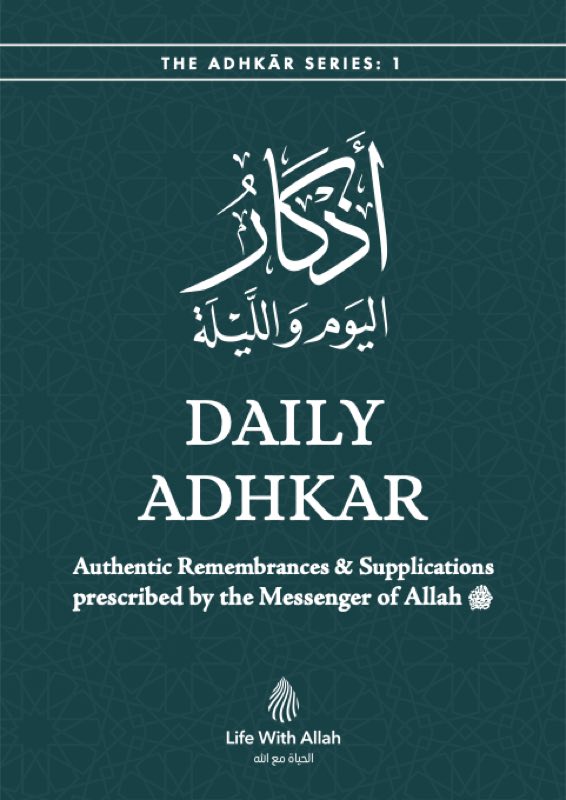
    at-Tirmidhi 3505Sec. 31

The Arabic, with audio and transliteration, is in the Morning and Evening Adhkar app, and the How to Muslim guide sorts du‘as by time and need.

المزيد

Keep going

Read with care, then read on

A few narrations and details in the book that need care, and our sites that go deeper.

Details to read with care

The book is careful and well sourced, but the book gives each hadith by collection name only, a few of the reports it uses are graded differently by different scholars, and some points of practice are stated as settled where scholars differ. Here they are, section by section.

  • Section 2

    Dhikr as the best of deeds, and the polish of hearts

    The book quotes the report that dhikr is the best of deeds, better than spending gold and silver (Tirmidhi 3377, also Ibn Majah 3790 and Ahmad 27525). Al-Albani graded it sahih, al-Baghawi hasan and Shu‘ayb al-Arna’ut isnad sahih, but Ibn Rajab preferred that it is a saying of Abu al-Darda rather than of the Prophet ﷺ, and the Ahmad 27525 chain is called weak and interrupted in one edition’s notes. The book also cites a saying that every thing has a polish and the polish of hearts is dhikr (al-Bayhaqi, Shu‘ab al-Iman 522); al-Albani called that one fabricated, and al-Mundhiri and al-Damyati criticised a narrator in its chain. It is safest to rely on the Qur’anic verses and the sound reports about dhikr, and to leave the polish saying out.

  • Section 5

    Renew your faith by saying La ilaha illa Allah often

    The book gives this as a saying of the Prophet ﷺ, citing Ahmad (from Abu Hurayrah; also al-Bazzar 9569). Ahmad’s numbering differs between editions, so the exact number should be checked in the edition used. Al-Albani, Shu‘ayb al-Arna’ut and al-‘Ajluni called the chain weak, and al-Dhahabi pointed to a weak narrator, Sadaqa ibn Musa. Other scholars, among them al-Mundhiri and Ahmad Shakir, were kinder and called it hasan. The meaning is sound and well supported elsewhere, so you can keep up the habit, but avoid presenting these exact words as a firmly authentic hadith.

  • Section 6

    Paradise’s plants, and the hundred tasbih reports

    The book uses a report in which Ibrahim tells the Prophet ﷺ on the Night Journey that Paradise has plants of the four phrases (Tirmidhi 3462). Graders differ: al-Tirmidhi called it hasan gharib, al-Albani and Ibn Hajar hasan, while Shu‘ayb al-Arna’ut called the chain weak because of ‘Abd al-Rahman ibn Ishaq. A report urging shelter in the four phrases plus hawqalah (Nasa’i Kubra 10684, with al-Hakim) ranges from sahih (al-Hakim, al-Albani) to hasan (Ibn Hajar), with criticism of narrators by al-Bukhari and al-‘Uqayli. The report on a hundred tasbih, tahmid and takbir that looks closest to the book’s wording is Ahmad 26911 (Umm Hani), whose chain the Dar al-Salam edition calls weak because of Abu Salih; al-Albani first weakened it and later called it hasan. Treat these as encouragement backed by disputed chains, and rely on the Sahih reports for the main rewards.

  • Section 6

    Counting on the fingers or with beads

    The book encourages counting tasbih on the fingers and allows beads or a counter. The report that the Prophet ﷺ counted on his fingers is in Abu Dawud 1502 and Tirmidhi 3411; al-Albani graded the Abu Dawud report sahih and al-Arna’ut called its isnad sahih, though the right-hand wording of the Abu Dawud chain has been questioned by one later grader, and al-Nawawi mentioned a concern about the narrator ‘Ata ibn al-Sa’ib in another chain. A separate report tells the women to count on their fingers because the fingers will be questioned (Abu Dawud 1501, hasan per al-Albani; also Tirmidhi 3583). Scholars differ on beads: some allow them, others prefer the fingers as the reported practice.

  • Section 7

    Ask with certainty that Allah will answer

    The book says to ask Allah while certain of a reply, because He does not accept du‘a from a heedless heart (Tirmidhi 3479). Al-Tirmidhi called the report gharib, al-Nawawi called the chain weak, and al-Dhahabi, al-Mundhiri and al-‘Iraqi pointed to a weak narrator, Salih al-Murri. Al-Albani graded it hasan through support. The advice to ask with presence of heart is supported by the Qur’an and wider teaching, so you can hold it as good practice without leaning on this wording as a sure hadith.

  • Section 7

    Raising the hands and wiping the face

    The book relies on the report that Allah is shy to return empty the hands of a servant who raises them (Abu Dawud 1488, also Tirmidhi 3556 and Ibn Majah 3865). Most graders accept it (Ibn Hibban, al-Albani, Ibn Baz and Shu‘ayb al-Arna’ut sahih, Ibn Hajar hasan), though Sadr al-Din al-Munawi criticised the narrator Ja‘far ibn Maymun. Scholars differ on whether the hands are raised in every du‘a, and on wiping the face afterwards, so neither is presented here as required.

  • Section 8

    The Greatest Name and the list of ninety nine

    The book treats the du‘as in Abu Dawud 1495 and 1493 as ones made by the Greatest Name. Both reports are widely graded sahih (al-Albani, Ibn Hibban, Ibn Baz and others), though al-Haythami weakened one route of the first because of Aban ibn ‘Ayyash. Scholars hold many different opinions on which Name is the Greatest, so it is not settled. The report on the ninety nine Names is in the Sahihayn, but the numbered list in some collections is not part of that sound text, as al-Albani and others point out, so use the lists as teaching aids and not as hadith.

  • Section 9

    Those nearest him on the Day of Judgement

    The book cites that the people closest to the Prophet ﷺ are those who sent most salah (Tirmidhi 484). Al-Tirmidhi and al-Baghawi called it hasan gharib, and Ibn Hibban graded it sahih, but Shu‘ayb al-Arna’ut called the chain weak because of ‘Abdullah ibn Kaysan, al-Dhahabi noted criticism of Khalid ibn Makhlad, and al-Albani moved from weak to hasan li-ghayrihi. The forty benefits listed are Ibn al-Qayyim’s own reflections and not all hadith promises. Hold the nearness as a hope, not a guaranteed ranking.

  • Section 10

    Two rak‘ahs of repentance and forgiving all believers

    The report on wudu, two rak‘ahs and asking forgiveness (Abu Dawud 1521, also Tirmidhi 406 and Ibn Majah 1395) is graded sahih by al-Albani and hasan by Ibn Muflih and al-Arna’ut, though al-Zayla‘i criticised the narrator Asma ibn al-Hakam. The practice itself is widely taught. The book also cites a report that whoever asks forgiveness for all believers earns a good deed for each (al-Tabarani). Its grading is uncertain: al-Haythami and al-Mundhiri called a Tabarani chain jayyid, but a similarly worded report elsewhere is called fabricated by al-Albani, so hold it as unconfirmed and lean on the Qur’an’s own command to ask forgiveness for the believing men and women (Muhammad 47:19Read it word by word, and listenSee it on the Ayah Unpacked mapRead it on Quran.comAlso in the libraryDaily Adhkar Ch. 10: Seeking forgiveness and the secrets of deedsEvery verse in our notes).

  • Section 11

    The Hajj and ‘Umrah reward after Fajr

    The book says that praying Fajr in congregation, staying in remembrance until sunrise and praying two rak‘ahs earns the reward of a complete Hajj and ‘Umrah. It is in at-Tirmidhi 586, who called it hasan gharib; Ibn Baz said there is no harm in it and al-Albani graded it hasan, while Ibn Hajar called it gharib and al-Mubarakfuri criticised a narrator, Abu Zilal. Scholars therefore differ a little on its strength. Treat it as a hoped-for reward, not a replacement for the obligatory Hajj or ‘Umrah. The extra claims that it applies equally to a woman at home or to someone who moves within the masjid are scholarly extensions, not the wording of the hadith.

  • Section 11

    Who keeps the duha prayer

    The book cites a report that only the awwab, those who turn to Allah often, keep the duha prayer. It appears in Ibn Khuzaymah 1224 and al-Hakim 1182, and al-Tabarani, with grades from hasan (al-Albani, Shu‘ayb al-Arna’ut) to sahih on Muslim’s condition (al-Hakim), though Ibn al-Qaysarani criticised one narrator. Most graders accept it. The stronger and clearer proofs for duha are the sahih reports, such as the charity owed by each joint (Muslim 720), so lean on those.

  • Section 14

    Abu Umamah’s du‘a against worry and debt

    The book says Abu Umamah’s worries lifted and his debt was paid after this du‘a. It is in Abu Dawud 1555. Al-Albani and Shu‘ayb al-Arna’ut graded the isnad da‘if because of Ghassan ibn ‘Awf, and al-Mundhiri also noted a weak narrator, while al-Shawkani saw no objection to the chain. Scholars therefore differ. It is a lovely supplication in meaning, but do not promise a result from it, and take proper practical steps with debt and low mood too.

  • Section 15

    Having paid your thanks for the day

    The book says that this du‘a of thanks means you have fulfilled your thanks for that day or night (Abu Dawud 5073). The grades vary: al-Albani and Shu‘ayb al-Arna’ut called it da‘if, while Ibn Hibban counted it sahih, Ibn al-Qayyim and Ibn Baz called it hasan, and Ibn Hajar noted that one narrator is unknown. Treat it as a reported promise whose chain is disputed. Saying words of thanks is good whatever the grade.

  • Section 15

    Freed from the Fire in stages

    The book reports that whoever says the call to witness four times is freed in stages from the Fire (Abu Dawud 5069). Some wordings also add forgiveness of that day’s sins, which we could not match to a specific chain. Al-Albani and Shu‘ayb al-Arna’ut weakened the chain over unknown narrators, and al-Mundhiri and al-Haythami noted weakness, while Ibn al-Qayyim, Ibn Hajar and Ibn Baz leaned to hasan. So scholars differ. Hold the du‘a as a good practice and its reward as a hope, not as a guarantee.

  • Section 15

    Hasbiyallah seven times

    The book attributes this promise to the Prophet ﷺ. It is established by some as a saying of Abu al-Darda in Abu Dawud 5081 (Ibn Baz called that isnad jayyid and Shu‘ayb al-Arna’ut sahih, though al-Albani weakened it). The form traced to the Prophet ﷺ is not established: Ibn al-Jawzi called it fabricated and al-Albani munkar. The words are an unobjectionable remembrance, but we should not say the Prophet ﷺ promised the seven-times reward.

  • Section 15

    Pleased with Allah, three separate claims

    The book blends three claims. The wording about being pleased with Allah as Lord three times appears in an-Nasa’i, al-Kubra 10324, with graders split: al-Albani said da‘if for that wording, Ibn Hajar and Ibn Baz hasan, and Shu‘ayb al-Arna’ut sahih li-ghayrihi. The claim that the Prophet ﷺ takes your hand into Paradise (al-Tabarani) we could not verify. The tasting of the sweetness of faith is sound, in Muslim 34. Keep the three apart.

  • Section 16

    Ten salawat morning and evening

    The book says ten salawat in the morning and ten in the evening earns the Prophet’s ﷺ intercession (al-Tabarani, from Abu al-Darda). Graders differ widely: al-Albani first called it hasan and later weak, al-‘Iraqi noted a break in the chain, al-Haythami, al-Mundhiri and al-Suyuti said one route is jayyid, and Ibn ‘Uthaymin said he did not know it to be authentic. Sending blessings on the Prophet ﷺ is certainly encouraged, but do not present this promise as sahih.

  • Section 16

    Reports we could not trace

    Three items in this part could not be matched to a verified report: the hundred tasbih, tahmid and takbir compared with camels and slaves (an-Nasa’i), the hundred istighfars each morning (al-Tabarani), and the morning and evening tahlil version (an-Nasa’i). The established report for istighfar is a hundred times a day (Muslim 2702), and for tahlil the Bukhari 3293 and Muslim 2691 report. Where the specific report is uncertain, treat the numbers as optional and the phrases as always good.

  • Section 17

    Ten verses and the heedless

    The book says that whoever recites ten verses at night is not written among the heedless. The report (Ibn Khuzaymah 1144, also al-Hakim) actually says whoever stands in prayer with ten verses. Ibn Khuzaymah himself hesitated over one narrator, at-Tabarani called a version of it gharib, and al-Albani called the chain jayyid. Hold it as encouragement to pray a few verses at night, not as a guarantee.

  • Section 17

    Lying on the stomach

    The book gives two reports here. The nudge by Abu Dharr is in Ibn Majah 3724, and the saying that Allah dislikes this way of lying comes from Tikhfah al-Ghifari (Abu Dawud 5040, Ibn Majah 3723, Ahmad 23617). An-Nawawi called the chain sahih and Ibn Muflih said its narrators are trustworthy. Al-Albani graded the Ibn Majah wordings sahih (sources list his verdict on Abu Dawud 5040 differently) and Zubayr ‘Ali Za’i graded it sahih. Yet the chain has idtirab over the Companion’s name (Tikhfah or Tihfah, Qays or Ya‘ish), and Shu‘ayb al-Arna’ut called one chain in Ahmad da‘if and another hasan li-ghayrihi. Scholars therefore differ on how strongly to state it, and it should not be taken as medical advice about sleep position.

  • Section 18

    Surah al-Mulk and the grave

    Three separate things are blended here. The Prophet’s ﷺ words that a thirty-verse surah pleads for its reader are Abu Hurayrah’s report (at-Tirmidhi 2891, graded hasan by al-Albani). The report that he did not sleep until he read Alif Lam Mim Tanzil (as-Sajdah) and Tabarak is Jabir’s (at-Tirmidhi 2892, 3404) and is more criticised: al-Bayhaqi called the chain hasan and al-Albani accepted it, but Ibn Hajar noted flaws (an‘anah), al-Munawi mentioned idtirab, and Ibn Baz and Zubayr ‘Ali Za’i weakened it. Ibn Mas‘ud’s saying about protection from the grave’s punishment is his own, graded hasan by al-Albani. Keep the three apart.

  • Section 18

    What “enough” means

    The Prophet ﷺ said the last two verses of al-Baqarah will suffice the one who reads them at night (al-Bukhari 5008, Muslim 807). Scholars differ on whether this means enough protection, enough in place of night prayer, or both, so it is safest to hold it as all of these without insisting on one.

  • Section 18

    Surah al-Kafirun before sleep

    The report telling a man to read al-Kafirun and sleep on its end (Abu Dawud 5055, at-Tirmidhi 3403) has an unnamed man between Abu Ishaq and Farwah in at-Tirmidhi’s chain. Ibn ‘Abd al-Barr said the chain is mudtarib and does not stand. Shu‘ayb al-Arna’ut called it hasan with some idtirab, Zubayr ‘Ali Za’i graded it hasan, and al-Albani graded it sahih in Abu Dawud and hasan li-ghayrihi elsewhere. It is a gentle practice many scholars accept, but hold it with this difference in mind.

  • Section 19

    Du‘a of the face and army of Allah

    The book gives a du‘a seeking refuge by Allah’s noble face and perfect words (Abu Dawud 5052, from ‘Ali). Abu Dawud himself said nothing on it and al-Mundhiri discussed the narrator al-Harith al-A‘war. Al-Albani graded it da‘if because Abu Ishaq as-Sabi‘i is described as practising tadlis and narrates with ‘an, and Zubayr ‘Ali Za’i agreed, while Shu‘ayb al-Arna’ut called the chain qawi. A longer wording of the praise du‘a (al-Hakim) was only found with weak gradings: an-Nawawi called its chain da‘if and Shu‘ayb al-Arna’ut found a narrator unknown. Prefer the sound versions in Muslim (2713, 2715).

  • Section 20

    The nightmare refuge du‘a

    The refuge du‘a at-Tirmidhi 3528 prints is the one through ‘Amr ibn Shu‘ayb from his father from his grandfather, which at-Tirmidhi called hasan gharib. Muhammad ibn Ishaq is in its chain and narrates with ‘an, and some later scholars weakened it on that ground, among them ash-Shawkani and Shu‘ayb al-Arna’ut. A separate report of similar words through Khalid ibn al-Walid is much weaker: Ibn al-Qaysarani weakened it for al-Husayn ibn Mubarak and al-Albani called it mawdu‘. Tell the two reports apart before relying on either. The sound advice, in al-Bukhari 7044 and Muslim 2261, is simply to seek refuge in Allah from the dream and from Shaytan.

  • Section 21

    Ayat al-Kursi after each prayer

    The report that only death stands between the reader and Paradise (an-Nasa’i, al-Kubra 9848) was graded sahih by Ibn Hibban and later by al-Albani, and Ibn Baz found nothing wrong with it. Ibn al-Jawzi called a different chain batil. Al-Albani also said that versions adding Surah al-Ikhlas are batil. Hold the plain wording as a strong practice, and avoid the additions.

  • Section 22

    Seven times for protection from the Fire

    The book says that whoever says this seven times after Maghrib and Fajr is protected if he dies that day or night (Abu Dawud 5079). Abu Hatim criticised the narrator al-Harith ibn Muslim, and al-Albani and Shu‘ayb al-Arna’ut graded the chain da‘if, while Zubayr ‘Ali Za’i graded it hasan, so scholars differ. The du‘a itself asks for something good, but the promise of protection is not firmly established.

  • Section 22

    Du‘a for knowledge after Fajr

    The book presents the du‘a for useful knowledge, pure provision and accepted deeds (Ibn Majah 925, Ahmad 26521) as a firm practice after Fajr. Al-Albani graded the Ibn Majah report sahih, while Shu‘ayb al-Arna’ut and Zubayr ‘Ali Za’i graded the chain da‘if because the freed slave of Umm Salamah who narrates it is unknown. Scholars therefore differ. It is a good thing to ask Allah for in any case, but do not insist on it as a fixed sunnah of Fajr.

  • Section 23

    Clothes du‘a and “past and future sins”

    The book says thanking Allah for a new garment brings forgiveness of past and future sins. The report is Abu Dawud 4023 (Mu‘adh ibn Anas), which also carries the food wording found in Tirmidhi 3458 and Ibn Majah 3285. Al-Albani graded it hasan and al-Mundhiri noted criticism of the narrator Sahl ibn Mu‘adh, so scholars differ on its strength. The words about what is to come are held to be an unsound addition. The thanks itself is a fine habit, so say it for the gratitude and do not count on the promised reward.

  • Section 23

    Bismillah as a screen from the jinn

    The book gives this virtue for undressing (Tabarani) and for entering the lavatory (Tirmidhi 606). At-Tirmidhi himself said the chain is not strong, al-Bayhaqi said it needs scrutiny, and Mughultay said not every narrator is known. Ibn Hajar said its narrators are trustworthy, as-Suyuti graded it hasan, and al-Albani graded it sahih. So scholars differ. It is safe to keep the habit of Bismillah, and to present the screen as a reported benefit, not a certainty.

  • Section 23

    Bismillah and the extra words after wudu

    The report on Bismillah at the start of wudu (Abu Dawud 101, Tirmidhi 25) is disputed. Ahmad said no authentic hadith on it is established, and al-Bukhari questioned whether a narrator heard from his source. Later scholars accept it through supporting reports: al-Albani graded Abu Dawud 101 sahih. After wudu, the shahadah with the eight gates of Paradise is in Muslim 234, but the plea to be among the repentant and the purified is an addition in Tirmidhi 55. At-Tirmidhi himself noted confusion in its chain and said little on the topic is sound, al-Bukhari said Abu Idris did not hear from ‘Umar, and Ibn al-Qattan, Ibn al-Mulaqqin and adh-Dhahabi doubted it. Say the Muslim wording with confidence and the addition as a gentle extra.

  • Section 23

    The du‘a “sealed on a page”

    The book says the second du‘a after wudu is written on a page and sealed until the Day of Judgement (an-Nasa’i, ‘Amal al-Yawm wa al-Laylah 81). An-Nasa’i himself judged the correct form to be one that stops with the Companion Abu Sa‘id, not the Prophet ﷺ. Ibn Hajar and al-Mubarakfuri both noted the scholars’ disagreement over whether it was raised or stopped. Treat the words as a good du‘a and the sealing as a report of uncertain status.

  • Section 24

    Leaving and entering home

    The du‘a for leaving home (Abu Dawud 5095, Tirmidhi 3426) is called hasan sahih gharib by at-Tirmidhi and graded sahih by al-Albani, but Muqbil al-Wadi‘i judged this particular chain weak, and Abu Dawud was silent on it. The du‘a for a good entrance and exit (Abu Dawud 5096) is weak: al-Mundhiri said Muhammad ibn Isma‘il did not hear it from his father, and al-Albani graded it da‘if. The firm report is the one in Muslim 2018 about naming Allah at the door and before food. The first du‘a is widely said, with the dispute noted, and for entering rely on the Muslim hadith.

  • Section 24

    The masjid du‘as blend several reports

    The book joins different reports into one wording for entering and leaving the masjid. Muslim 713 has the plea for the gates of mercy on entering and for Allah’s bounty on leaving, with no mention of sending peace on the Prophet ﷺ. That addition is in Ibn Majah 771 (Fatimah), which Shu‘ayb al-Arna’ut graded sahih li-ghayrihi and al-Albani graded sahih, while Mughultay and Zubair Ali Za’i called it weak. Ibn Majah 773 adds a plea to be guarded from Shaytan on leaving; Ibn Hajar called it hasan through supporting reports. Keep each wording tied to its own source and do not merge them as if they were one hadith.

  • Section 25

    Whatever was said in the gathering is forgiven

    The book gives the closing du‘a of a gathering (Tirmidhi 3433) as wiping out what was said there. At-Tirmidhi called it gharib sahih from this route, al-Bukhari criticised a link in the chain, and al-Albani graded it sahih on the condition of Muslim. Many scholars read the promise as applying to small slips and idle talk, not to major sins or to wrongs owed to other people. The related ‘A’ishah report (Nasa’i, as-Sunan al-Kubra 10067) is graded sahih by al-Albani and by Muqbil al-Wadi‘i.

  • Section 26

    The table du‘as and their promised forgiveness

    The wording that forgives earlier sins after a meal (Tirmidhi 3458, Ibn Majah 3285, with the same chain in Abu Dawud 4023) is disputed. At-Tirmidhi called it hasan gharib and al-Albani graded it hasan, but Ibn Muflih noted a criticised narrator, ‘Abd ar-Rahim ibn Maymun. The praise for feeding and giving drink (Abu Dawud 3850, Tirmidhi 3457) is weak, with confusion over the chain, and ash-Shawkani named Isma‘il ibn Raja’ as the problem. The du‘a for milk (Tirmidhi 3455) is hasan to at-Tirmidhi and al-Albani but weak to Shu‘ayb al-Arna’ut and ash-Shawkani, who point to ‘Ali ibn Zayd. The safest after-meal wording is the abundant praise in Bukhari 5458.

  • Section 26

    “The thirst has gone” on breaking the fast

    The report (Abu Dawud 2357) is disputed. Al-Albani and Shu‘ayb al-Arna’ut graded it hasan, but Ibn ‘Uthaymin saw weakness in it, Ibn Manda called it gharib, and al-Bazzar said it is known only by this route. The longer wording that begins with ‘Allahumma laka sumtu’ is weaker still and should not be mixed into this one. Say it as a reported du‘a, not as a firmly established sunnah.

  • Section 27

    A million good deeds for the market du‘a

    The book gives a very large reward for the market du‘a (Tirmidhi 3428; Ibn Majah has it too). Tirmidhi himself called it gharib. Ibn al-Qayyim called it ma‘lul, saying a report like it does not stand firm, Ibn Rajab said the chain is weak, and Mulla ‘Ali al-Qari said it has no basis. Al-Albani graded it hasan, though we have not seen that verdict ourselves. So scholars differ. The safe way to hold it is to say the words as a remembrance of Allah’s oneness and power, without counting on the reward as established.

  • Section 28

    The thunder phrase is a Companion’s words

    The book gives the thunder words as if they were part of the Prophet’s ﷺ teaching, citing the Muwatta’. In fact the report is a Companion’s: ‘Abdullah ibn al-Zubayr used to say it, which scholars call mawquf. An-Nawawi graded the chain sahih, and Mulla ‘Ali al-Qari agreed that it is sound as the Companion’s report. It is therefore a fine thing to say, but we should not call it a saying of the Prophet ﷺ. We have not confirmed a Muwatta’ number.

  • Section 28

    The du‘a before letting go of a hand

    The book cites Ibn al-Sunni for a du‘a said before releasing someone’s hand, and says the Prophet ﷺ would not let go until he had said it. We could not find that report in a main collection. A related report about not withdrawing one’s hand first is graded weak by al-Albani, apart from the clause about shaking hands. Hold it as a lovely du‘a to make, not as a practice proven from the Prophet ﷺ.

  • Section 28

    Jazak Allahu khayran as complete thanks

    The book says this phrase fully expresses thanks (Tirmidhi 2035). Al-Bukhari called the report munkar in his al-‘Ilal al-Kabir, and Abu Hatim al-Razi called it munkar through this chain. Tirmidhi called it hasan jayyid gharib, Ibn Hibban graded it sahih, al-Mundhiri said the chain is sahih, hasan or close, and al-Albani graded it sahih. So scholars differ. Making du‘a for someone who helped you is good in any case, but we should not say the Prophet ﷺ certainly declared it a full thank-you.

  • Section 29

    Replying to a sneeze

    The book teaches the sneezer’s praise and the replies from Bukhari 6224. Scholars differ on whether the reply to the sneezer is obligatory or only recommended, and on how many sneezes it applies to. We present it as a courtesy and leave the ruling to the schools. The safe way to hold it is to keep the manners and not to lecture others on the ruling.

  • Section 30

    The du‘a against hidden shirk

    The book gives the shirk du‘a to Ahmad as a cure for shirk quieter than an ant’s footsteps; the report is also in al-Bukhari’s al-Adab al-Mufrad. Al-Albani graded it sahih in Sahih al-Adab al-Mufrad and Sahih al-Jami‘, but graded another wording weak. Al-Haythami noted that one narrator was criticised. So the grading is not agreed, and the exact words differ between routes. The du‘a asks only what every believer should ask, so it is safe to say, but say it as a supplication and not as a precise prophetic formula.

  • Section 30

    Which ten verses of al-Kahf

    The book says memorising the first ten verses of Surah al-Kahf protects from Dajjal, citing Muslim. The report is Muslim 809 (from Abu al-Darda’), and its second chain notes that Shu‘bah said the end of the surah while Hammam said the beginning, so some narrations name the last ten verses. The safest course is to learn the opening verses as the main wording says, and to note that some narrations give the closing ones. Neither is a charm: the protection is a promise from Allah, not an automatic cure for fear.

  • Section 31

    Praise for good news and for bad news

    The book gives two praise sayings, one for pleasant events and one for unwelcome ones, from a single report in Ibn Majah 3803, from ‘A’ishah. Ibn Baz and Muqbil al-Wadi‘i called it weak through its routes, and al-Albani graded one wording weak and another sahih in different works; some editors accept it with supporting reports. Praising Allah in every state does have other support. So hold the second saying as a good habit of the heart, and do not call the exact wording a firm saying of the Prophet ﷺ.

  • Section 31

    Grief and anxiety du‘a and its promise

    The book says that Allah removes sorrow and gives joy to the one who says this long du‘a (Ahmad 3712; Ibn Hibban also relates it). Shu‘ayb al-Arna’ut called the chain weak, al-Mundhiri noted that it is not free of irsal, and ad-Daraqutni discussed a narrator in the chain. Al-Albani graded it sahih, though we have not seen that verdict ourselves. So scholars differ. Do not present the relief as automatic, and do not treat it as a treatment for depression or anxiety disorders: say it alongside seeking help from a doctor or a trusted person.

  • Section 31

    Seven times for the sick and the afflicted

    The book says Allah will heal a sick person for whom this du‘a is said seven times (Abu Dawud 3106, Tirmidhi 2083). Shu‘ayb al-Arna’ut and Ibn Hajar graded it hasan, and al-Albani sahih, while ash-Shawkani criticised a narrator, Yazid ibn ‘Abd al-Rahman. The report itself carries a condition that the person’s appointed time has not come, so it is not a promise of cure. A second report, that whoever thanks Allah on seeing an afflicted person will be spared that affliction (Tirmidhi 3431 and 3432), is graded sahih li-ghayrihi by al-Albani, and al-Mundhiri called it sahih, hasan or close. Say both as du‘a and comfort, never in place of medical treatment.

فوائد

Your fawa’id

Write down what this book taught you

Each fa’idah is saved in your Rawdah notebook under Daily Adhkar, with the chapter it came from. Your notebook page keeps them all, book by book.

Notes are kept in this browser only. Download a copy from your notebook page to keep them safe.

From this book0 notes

    Nothing yet. Your first fa’idah from this book will appear here.

    Open your whole notebook